
Italian Mahi Carpaccio Crudo
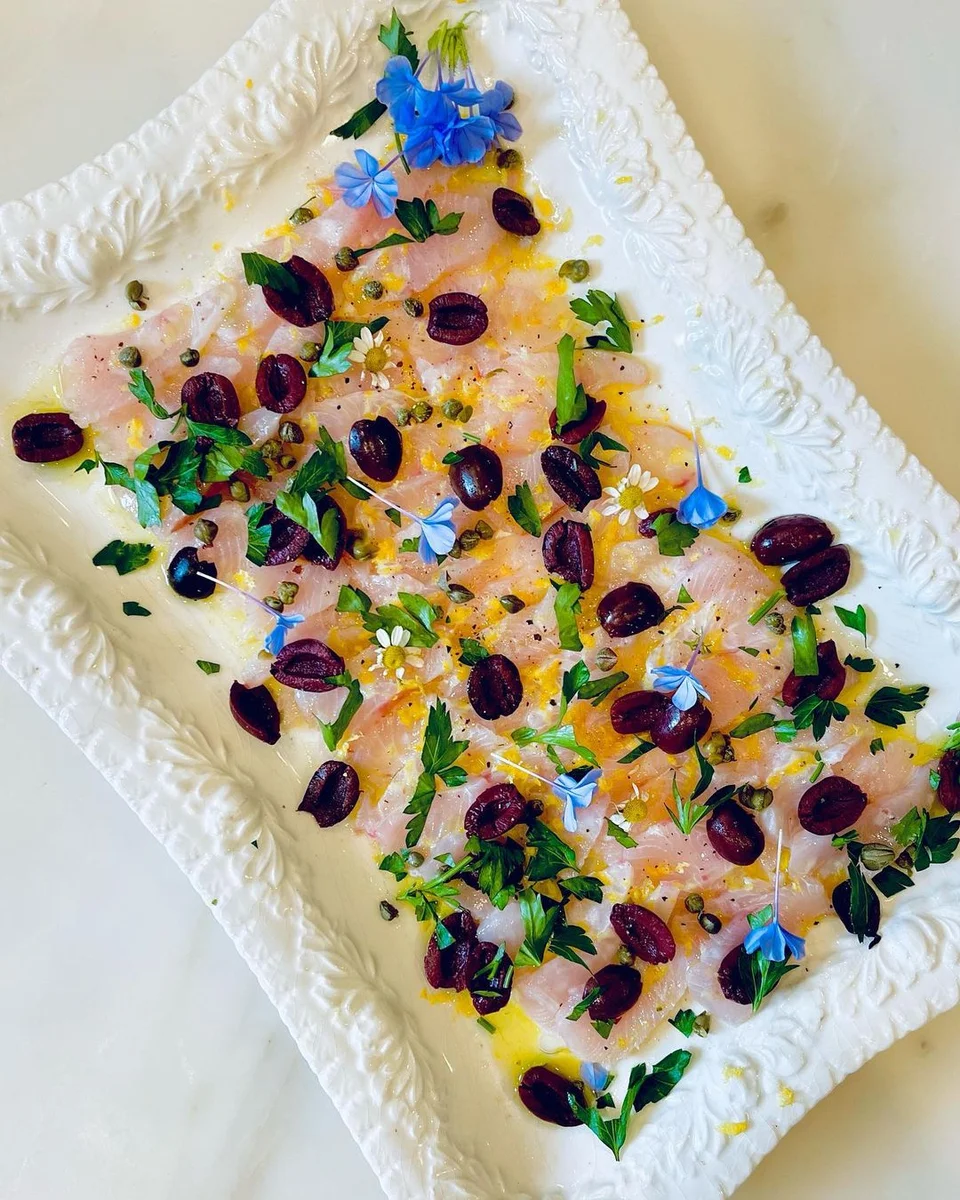
Italian mahi carpaccio is a raw-fish starter dressed with lemon, olive oil, capers, olives and parsley. A brief spell in the freezer firms the fish so it is easier to cut into thin slices.
Ingredients
- 680 g (1½ lb)fresh white fish fillet, 2.5–5 cm thick
- Juice of ½–1 lemonlemon juice
- 1 tsp (about 5 ml)lemon zest
- 30–45 ml (2–3 tbsp)good olive oil
- 1 heaped tbspcapers
- 45 ml (3 tbsp)Greek olive halves
- 45 ml (3 tbsp)chopped flat-leaf parsley
- To tastesalt
- To tastefreshly ground black pepper
Instructions
- 1
Firm the fish
Freeze the fish fillet for 20 minutes to make it easier to slice thinly.
- 2
Slice thinly
Using a very sharp knife, cut the fish into very thin slices.
- 3
Arrange the fish
Lay the slices across a serving platter.
- 4
Season the slices
Sprinkle the fish generously with salt and grind fresh pepper over it.
- 5
Add the dressing
Squeeze the lemon juice over the fish, then drizzle the olive oil evenly across it.
- 6
Finish and serve
Scatter the olives, capers and parsley over the fish, then serve immediately.
What is mahi carpaccio?
Carpaccio is a style of Italian starter made from very thin slices served uncooked. This version uses mahi or another white fish, with lemon, olive oil and salty Mediterranean garnishes.
Thin slicing gives the fish a delicate texture, while the capers and olives bring savoury contrast to the bright citrus dressing.
Nutrition and macros by portion
The nutrition label shows one serving as written: 250 calories, 35g protein, 3g carbs, 12g fat.
| Portion | Adjustment | kcal | Protein | Carbs | Fat |
|---|---|---|---|---|---|
| Lighter | Use less olive oil | 175 kcal | 25g | 2g | 8g |
| This serving | As written | 250 kcal | 35g | 3g | 12g |
| Hungry | Serve with extra bread | 375 kcal | 53g | 5g | 18g |
The fish provides most of the protein, while the olive oil supplies most of the fat; the fish and lemon contribute relatively little carbohydrate. Serve it with salad and a measured portion of bread to make a more complete plate.
Choosing the fish
Fresh white fish: choose a firm, fresh fillet and keep it chilled until you are ready to prepare it. Since it is served raw, buy fish specifically suitable for raw consumption and follow the fishmonger's storage and handling advice.
Brief chilling: the 20-minute freezer step firms the fillet for slicing; it is not a parasite-control freezing treatment.
Getting thin slices
Sharp knife: use a long, very sharp blade and steady strokes rather than pressing down hard. Slightly firm fish is easier to cut cleanly.
Even pieces: aim for slices of similar thickness so they sit neatly on the platter and take the dressing evenly.
Balancing the dressing
Lemon: the recipe allows half to one lemon, so start with less if you prefer a gentler citrus flavour. The juice should season the fish without overwhelming it.
Olive oil: drizzle it across the platter so the slices are lightly coated. Capers and olives add saltiness, so taste before adding extra salt.
Serving it promptly
Fresh finish: add the olives, capers and parsley just before serving, and bring the dish to the table immediately. The citrus begins to change the fish's texture as it stands.
Keep chilled: prepare the platter close to serving time and do not leave raw fish sitting at room temperature.
What to serve alongside
Simple sides: serve with crusty bread to catch the lemon and olive oil, or add a crisp green salad for freshness.
Small portions: this works well as a starter before a more substantial main course, with the bread or salad adjusted to suit the meal.
Recipe notes & tips
- Chill the platter before arranging the fish to help keep the starter cool.
- Use a very sharp knife for cleaner, thinner slices.
- Pat the fish dry before slicing if its surface is wet.
- Add the lemon juice gradually and taste before using the full amount.
- Check the olives and capers for saltiness before seasoning the fish generously.
- Serve immediately after adding the garnishes.
Variations
- Add chilli: scatter a little finely sliced fresh chilli over the platter for gentle heat.
- Use another fish: choose a firm white fish suitable for raw consumption and slice it in the same way.
- Add fennel: shave a little fennel very thinly for a crisp, anise-like note.
- Try orange: replace some of the lemon juice with orange juice for a softer citrus flavour.
- Add rocket: finish with a small handful of rocket for a peppery edge.
Common mistakes to avoid
- Slicing fish that is too soft: firm it in the freezer for 20 minutes first.
- Using a blunt knife: sharpen the blade so it cuts rather than tears the fish.
- Adding too much salt: taste the capers and olives first, then season sparingly.
- Leaving it dressed too long: add the lemon and oil near serving time and serve immediately.
- Using fish not intended for raw eating: ask your fishmonger and follow their raw-fish handling advice.
How to store
This dish is best served immediately and is not suited to keeping once dressed. Keep any unused fish covered and refrigerated, following the fishmonger's storage advice; do not store it at room temperature.
Frequently asked questions
Can I use a different white fish?
Yes, provided it is fresh, firm and suitable for serving raw. Ask your fishmonger for guidance on the fish and its handling.
Does freezing the fish for 20 minutes make it safe to eat raw?
No. That short freeze is only to firm the fish for slicing and is not a parasite-control treatment. Buy fish suitable for raw consumption and follow the supplier's advice.
How thin should I slice the fish?
Slice it as thinly as you can without tearing it. A sharp knife and briefly firming the fillet make this easier.
Can I prepare it ahead?
You can chill the platter and prepare the garnishes ahead, but slice and dress the fish close to serving time. Serve it promptly once the lemon is added.
How much lemon should I use?
Use the juice of half a lemon for a milder dressing or up to one lemon for a brighter, more pronounced citrus flavour.
Cook it from the original
This recipe comes from fooooods.com. Their page has the author’s own photos, notes and tips — the best place to cook it from.
Open the recipe on fooooods.com