
French Lemon Tart W/ Lemon Curd
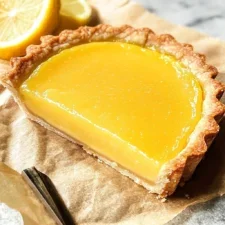
This French-style lemon tart pairs a crisp, buttery pastry case with a smooth, tangy lemon curd. It makes an eye-catching dessert for a gathering, though the pastry needs at least an hour to chill before baking.
Ingredients
- 167 g (1⅓ cups)plain flour
- 1.25 ml (¼ tsp)kosher salt
- 40 g (⅓ cup)icing sugar
- 113 g (½ cup), coldunsalted butter
- 1 largeegg
- 2.5 ml (½ tsp)vanilla extract
- 120 ml (½ cup)lemon juice
- 30 ml (2 tbsp)lemon zest
- 200 g (1 cup)granulated sugar
- 1.25 ml (¼ tsp)kosher salt
- 2 largeeggs
- 4 largeegg yolks
Instructions
- 1
Make the pastry
In a food processor, combine the flour, icing sugar and salt. Add the cold butter and pulse until the mixture has pea-sized pieces. Mix in the egg and vanilla until a dough forms, taking care not to overwork it.
- 2
Chill the dough
Wrap the dough in cling film and chill it for at least 1 hour.
- 3
Shape the shell
On a floured surface, roll out the chilled dough into a circle. Transfer it to a 9-inch tart tin, trim the excess pastry and prick the base with a fork. Freeze for 20 minutes.
- 4
Bake the pastry
Preheat the oven to 180°C (350°F). Bake the pastry case for 15–20 minutes, until lightly golden, then leave it to cool.
- 5
Cook the filling
Over low heat, whisk together the lemon juice, lemon zest, granulated sugar, butter, eggs and egg yolks until the mixture thickens, about 10–15 minutes. Pour it into the cooled pastry case and refrigerate until set.
What is a French lemon tart?
A French lemon tart, often called tarte au citron, combines pastry with a sharp, silky citrus filling. This version uses a buttery pastry shell and lemon curd for a bright contrast of crisp and creamy textures.
The method relies on chilling the pastry and gently cooking the curd. Note that the ingredient list gives one quantity of butter, while the method also calls for butter in the curd without specifying a separate amount.
Nutrition and macros by portion
The nutrition label shows one serving as written: 290 calories, 4g protein, 34g carbs, 15g fat.
| Portion | Adjustment | kcal | Protein | Carbs | Fat |
|---|---|---|---|---|---|
| Lighter | Smaller tart slice | 203 kcal | 3g | 24g | 11g |
| This serving | As written | 290 kcal | 4g | 34g | 15g |
| Hungry | Larger tart slice | 435 kcal | 6g | 51g | 23g |
The pastry flour and sugars supply most of the carbohydrates, while butter and egg yolks contribute much of the fat; eggs also provide protein. Pair a slice with fresh berries or serve it after a meal with a protein-rich component to make the overall plate more balanced.
Building the pastry
Cold butter: pulse it with the dry ingredients until small, pea-sized pieces remain. These pieces help create a tender, crisp pastry rather than a dense dough.
Light mixing: add the egg and vanilla only until the dough comes together. Overworking can make the baked shell tough.
Chilling and shaping
First chill: give the wrapped dough at least an hour in the fridge so it firms up and is easier to roll. This means the stated 50-minute total time does not include all the resting time.
Second chill: after lining the tin and pricking the base, freeze the shell for 20 minutes as directed. Trim the edge neatly and prick across the base so it is ready for baking.
Cooking the lemon curd
Gentle heat: whisk the lemon juice, zest, sugar, eggs and yolks over low heat, following the method's instruction to include butter. Keep the mixture moving so the eggs thicken the filling without scrambling.
Thickening cue: the stated cooking time is about 10–15 minutes. The mixture should thicken before it is poured into the cooled shell; the recipe does not give a specific temperature.
Baking the shell
Colour: bake at 180°C (350°F) for 15–20 minutes, looking for a lightly golden pastry case. Let it cool before adding the curd so the filling can set in the fridge.
Serving the tart
For clean slices, wait until the filling has set and use a sharp knife, wiping it between cuts if needed. Serve the tart on its own or with fresh berries for a fruity contrast.
Because the filling is rich and tangy, a modest slice works well after a meal. Unsweetened tea or coffee can complement it without adding more sweetness.
Recipe notes & tips
- Measure the pastry flour by weight for a more consistent dough.
- Keep the butter cold when making the pastry.
- Roll the dough on a lightly floured surface to help prevent sticking.
- Watch the pastry near the end of baking and remove it when lightly golden.
- Whisk the curd continuously over low heat while it thickens.
- Allow enough time for both the pastry and filling to chill.
Variations
- Berry topping: arrange fresh berries over the set tart just before serving.
- Citrus blend: replace some of the lemon juice with orange juice for a softer citrus note.
- Extra zest: add a little more finely grated lemon zest for a stronger lemon aroma.
- Individual tarts: divide the pastry among small tart tins and check them earlier, as baking time may vary.
- Gluten-free option: use a suitable gluten-free plain flour blend for the pastry.
Common mistakes to avoid
- Warm pastry dough: it can become difficult to handle; chill it for at least 1 hour before rolling.
- Overworking the dough: this can make the shell tough; stop mixing as soon as it forms.
- Skipping the second chill: a soft shell is harder to handle; freeze the lined case for 20 minutes as directed.
- Adding curd to a warm shell: the filling may not set as intended; let the baked case cool first.
- Cooking the curd over high heat: the eggs can scramble; keep the heat low and whisk continuously.
- Assuming the curd butter amount: the ingredient list does not state a separate quantity for it; check the source recipe before cooking.
How to store
Cover and refrigerate the tart once set, and use within 3 days. Serve chilled; reheating is not recommended because it can soften the curd and pastry.
Frequently asked questions
How long does the pastry need to chill?
The dough needs at least 1 hour in the fridge, followed by 20 minutes in the freezer after it has been shaped in the tin.
Why does the recipe take longer than 50 minutes?
The stated total time does not account for the at-least-1-hour dough chill or the time needed for the filling to set in the fridge.
How do I know when the curd is thick enough?
The method says to cook it over low heat for about 10–15 minutes, whisking until it thickens. It does not give a precise temperature or further doneness test.
How much butter goes into the lemon curd?
The ingredient list gives 113 g (½ cup) of butter for the recipe, but does not say how much, if any, is intended for the curd. The method does call for butter in the filling, so check the original recipe for clarification.
Can I make the tart ahead?
Yes. Chill it until the filling sets, then keep it covered in the fridge. The pastry can also be prepared and chilled ahead of baking.
Can I use a different-sized tart tin?
The method specifies a 9-inch tart tin. A different size may change how thick the pastry and filling are, and can affect baking and setting time.
Cook it from the original
This recipe comes from bazarecipe.com. Their page has the author’s own photos, notes and tips — the best place to cook it from.
Open the recipe on bazarecipe.com