
Creme Brulee
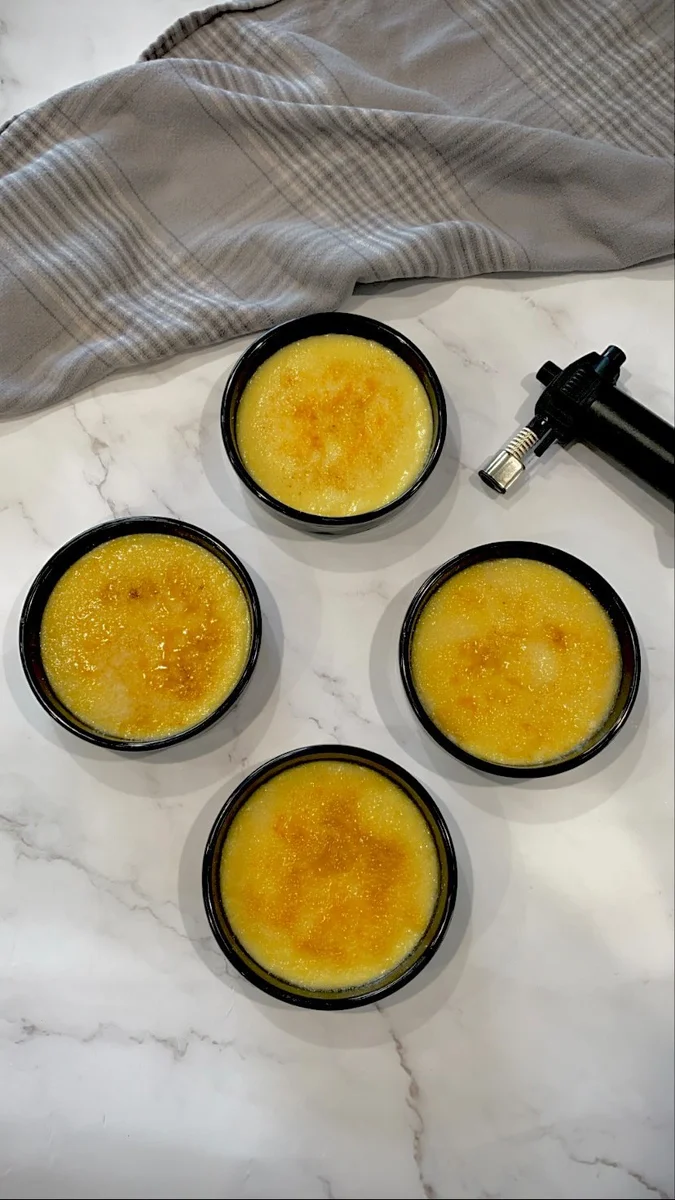
Crème brûlée is a chilled vanilla custard topped with a thin layer of caramelised sugar. It is a good make-ahead dessert: prepare the custards in the oven, then torch the sugar just before serving.
Ingredients
- 480 ml (2 cups)whipping cream or double cream
- 5egg yolks
- 100 g (½ cup)sugar
- 15 ml (1 tbsp)vanilla extract
- 50 g (¼ cup)sugar, for topping
Instructions
- 1
Preheat the oven
Heat the oven to 163°C (325°F).
- 2
Warm the cream
Pour 480 ml (2 cups) of cream into a saucepan and warm it over a medium heat.
- 3
Mix the yolks
Put the egg yolks, 100 g (½ cup) of sugar and vanilla in a mixer and beat until fluffy.
- 4
Combine the custard
Take the warm cream off the heat and slowly add it to the egg mixture, stirring gently. Avoid overmixing, which can create lots of bubbles.
- 5
Strain the mixture
Pass the liquid through a strainer to remove any bits of cooked or curdled egg.
- 6
Fill the ramekins
Set four ramekins in a baking tray and divide the custard mixture between them.
- 7
Add hot water
Pour hot water into the baking tray until it reaches halfway up the sides of the ramekins.
- 8
Bake the custards
Bake for 35 minutes.
- 9
Cool and chill
After 35 minutes, take the tray out of the oven and leave the ramekins in the hot water for another 10 minutes. Remove them, cover and refrigerate for at least 2 hours.
- 10
Caramelise the sugar
After chilling, sprinkle sugar over each ramekin and use a torch to caramelise the topping.
What is crème brûlée?
Crème brûlée is a French-style baked custard served cold under a crisp layer of caramelised sugar. The name means “burnt cream”, referring to the torched topping.
This version relies on a gentle water bath to bake the custard evenly, then contrasts its smooth texture with a freshly caramelised crust.
Nutrition and macros by portion
The nutrition label shows one serving as written: 636 calories, 6g protein, 42g carbs, 50g fat.
| Portion | Adjustment | kcal | Protein | Carbs | Fat |
|---|---|---|---|---|---|
| Lighter | Use smaller ramekins | 445 kcal | 4g | 29g | 35g |
| This serving | As written | 636 kcal | 6g | 42g | 50g |
| Hungry | Serve with extra fruit | 954 kcal | 9g | 63g | 75g |
The cream and egg yolks provide most of the fat, while the sugar supplies most of the carbohydrates; the yolks also contribute protein. Serve one ramekin with a handful of fresh fruit for a lighter-feeling plate.
The ingredients that matter
Cream: Whipping or heavy cream gives the custard its rich, soft texture. Warm it gently rather than bringing it to a boil.
Yolks: Egg yolks thicken the custard as it bakes. Using yolks alone helps keep the texture rich and tender.
Vanilla: Vanilla extract flavours the custard throughout. Stir it in with the yolks and sugar before adding the cream.
Mixing without bubbles
Temper gently: Add the warm cream to the egg mixture in a slow stream while stirring. This helps bring the ingredients together without shocking the yolks.
Keep it calm: The method cautions against mixing too much, since excess air can leave bubbles in the custard. Straining the mixture also removes small cooked egg bits.
Why use a water bath?
Water bath: Hot water around the ramekins moderates the heat reaching the custard. Fill the tray until the water comes halfway up their sides.
Doneness: The recipe gives a baking time of 35 minutes, followed by 10 minutes resting in the hot water. Keep the ramekins steady as you remove the tray.
Chilling and serving
Chill: Cover the ramekins and refrigerate for at least 2 hours after they have rested in the water bath. This gives the custard time to cool before the topping goes on.
Finish: Add the topping sugar after chilling and caramelise it with a torch. Serve once the top has formed a crisp layer.
What to serve alongside
Fruit: Fresh berries or sliced stone fruit make a bright accompaniment to the rich custard. Keep the portion modest so the caramelised top remains the main contrast.
Coffee: A small coffee or espresso pairs neatly with the sweet, creamy dessert. The ramekins can also be served on their own after a meal.
Recipe notes & tips
- Warm the cream over a medium heat rather than letting it boil.
- Add the cream gradually while stirring the yolk mixture.
- Strain the custard before dividing it between the ramekins.
- Pour the water carefully so it reaches halfway up the ramekins.
- Chill the custards for at least 2 hours before adding the topping.
- Caramelise the sugar shortly before serving for a crisp finish.
Variations
- Citrus: Add finely grated orange zest to the custard mixture for a fragrant note.
- Coffee: Stir a little strong coffee into the warm cream for a coffee-flavoured custard.
- Cinnamon: Add a small pinch of cinnamon to the yolks and sugar before mixing.
- Berry topping: Serve with fresh berries alongside the ramekin.
- Vanilla bean: Replace the extract with seeds scraped from a vanilla pod.
Common mistakes to avoid
- Boiling the cream: It can become too hot for the yolks; warm it gently and take it off the heat.
- Pouring too quickly: The hot cream can cook the yolks; add it in a slow stream while stirring.
- Skipping the strainer: Small cooked egg bits may remain in the custard; strain before filling the ramekins.
- Overmixing: Extra air can create bubbles; stir gently when combining the cream and eggs.
- Rushing the chill: The custard needs at least 2 hours in the fridge; allow the full chilling time before topping.
- Adding sugar too early: The topping may soften while the custard chills; add it just before using the torch.
How to store
Cover and refrigerate the custards for up to 2 days before adding the sugar topping. For the best crisp crust, torch the sugar just before serving; this dessert is not suited to reheating.
Frequently asked questions
Can I make crème brûlée ahead?
Yes. Bake, cool and refrigerate the custards, then add and torch the sugar shortly before serving.
How long should the custards chill?
The method calls for at least 2 hours in the fridge after the ramekins have rested in the hot water for 10 minutes.
Do I need a water bath?
Yes, this method uses one. Add hot water to the tray until it comes halfway up the sides of the ramekins.
What if I do not have a kitchen torch?
The supplied method specifies a torch and does not give an alternative. A grill can heat unevenly, so watch closely if you choose to use one.
Why strain the custard?
Straining removes any small bits of cooked or curdled egg, helping the finished custard have a smoother texture.
Can I use double cream?
Yes. The ingredient list allows whipping cream or heavy cream; double cream is a suitable UK equivalent.
Cook it from the original
This recipe comes from fooooods.com. Their page has the author’s own photos, notes and tips — the best place to cook it from.
Open the recipe on fooooods.com