
Easy Pesto Veggie Pasta
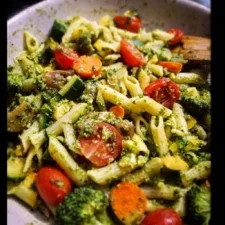
Ingredients
- 1 pound (450g) Short Pasta: We recommend varieties like Fusilli, Penne, or Rotini. The twists and ridges are perfect for catching and holding onto the rich pesto sauce and small pieces of vegetables, ensuring a flavorful bite every time.
- 1 cup Basil Pesto: Use a high-quality store-bought pesto for ultimate convenience, or your favorite homemade recipe. This is the heart of the dish, providing a powerful punch of basil, garlic, pine nuts, and Parmesan flavor.
- 2 tablespoons Olive Oil: A good quality extra virgin olive oil is preferred for sautéing the vegetables. It adds a foundational, fruity, and slightly peppery note that complements the other ingredients beautifully.
- 1 large Yellow Onion, chopped: This forms the aromatic base of our vegetable medley. When sautéed, it becomes sweet and translucent, adding a deep layer of flavor that you can’t get otherwise.
- 3-4 cloves Garlic, minced: Freshly minced garlic provides a pungent, savory kick that is essential in Italian-inspired cooking. Be careful not to burn it, as it can turn bitter.
- 1 Red Bell Pepper, chopped: Adds a wonderful sweetness, a vibrant splash of color, and a satisfyingly crisp-tender texture to the pasta.
- 1 Zucchini, chopped: Zucchini brings a mild, slightly sweet flavor and a soft texture that absorbs the pesto sauce wonderfully. It also adds a dose of healthy greens.
- 1 cup Cherry or Grape Tomatoes, halved: These little gems burst with sweetness and a touch of acidity when cooked, creating small pockets of juicy flavor that cut through the richness of the pesto.
- 1/2 cup Grated Parmesan Cheese: For mixing into the pasta and for garnish. It adds a salty, nutty, and savory (umami) flavor that melts into the sauce, making it extra delicious and cohesive.
- Salt and Black Pepper, to taste: Essential for seasoning at every stage. Salting the pasta water is crucial, and a final seasoning of the entire dish brings all the flavors together.
- 1 cup Reserved Pasta Water: This starchy, cloudy water is the secret ingredient to creating a silky, restaurant-quality sauce that clings perfectly to the pasta instead of being oily or dry.
Instructions
- 1
Boil and Salt the Water: Fill a large pot or Dutch oven with at least 4-6 quarts of water. Bringing a large volume of water to a boil is key for cooking pasta evenly. Once the water reaches a rolling boil, add a generous amount of salt (about 1-2 tablespoons). This is your only opportunity to season the pasta itself from the inside out, and it makes a significant difference in the final taste of the dish.
- 2
Cook the Pasta: Add the pound of your chosen short pasta to the boiling salted water. Stir it immediately for the first 1-2 minutes to prevent the pieces from sticking together. Cook according to the package directions, but aim for “al dente,” which means “to the tooth.” The pasta should be tender but still have a slight, firm bite in the center. It will continue to cook slightly when mixed with the hot vegetables and sauce.
- 3
Sauté the Aromatics: While the pasta is cooking, heat the 2 tablespoons of olive oil in a large, deep skillet or pan over medium heat. Once the oil shimmers, add the chopped yellow onion. Sauté for 3-4 minutes until it becomes soft and translucent. Add the minced garlic and cook for another minute until fragrant. Be vigilant during this step, as garlic can burn quickly, which would impart a bitter taste to the dish.
- 4
Cook the Vegetables: Add the chopped red bell pepper and zucchini to the skillet with the onions and garlic. Season the vegetables with a pinch of salt and black pepper. Continue to sauté for 5-7 minutes, stirring occasionally. You want the vegetables to be crisp-tender—cooked through but still retaining a slight bite and their vibrant color.
- 5
Add the Tomatoes: Add the halved cherry tomatoes to the skillet during the last 2 minutes of cooking the other vegetables. You just want to warm them through until they begin to soften and slightly release their juices. Overcooking them will result in a mushy texture.
- 6
Reserve Pasta Water and Drain Pasta: Just before your pasta is perfectly al dente, use a mug or a heat-proof measuring cup to carefully scoop out about 1 to 1.5 cups of the starchy cooking water. This liquid gold is crucial for the next step. Immediately drain the pasta in a colander. Do not rinse the pasta; the starches clinging to its surface will help the pesto sauce adhere beautifully.
- 7
Combine and Create the Sauce: Add the drained pasta directly into the skillet with the sautéed vegetables. Turn the heat down to low. Add the cup of basil pesto and about half of the reserved pasta water (start with 1/2 cup). Use tongs to toss everything together thoroughly, ensuring every piece of pasta and every vegetable is coated in the pesto.
- 8
Emulsify and Finish: Continue to toss the pasta over low heat. If the sauce looks too thick or dry, add another splash of the reserved pasta water, a little at a time, until it reaches your desired consistency. The starches in the water will help the oil from the pesto emulsify, creating a creamy, non-greasy sauce that clings to the pasta. Stir in the 1/2 cup of grated Parmesan cheese. The cheese will melt into the sauce, adding richness and flavor.
- 9
Taste and Serve: Remove the pan from the heat. Give the pasta one final taste and adjust the seasoning with more salt and pepper if needed. Serve immediately in warm bowls, garnished with extra grated Parmesan cheese and fresh basil leaves if desired.
Cook it from the original
This recipe comes from betterhomerecipes.com. Their page has the author’s own photos, notes and tips — the best place to cook it from.
Open the recipe on betterhomerecipes.com