
Whole Wheat Bread
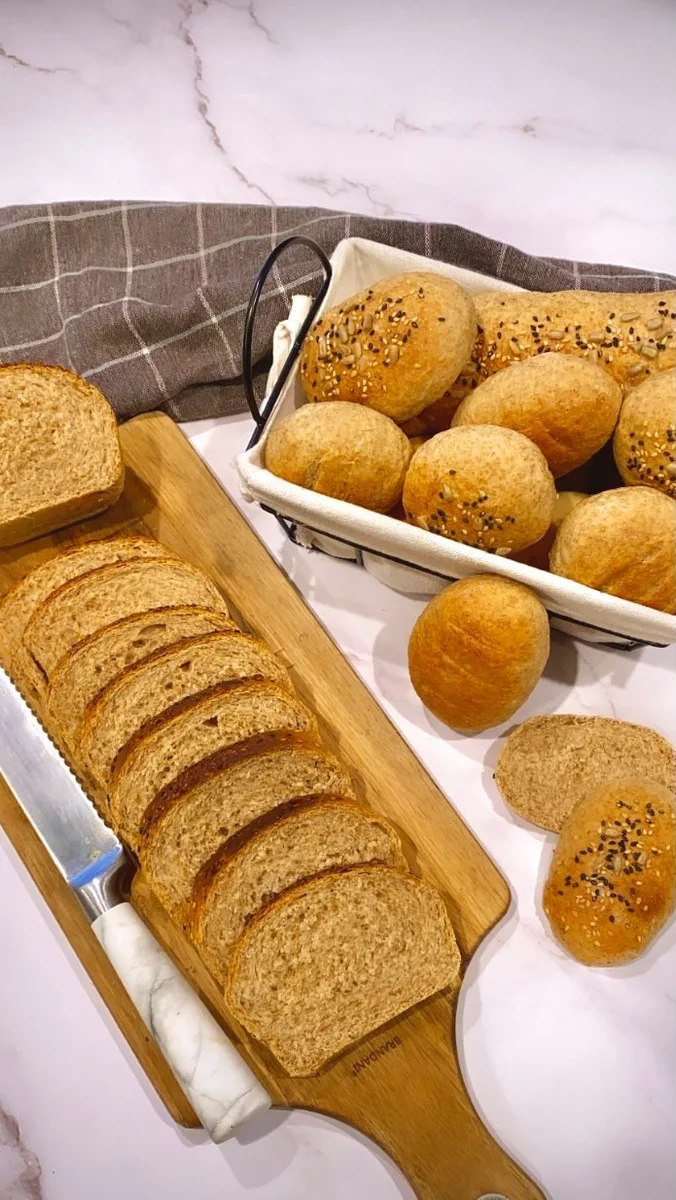
This whole wheat bread dough combines wholemeal flour, yeast and oil for a soft, versatile base. The method is quick to mix, with a short rise before the dough is ready to shape and bake.
Ingredients
- 600 g (5 cups)wholemeal flour
- 480 ml (2 cups)warm water or warm milk
- 120 ml (½ cup)olive oil or vegetable oil
- 18 g (2 tbsp)yeast
- 25 g (2 tbsp)sugar or honey
- 10 g (2 tsp)salt
Instructions
- 1
Mix the starter
Put the warm water or milk, sugar or honey, yeast, salt and 2 cups of flour in a bowl. Mix until combined, then leave for 10 minutes, until doubled in size.
- 2
Form the dough
Add the oil and the remaining 3 cups of flour, gradually or all at once. Mix until a soft dough forms.
- 3
Rest if desired
The dough can be used straight away; for a softer dough, leave it to rest for a further 10 minutes before using.
What is whole wheat bread?
Whole wheat bread is made with flour milled from the whole wheat grain, giving it a deeper flavour and more substantial texture than bread made with refined white flour. It is a familiar everyday staple in many food traditions, with recipes varying from dense loaves to softer rolls.
This version makes a simple, oil-enriched dough with a brief initial rise. It is presented as a versatile dough, though the recipe does not include instructions for shaping or baking it.
Nutrition and macros by portion
The nutrition label shows one serving as written: 774 calories, 21g protein, 114g carbs, 27g fat.
| Portion | Adjustment | kcal | Protein | Carbs | Fat |
|---|---|---|---|---|---|
| Lighter | Use less oil | 542 kcal | 15g | 80g | 19g |
| This serving | As written | 774 kcal | 21g | 114g | 27g |
| Hungry | Serve a larger slice | 1161 kcal | 32g | 171g | 41g |
Most of the carbohydrates and fibre come from the wholemeal flour, while the oil provides most of the fat and the flour contributes much of the protein. Pair a portion with a protein-rich filling and vegetables for a more balanced plate.
Choosing the liquid and flour
Liquid choice: warm water keeps the dough straightforward, while warm milk can give it a richer, softer character. Use liquid that feels warm rather than hot, as excessive heat can affect the yeast.
Flour: wholemeal flour absorbs liquid readily and gives the dough its characteristic flavour. Add it as directed, then judge the dough by its softness rather than adding extra flour automatically.
Why the first rest matters
Yeast mixture: mixing the yeast with liquid, sweetener, salt and part of the flour gives it a chance to start working before the rest of the flour goes in. The recipe calls for a 10-minute rest and says the mixture should double in size.
Temperature: a comfortably warm liquid helps the yeast get started. If the mixture has not expanded after 10 minutes, give it more time in a warm spot rather than assuming it is ready.
Getting a soft dough
Flour addition: the method allows the last 3 cups of flour to go in gradually or all at once. Adding it gradually makes it easier to stop when the dough is soft and workable.
Oil: the oil is mixed in with the remaining flour. The recipe offers olive oil or vegetable oil, so either can be used according to the flavour you prefer.
What the dough should feel like
Texture: the stated cue is a soft dough, not a firm, dry mass. Wholemeal flour can continue absorbing moisture as it sits, so avoid correcting a slightly tacky dough with a large extra addition of flour.
Rest: the additional 10-minute rest is optional and is suggested for a softer dough. The recipe does not specify a second rise or a baking time.
Using and serving the bread
Shaping and baking: this recipe says the dough is ready to use, but does not give a shape, oven temperature or bake time. Choose a separate baking method suited to the form you want, and follow its doneness cues.
Serving: once baked, this bread works well alongside soup or a salad, or as the base for a sandwich. Let a loaf cool before slicing so its crumb has time to settle.
Recipe notes & tips
- Measure the flour consistently, as tightly packed cups can make the dough too dry.
- Check that the liquid is warm, not hot, before mixing it with the yeast.
- Watch for the mixture to expand during its 10-minute rest rather than relying on the clock alone.
- Add the final flour gradually if you want more control over the dough's softness.
- Allow a baked loaf to cool before cutting for neater slices.
Variations
- Use milk: choose warm milk instead of water for a richer dough.
- Choose honey: use honey in place of sugar as the recipe allows.
- Switch the oil: use vegetable oil instead of olive oil for a milder flavour.
- Make rolls: shape the prepared dough into individual pieces, using a suitable baking method.
- Add seeds: knead seeds into the dough for extra texture.
Common mistakes to avoid
- Hot liquid: it can interfere with the yeast; use liquid that feels warm rather than hot.
- Too much flour: the dough can become firm and dry; add the last 3 cups gradually and stop when it is soft.
- Skipping the first rest: the yeast mixture may not have time to expand; leave it for the stated 10 minutes.
- Expecting a full baking method: none is provided here; use a separate method for shaping, oven temperature and bake time.
- Slicing too soon: the crumb can compress while hot; let the baked bread cool before cutting.
How to store
Store baked bread in an airtight container or bag at room temperature for about 2–3 days. Freeze it for longer storage, and thaw before serving; reheat slices briefly in a toaster or warm oven.
Frequently asked questions
Can I use water instead of milk?
Yes. The recipe lists warm water and warm milk as alternatives. Water gives a simpler dough, while milk can make it richer.
Can I use honey instead of sugar?
Yes, the ingredient list allows either sugar or honey. Use the same stated amount.
Does the dough need to rise after mixing?
The recipe specifies a 10-minute rest for the first mixture and says the dough can be used straight away. It suggests an optional further 10-minute rest for a softer dough, but gives no other rise time.
What temperature should I bake it at?
The supplied method does not state an oven temperature, shape or baking time. Use a separate bread-baking method suited to the loaf or rolls you plan to make.
Can I prepare the dough in advance?
The recipe does not include instructions for refrigerating or making the dough ahead. For best results, follow the method and use it as directed, or use a separate make-ahead bread method.
Cook it from the original
This recipe comes from fooooods.com. Their page has the author’s own photos, notes and tips — the best place to cook it from.
Open the recipe on fooooods.com