
Spinach Feta Rolls
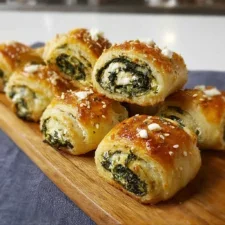
Spinach feta rolls wrap a savoury, dill-scented filling in crisp, flaky puff pastry. They make a handy warm snack or a shareable appetiser, and chilling the rolled pastry helps keep the spirals neat.
Ingredients
- 280 g (10 oz)frozen chopped spinach
- 2 sheets, about 450 g total (1 lb)puff pastry
- 225 g (8 oz)feta cheese
- 1 mediumyellow onion
- 3 clovesgarlic
- 1large egg
- 15 g (¼ cup), choppedfresh dill
- Zest of 1lemon
- 15 ml (1 tablespoon)olive oil
- 2.5 ml (½ teaspoon), freshly groundblack pepper
- 18 g (2 tablespoons), optionalsesame seeds or poppy seeds
Instructions
- 1
Squeeze the spinach
Put the thawed spinach in a clean kitchen towel, cheesecloth or several layers of sturdy paper towel. Gather and twist the cloth, squeezing over a sink or bowl until no more liquid comes out. Set the spinach aside.
- 2
Cook the aromatics
Heat 15 ml (1 tablespoon) olive oil in a medium frying pan over medium heat. Add the finely chopped onion and cook, stirring occasionally, for 5–7 minutes until soft and translucent. Stir in the minced garlic and cook for 1 minute, taking care not to let it burn. Take the pan off the heat and let the mixture cool for a few minutes.
- 3
Mix the filling
Put the squeezed spinach in a large bowl and crumble the feta over it. Add the cooled onion and garlic, chopped dill and lemon zest. Lightly beat the egg in a small bowl, then add about three-quarters to the spinach mixture and reserve the rest for the egg wash. Add the black pepper and mix until the filling is evenly combined and cohesive.
- 4
Fill the pastry
Lightly flour the work surface and unfold one thawed pastry sheet. If needed, gently roll it into a rectangle about 25 × 30 cm (10 × 12 inches), with a long side facing you. Spread half the filling over the pastry, leaving a 2.5 cm (1-inch) border clear along the far long edge.
- 5
Roll and seal
Starting at the long edge nearest you, roll the pastry tightly around the filling. Brush the clear edge lightly with water, then press it against the roll to seal.
- 6
Make the second roll
Repeat the filling, rolling and sealing process with the second pastry sheet and the remaining filling.
- 7
Chill the logs
Wrap each log in cling film and chill in the fridge for at least 30 minutes, or in the freezer for 15–20 minutes, until firm enough to slice cleanly.
- 8
Heat the oven
While the logs chill, preheat the oven to 200°C (400°F). Line two large baking trays with baking paper.
- 9
Slice the rolls
Take one chilled log from the fridge and use a sharp serrated or chef’s knife to cut it into rounds about 2 cm (¾ inch) thick. Use a gentle sawing motion rather than pressing straight down.
- 10
Arrange and glaze
Place the rounds cut-side up on the prepared trays, leaving about 5 cm (2 inches) between them. Mix 5 ml (1 teaspoon) water into the reserved beaten egg and brush it over the tops and sides of the rolls. Sprinkle with sesame or poppy seeds if using.
- 11
Bake until golden
Bake for 20–25 minutes, until the pastry is puffed, deeply golden on top and crisp underneath. Rotate the trays halfway through baking if needed for even cooking.
- 12
Cool and serve
Remove the trays from the oven and leave the rolls to cool on them for 5–10 minutes. Serve warm or at room temperature.
What are spinach feta rolls?
These are pastry spirals filled with spinach, feta and herbs, drawing on the familiar Greek pairing found in spanakopita. Instead of layering pastry around the filling, this version rolls it into logs and slices them into individual portions.
The combination works because salty feta and aromatic dill give the spinach plenty of flavour, while lemon zest adds a fresh note. Puff pastry makes the rolls crisp and flaky when the filling is well drained.
Nutrition and macros by portion
The nutrition label shows one serving as written: 130 calories, 0g protein, 0g carbs, 0g fat.
| Portion | Adjustment | kcal | Protein | Carbs | Fat |
|---|---|---|---|---|---|
| Lighter | Smaller rolls, extra salad | 91 kcal | 0g | 0g | 0g |
| This serving | As written | 130 kcal | 0g | 0g | 0g |
| Hungry | Larger portion | 195 kcal | 0g | 0g | 0g |
Most of the carbohydrates come from the puff pastry, while its pastry fat and the olive oil contribute much of the fat. Feta and egg provide most of the protein, alongside smaller amounts from the pastry and spinach. Pair a serving with a generous salad or vegetables for a more balanced plate.
Get the spinach properly dry
Thawed frozen spinach holds a surprising amount of water, which can make the pastry damp beneath the filling. Squeeze it firmly in a clean towel until liquid stops coming out.
Frozen chopped spinach is convenient and distributes evenly through the filling. If you use another form of spinach, prepare and drain it before mixing it in.
Build a balanced filling
Cook the onion until soft and translucent, then add the garlic just for the final minute so it becomes fragrant without burning. Let the mixture cool before combining it with the spinach and feta.
Feta brings plenty of saltiness, so the recipe relies on black pepper rather than adding salt. Dill and lemon zest keep the cheese-rich mixture tasting bright.
Keep the pastry workable
Thaw the pastry according to its packet instructions, usually in the fridge, and handle it while it is pliable but still cool. If it becomes warm and sticky, pause and chill it briefly before continuing.
Roll each sheet snugly around its filling, then seal the far edge with a little water. Chilling the finished logs firms the pastry and filling, making it easier to cut rounds without flattening them.
Look for crisp, golden layers
Arrange the slices cut-side up with space between them so the pastry has room to puff. Brush the exposed pastry with egg wash for a glossy, browned finish.
They are ready when the pastry is puffed and deeply golden on top, with a crisp base. Let them stand for 5–10 minutes on the tray so the filling and pastry settle before serving.
Serve them warm or at room temperature
These rolls work as a snack or appetiser, either fresh from the oven or cooled to room temperature. A simple green salad or sliced tomatoes make an easy accompaniment.
For a more substantial meal, serve them alongside soup or a salad with beans. The pastry is richest when freshly baked, so add lighter, fresh sides to balance the plate.
Recipe notes & tips
- Thaw the pastry in the fridge according to the packet directions.
- Squeeze the spinach until no more liquid comes out to help keep the pastry crisp.
- Let the cooked onion and garlic cool before mixing the filling.
- Use a light hand with flour when rolling so excess flour does not get trapped in the pastry.
- Chill the logs before slicing and use a gentle sawing motion for tidy rounds.
- Rotate the trays halfway through baking if the rolls are browning unevenly.
Variations
- Add nutmeg: Grate a little into the filling for a warm, savoury note.
- Use spring onions: Replace the yellow onion with finely chopped spring onions and soften them before adding the garlic.
- Change the herbs: Replace some or all of the dill with chopped parsley.
- Add seeds: Sprinkle sesame or poppy seeds over the egg wash before baking.
- Make smaller bites: Slice the chilled logs into thinner rounds and start checking them earlier for doneness.
Common mistakes to avoid
- Wet spinach: Excess liquid can soften the pastry; squeeze the thawed spinach thoroughly.
- Hot aromatics: Warm onion and garlic can soften the pastry or affect the egg; let them cool before mixing.
- Overfilled pastry: Too much filling makes the logs difficult to roll and seal; spread half evenly over each sheet.
- Warm pastry: Soft pastry is hard to slice neatly; chill the logs until firm.
- Crowded trays: Rolls need space to puff and brown; leave about 5 cm between them.
- Undercooked bases: Pale, soft bottoms need more time; bake until the pastry is crisp underneath.
How to store
Once cool, store the rolls in an airtight container in the fridge for up to 3 days. Reheat on a baking tray in a 180°C oven until warmed through and crisp again; avoid the microwave if you want to keep the pastry flaky.
Frequently asked questions
Can I make the rolls ahead?
Yes. Prepare and chill the sealed logs, then slice and bake them when needed. Keep them wrapped in the fridge until ready to cut.
Can I use fresh spinach instead of frozen?
Yes, but cook it down first and squeeze out as much moisture as possible before making the filling. Measure it after it has been cooked and drained.
Why is the pastry soggy underneath?
The spinach may still have contained too much water, or the rolls may need more baking time. Squeeze the spinach thoroughly and bake until the bases are crisp.
Can I freeze the rolls?
You can freeze the sliced, unbaked rolls on a tray until firm, then transfer them to a freezer-safe container. Bake from frozen, allowing extra time and checking that the pastry is fully puffed and golden.
How do I know when they are done?
The pastry should be puffed and deeply golden on top, and crisp underneath. The recipe gives a baking time of 20–25 minutes, but check the rolls as they approach the end of that range.
Can I leave out the seeds?
Yes. The sesame or poppy seeds are optional and can simply be omitted.
Cook it from the original
This recipe comes from betterhomerecipes.com. Their page has the author’s own photos, notes and tips — the best place to cook it from.
Open the recipe on betterhomerecipes.com