
Bibimbap
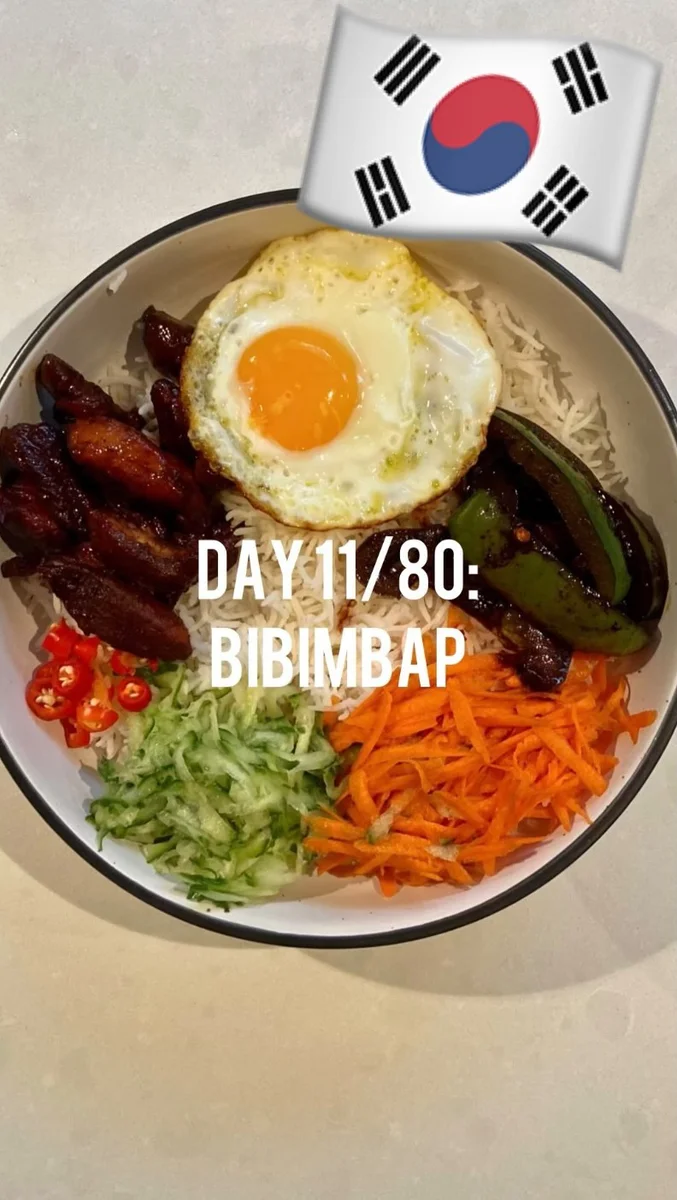
Bibimbap is a Korean-style bowl of rice topped with vegetables, chilli sauce and other toppings, mixed together before eating. This quick version uses leftover stir-fried chicken and capsicum for an easy way to turn cooked ingredients into a colourful meal.
Ingredients
- 160 g (1 cup)cooked rice
- ½carrot, grated
- ½cucumber, grated
- 2red chillies, sliced
- leftover; amount not specifiedstir-fried chicken and capsicum
- 30 g (2 tbsp)gochujang
- 10 ml (2 tsp)white vinegar
- 1fried egg
- to tastesesame seeds
Instructions
- 1
Add the rice
Put the cooked rice into a bowl.
- 2
Arrange the toppings
Top the rice with the grated carrot and cucumber, sliced chillies, leftover stir-fried chicken and capsicum, and fried egg.
- 3
Mix the sauce
Stir the gochujang and white vinegar together to make a sauce.
- 4
Finish the bowl
Drizzle the sauce over the bowl, mix everything together and enjoy.
What is bibimbap?
Bibimbap is a Korean dish whose name refers to mixed rice. It is commonly served as a bowl of rice with toppings arranged over it, then mixed together before eating.
This pared-back version pairs grated vegetables and leftover stir-fried chicken and capsicum with a fried egg and a tangy gochujang sauce.
Nutrition and macros by portion
The nutrition label shows one serving as written: 165 calories, 14g protein, 16g carbs, 5g fat.
| Portion | Adjustment | kcal | Protein | Carbs | Fat |
|---|---|---|---|---|---|
| Lighter | More cucumber, less rice | 115 kcal | 10g | 11g | 4g |
| This serving | As written | 165 kcal | 14g | 16g | 5g |
| Hungry | Add more cooked rice | 248 kcal | 21g | 24g | 8g |
The rice supplies most of the carbohydrates, while the egg and chicken contribute protein and the egg and gochujang contribute some fat. The amounts of leftover chicken and capsicum are unspecified, so the nutrition estimate is approximate; balance the bowl with extra vegetables or a side salad.
Build a balanced bowl
Rice base: cooked rice gives the toppings a warm, filling foundation. The recipe lists 1 cup for 4 servings, so divide it evenly if making all four bowls.
Fresh toppings: carrot, cucumber and chillies bring contrasting crunch and heat. Grating the carrot and cucumber makes them easy to mix through the rice.
Use the leftovers well
Chicken and capsicum: use the leftover stir-fried mixture as listed, making sure it is suitable to eat and heated through if serving it warm. The recipe does not specify an amount, so divide it between the bowls to suit what you have.
Egg: the fried egg adds a rich topping. With one egg listed for four servings, cut or divide it between bowls if you are serving the full recipe to four.
Get the sauce right
Gochujang: this Korean chilli paste brings savoury depth and heat. Stir it thoroughly with the vinegar so the sauce is easier to drizzle.
White vinegar: it sharpens the sauce and balances the paste. Taste the mixture before adding it if you prefer a milder chilli flavour.
Mix for the best texture
Keep the grated vegetables and sliced chillies distinct on top until serving, then mix the bowl as the method directs. This lets each portion have a little of every topping.
Scatter sesame seeds over the finished bowl to taste. Since the method gives no cooking time, the dish is ready once the toppings are assembled and the sauce is mixed in.
Serving ideas
Serve the bowl as a complete meal, or add extra cooked rice if you want a more substantial serving. A side of additional vegetables can also help stretch the leftover chicken across more portions.
The chilli level depends on the gochujang and the two fresh chillies. For a gentler bowl, use fewer chilli slices and add them gradually.
Recipe notes & tips
- Use cooked rice that is ready to serve before assembling the bowl.
- Grate the carrot and cucumber shortly before serving for their best texture.
- Slice the chillies finely so their heat spreads through the bowl.
- Mix the gochujang and vinegar until the sauce is smooth enough to drizzle.
- Add the sauce gradually and adjust to your preferred level of heat.
Variations
- Milder bowl: use fewer sliced chillies and add them to taste.
- Extra vegetables: add more grated carrot or cucumber to the toppings.
- More rice: serve with additional cooked rice for a larger bowl.
- No egg: leave out the fried egg if you do not want it.
- Sesame finish: sprinkle sesame seeds over each bowl just before serving.
Common mistakes to avoid
- Uneven portions: divide the listed rice and toppings evenly if serving four.
- Too much heat: add the chillies and sauce gradually, tasting as you go.
- Lumpy sauce: stir the gochujang and vinegar together thoroughly before drizzling.
- Cold leftover chicken: heat it through if you want a warm topping.
- Overmixing early: keep the toppings separate until you are ready to eat.
How to store
Store leftover components promptly in covered containers in the fridge and use within 2 days. For the best texture, keep the vegetables and sauce separate from the rice and toppings, then reheat the rice and chicken until hot before assembling.
Frequently asked questions
Can I use freshly cooked rice?
Yes. Cook the rice first, then add it to the bowl as directed.
How spicy is this bibimbap?
It depends on the gochujang and the fresh chillies. Use fewer chilli slices and add the sauce gradually for a milder bowl.
Can I make the sauce ahead?
Yes. Mix the gochujang and vinegar ahead and keep the sauce covered in the fridge until serving.
What can I use instead of leftover chicken?
The recipe specifies leftover stir-fried chicken and capsicum. You can omit that topping, but the result will differ from the listed version.
Does the fried egg go on top or get mixed in?
Place it on top with the other toppings, then mix the whole bowl before eating.
Cook it from the original
This recipe comes from fooooods.com. Their page has the author’s own photos, notes and tips — the best place to cook it from.
Open the recipe on fooooods.com