
Fasulyeh And Rice
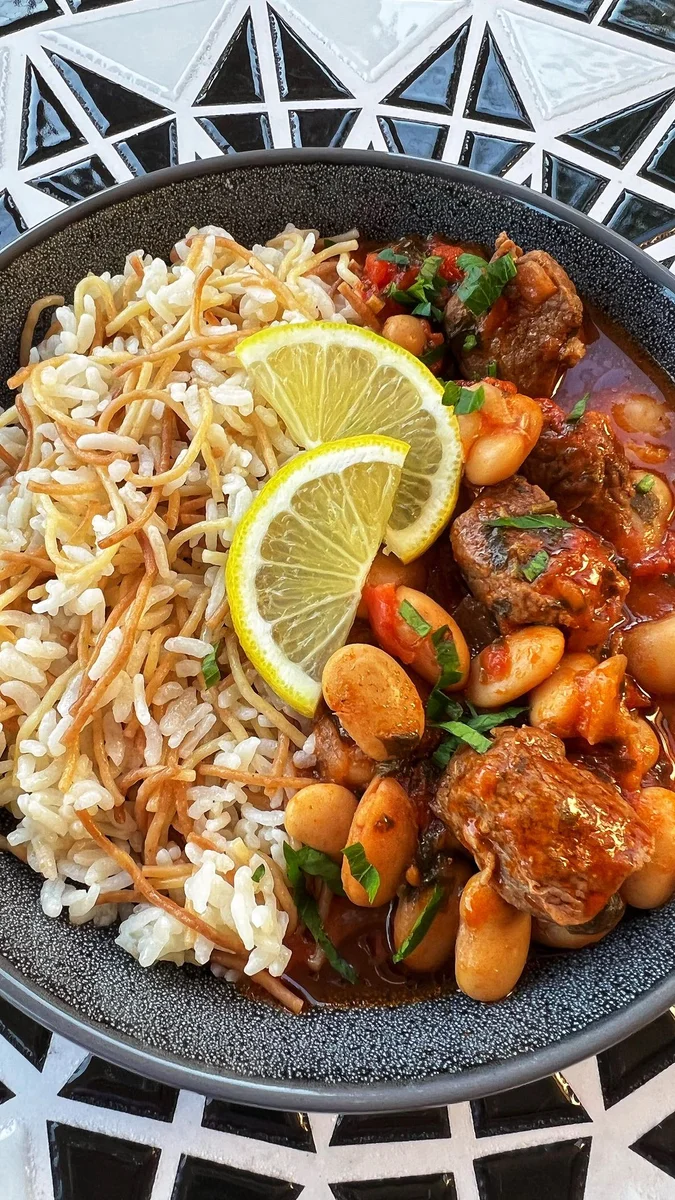
Fasulyeh and rice is a hearty tomato-based stew of lamb and butter beans, served with vermicelli rice and lemon. It is a slow-simmered, one-pot meal that gives the lamb time to become tender and the flavours to mingle.
Ingredients
- 2brown onions, finely diced
- 4 clovesgarlic, freshly crushed
- 30 g (2 cups)fresh coriander, chopped
- 1 kglamb shoulder, fat trimmed and cut into cubes
- 1 candiced tomatoes
- 1.5 litrestomato juice
- 15 ml (1 tbsp)salt
- 5 ml (1 tsp)pepper
- 4 cansbutter beans, or other beans of your choice
- 15 ml (1 tbsp)chilli sauce
- 30 ml (2 tbsp)olive oil
Instructions
- 1
Fry the aromatics
Heat the olive oil in a large pot. Fry the onion and garlic until fragrant, then add the coriander and cook for about 1 minute. Add the lamb and fry for another minute.
- 2
Add the liquids
Stir in the chilli sauce, canned tomatoes, salt and pepper, then pour in the tomato juice.
- 3
Simmer the stew
Bring the mixture to a boil, then cover and simmer over low heat for about 2 hours. A longer simmer will make the lamb more tender.
- 4
Serve with rice
Serve with vermicelli rice and a squeeze of lemon.
What is fasulyeh?
Fasulyeh is a name used for bean dishes in parts of the Middle East, where beans are often cooked in a tomato-based sauce. This version pairs butter beans with lamb and is served alongside vermicelli rice.
The long, gentle simmer lets the lamb soften while the tomato juice forms the stew’s base. Coriander and chilli sauce add freshness and heat.
Nutrition and macros by portion
The nutrition label shows one serving as written: 900 calories, 57g protein, 64g carbs, 43g fat.
| Portion | Adjustment | kcal | Protein | Carbs | Fat |
|---|---|---|---|---|---|
| Lighter | Lean lamb, less rice | 630 kcal | 40g | 45g | 30g |
| This serving | As written | 900 kcal | 57g | 64g | 43g |
| Hungry | Larger rice portion | 1350 kcal | 86g | 96g | 65g |
Lamb provides most of the protein and contributes fat, while the beans and vermicelli rice supply much of the carbohydrate. Olive oil adds further fat, and the exact values will vary with the lamb and canned ingredients. Serve a moderate scoop of rice alongside a generous portion of beans and stew for a balanced plate.
Building the flavour
Onion and garlic: Fry them in olive oil until fragrant before adding the other ingredients. This gives the stew a savoury starting point.
Coriander: Add it after the onion and garlic and cook for about a minute, as directed. The brief frying helps its aroma carry through the stew.
Choosing the lamb and beans
Lamb shoulder: Trimming the fat and cutting the meat into cubes prepares it for the long simmer. The recipe relies on time over low heat to tenderise the lamb.
Butter beans: Their creamy texture suits the tomato sauce, while the recipe also allows other beans. If using canned beans, drain them before adding them to the pot.
Getting the simmer right
Low heat: Once the stew boils, lower the heat and keep the pot covered. The liquid should simmer gently rather than bubble vigorously.
Timing: The stated cooking time is about 2 hours, with a longer simmer suggested for more tender lamb. Check that the lamb is tender before serving.
Serving with vermicelli rice
Rice: Serve the stew with vermicelli rice to make a filling meal. The rice is an accompaniment rather than part of the listed stew ingredients.
Lemon: Add a squeeze just before eating for a bright contrast to the rich lamb and tomato sauce.
Adjusting the seasoning
Salt: The recipe adds salt before simmering, but canned beans and tomatoes can vary in saltiness. Taste the finished stew and adjust only if needed.
Chilli sauce: Its heat and salt level depend on the product used. Start with the listed amount and taste before adding anything extra.
Recipe notes & tips
- Cut the lamb into similarly sized cubes so it cooks evenly.
- Keep the heat low after bringing the stew to a boil.
- Stir occasionally during the simmer to prevent sticking.
- Taste near the end before adjusting the salt, especially if the canned ingredients are salty.
- Serve the lemon separately so everyone can add it to taste.
Variations
- Use other beans: Swap the butter beans for another type of canned bean.
- Adjust the heat: Use less chilli sauce for a milder stew.
- Add more lemon: Serve extra wedges for a sharper finish.
- Change the rice: Serve with plain rice if you do not have vermicelli rice.
- Make it ahead: Reheat the stew gently before serving with freshly prepared rice.
Common mistakes to avoid
- High simmer: A vigorous boil can make the lamb less tender; keep the covered pot at a gentle simmer.
- Crowded browning: If the lamb is packed tightly into the pot, it may not fry evenly; brown it in batches if needed.
- Adding extra salt early: Canned ingredients may already be salty; taste the stew before adding more.
- Skipping the tenderness check: Two hours is approximate; continue simmering if the lamb is not yet tender.
- Overcooking the coriander: Fry it for about a minute as directed so it does not spend too long in the initial frying stage.
How to store
Cool leftover stew promptly and store it in a covered container in the fridge for up to 3 days. Reheat gently in a saucepan until steaming hot, adding a splash of water if it has thickened; store rice separately where possible.
Frequently asked questions
Can I use a different type of bean?
Yes. The ingredient list allows any beans you like, so use a similar quantity of another kind.
How do I know when the lamb is tender?
Check a cube with a fork: it should be easy to pierce and bite. If it is still firm, continue simmering gently.
Can I make the stew less spicy?
Yes. Reduce the chilli sauce or leave it out, then taste the stew before serving.
Should I drain the canned beans?
The recipe does not specify, but draining and rinsing canned beans can help you control the saltiness and thickness of the stew.
Can I prepare it in advance?
Yes. The stew can be cooked ahead and reheated gently; prepare the vermicelli rice separately for serving.
Cook it from the original
This recipe comes from fooooods.com. Their page has the author’s own photos, notes and tips — the best place to cook it from.
Open the recipe on fooooods.com