
Cheesy Chicken Pasta
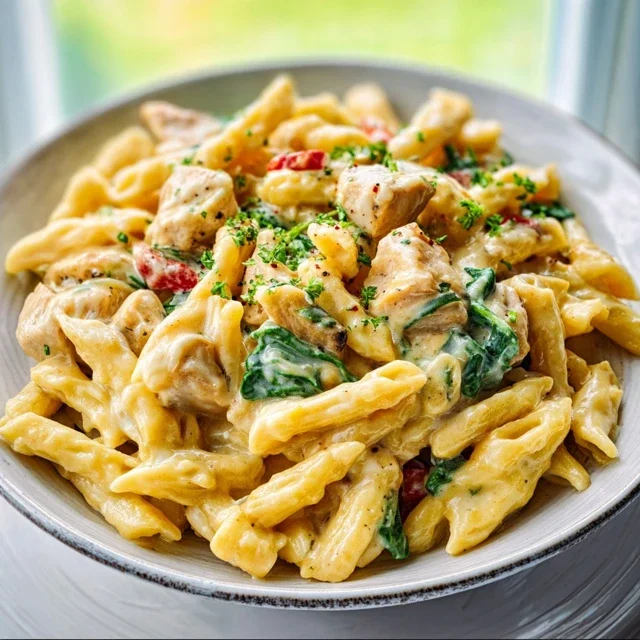
This American-style cheesy chicken pasta combines tender chicken and penne with a rich sauce made from cheddar, Gruyère and cream. It comes together in about 35 minutes, making it a comforting option for a weeknight dinner.
Ingredients
- 454 g (1 lb)penne pasta, or another short pasta such as rigatoni or rotini
- 680 g (1.5 lb)boneless, skinless chicken breast, cut into 2.5 cm (1-inch) cubes
- 57 g (4 tablespoons), dividedunsalted butter
- 30 g (¼ cup)plain flour
- 3 clovesgarlic, minced
- 480 ml (2 cups)low-sodium chicken stock
- 240 ml (1 cup)double cream
- 225 g (2 cups)sharp Cheddar, freshly grated
- 100 g (1 cup)Gruyère or Monterey Jack, freshly grated
- 5 g (1 teaspoon), plus more for the pasta watersalt
- ½ teaspoonblack pepper
- ¼ teaspoonpaprika or mustard powder
- 8 g (2 tablespoons)fresh parsley, chopped, for garnish
Instructions
- 1
Cook the pasta
Bring a large pan of well-salted water to the boil. Cook the pasta according to the packet instructions until al dente, then drain and set aside.
- 2
Season the chicken
While the pasta cooks, pat the chicken cubes dry with kitchen paper. Season generously with salt, pepper and paprika.
- 3
Sear the chicken
Melt 1 tablespoon of butter in a large Dutch oven or heavy-based pot over medium-high heat. Arrange the chicken in a single layer and sear for 2–3 minutes on each side, until golden. Remove it from the pot and set aside.
- 4
Make the roux
Turn the heat down to medium and add the remaining 3 tablespoons of butter. Once melted, stir in the garlic and cook for 30 seconds, until fragrant. Whisk in the flour and cook for 1 minute, stirring constantly.
- 5
Thicken the sauce
Pour in the chicken stock gradually, whisking continuously to keep the sauce smooth. Whisk in the double cream, bring to a gentle simmer and cook for 2–3 minutes, until thickened.
- 6
Melt in the cheese
Lower the heat and add the grated cheeses a handful at a time, stirring until each addition melts before adding the next. Keep the sauce below boiling point.
- 7
Combine everything
Taste the smooth sauce and adjust the seasoning if needed. Add the cooked pasta and chicken, including any juices that have collected, and stir gently to coat.
- 8
Serve with parsley
Serve immediately, topped with the chopped fresh parsley.
What is cheesy chicken pasta?
This is a creamy American-style pasta dish, bringing together cooked chicken, short pasta and a cheese sauce. It draws on the familiar comfort-food combination of pasta and a rich, roux-thickened sauce.
The two cheeses give the sauce both a familiar cheddar flavour and the savoury, nutty notes of Gruyère. Cooking the chicken separately also lets it brown before it is stirred through the pasta.
Nutrition and macros by portion
The nutrition label shows one serving as written: 850 calories, 0g protein, 0g carbs, 0g fat.
| Portion | Adjustment | kcal | Protein | Carbs | Fat |
|---|---|---|---|---|---|
| Lighter | Smaller pasta portion | 595 kcal | 0g | 0g | 0g |
| This serving | As written | 850 kcal | 0g | 0g | 0g |
| Hungry | Larger pasta portion | 1275 kcal | 0g | 0g | 0g |
The pasta supplies most of the carbohydrates, while butter, double cream and cheese contribute much of the fat. Chicken provides the main protein, with smaller amounts also coming from the cheese and pasta. Pair a serving with a green salad or vegetables for a more balanced plate.
Choosing the ingredients
Pasta shape: Penne, rigatoni and rotini all hold the sauce well. Cook whichever you choose just to al dente, as it will be coated in hot sauce before serving.
Cheese: Grate the cheddar and Gruyère or Monterey Jack fresh so they melt smoothly into the sauce. The recipe calls for sharp cheddar, which helps its flavour stand out alongside the cream.
Getting a smooth sauce
Roux: Stir the flour into the melted butter and cook it for a full minute, keeping it moving. Add the stock gradually while whisking to help prevent lumps.
Cheese: Turn the heat to low and add the cheese in small handfuls, letting each melt before adding more. Avoid boiling the sauce once the cheese is in, as high heat can make it grainy.
Cooking the chicken
Dry surface: Pat the chicken cubes dry before seasoning them. This helps them brown in the hot butter rather than releasing moisture straight away.
Browning: Place the pieces in a single layer and give them 2–3 minutes per side. The recipe uses these times and a golden exterior as its cue, then returns the chicken to the sauce later.
Timing the pasta and sauce
Pasta first: Start the pasta while preparing the chicken, as the method is designed for the two parts to overlap. Drain it when it is al dente and keep it ready to add to the finished sauce.
Sauce finish: The stock-and-cream mixture simmers for 2–3 minutes before the cheese goes in. Once the chicken and pasta are stirred through, serve promptly while the sauce is creamy.
What to serve alongside
Fresh side: A crisp green salad or steamed green vegetables make a refreshing contrast to the creamy sauce. Keep any dressing or seasoning simple so it does not compete with the cheese.
On the table: Serve the pasta straight from the pot with parsley scattered over the top. The recipe is a complete chicken-and-pasta main, so a light side is usually enough.
Recipe notes & tips
- Grate the cheese shortly before cooking so it is ready to add by the handful.
- Cut the chicken into evenly sized cubes to help them cook at a similar rate.
- Salt the pasta water generously, as this is the main chance to season the pasta itself.
- Keep the stock pour gradual and whisk continuously for a smoother sauce.
- Reserve the chicken juices and return them to the pot with the seared chicken.
- Serve as soon as the pasta and chicken are coated, while the sauce is smooth.
Variations
- Change the pasta: Use rigatoni or rotini instead of penne, as suggested in the recipe.
- Swap the second cheese: Use Monterey Jack in place of Gruyère for a milder flavour.
- Use mustard powder: Choose it instead of paprika for a different savoury note.
- Add vegetables: Stir in cooked broccoli or peas when combining the pasta and chicken.
- Finish with herbs: Scatter extra parsley over each serving just before it reaches the table.
Common mistakes to avoid
- Wet chicken: Pat the cubes dry before seasoning so they have a better chance of browning.
- Crowded pan: Sear the chicken in a single layer so the pieces can brown rather than steam.
- Lumpy sauce: Add the stock gradually while whisking continuously.
- Rushed roux: Cook the flour and butter for the full minute, stirring constantly.
- Boiling cheese sauce: Keep the heat low after adding the cheese to help it stay smooth.
- Overcooked pasta: Follow the packet timing and drain it at al dente, before combining it with the sauce.
How to store
Cool leftovers promptly and store them in an airtight container in the fridge for up to 3 days. Reheat gently in a saucepan over low heat, stirring in a splash of stock or milk if the sauce has thickened; avoid boiling.
Frequently asked questions
Can I use another pasta shape?
Yes. Rigatoni and rotini are named alternatives, and other short shapes can work too. Cook according to the packet directions until al dente.
Can I use Monterey Jack instead of Gruyère?
Yes. The recipe gives Monterey Jack as an alternative for the Gruyère. Grate it fresh and add it gradually over low heat.
How do I stop the cheese sauce becoming grainy?
Lower the heat before adding cheese, then stir it in a handful at a time. Do not let the sauce boil.
Can I prepare the dish ahead?
It is best served as soon as the pasta and chicken are mixed into the sauce. You can grate the cheese and cut the chicken ahead, then keep them refrigerated until cooking.
How do I know the sauce is thick enough?
After simmering the stock and cream for 2–3 minutes, it should have thickened before you add the cheese. Once the cheese melts, the sauce should be smooth and creamy.
What can I serve with cheesy chicken pasta?
Try a green salad or steamed vegetables to balance the rich sauce. The recipe is substantial enough to serve as the main dish.
Cook it from the original
This recipe comes from besthomemaderecipes.com. Their page has the author’s own photos, notes and tips — the best place to cook it from.
Open the recipe on besthomemaderecipes.com