
Poke Bowl
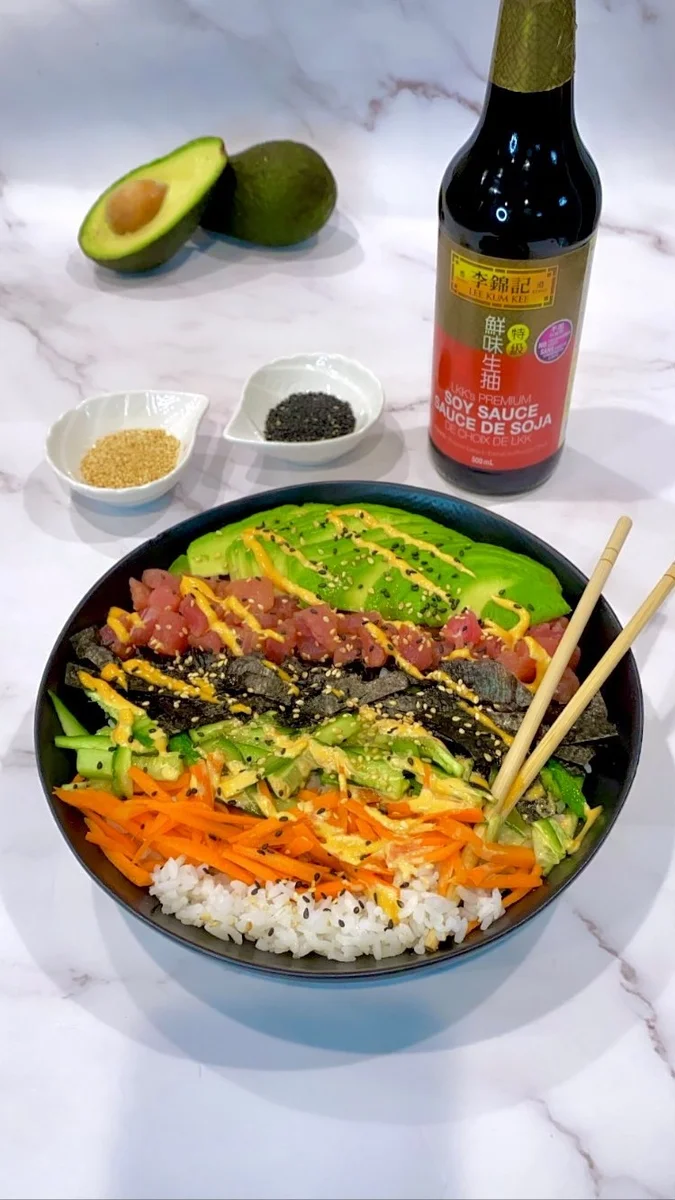
A poke bowl pairs seasoned rice with sriracha-soy tuna, crisp vegetables, avocado and nori. It makes a colourful meal with a mix of soft, creamy and crunchy textures.
Ingredients
- 190 g (1 cup)short-grain rice
- 300 ml (1¼ cups)water
- 30 ml (2 tbsp)rice vinegar
- 5 ml (1 tsp)sugar
- 2.5 ml (½ tsp)salt
- 300 gsashimi-grade ahi tuna
- 5 ml (1 tsp)sriracha
- 10 ml (2 tsp)rice vinegar
- 30 ml (2 tbsp)soy sauce
- 1carrot, thinly sliced
- 1cucumber, thinly sliced
- To tastenori seaweed, cut into small pieces
- 1avocado
- To tastetoasted sesame seeds
- To tasteLee Kum Kee premium soy sauce
- To tasteLee Kum Kee sriracha mayo
Instructions
- 1
Wash the rice
Wash the rice and leave it to soak for 15 minutes.
- 2
Start cooking
Drain the rice, put it in a pot with the hot water and bring it to the boil. Stir, then cover the pot.
- 3
Cook the rice
Cook the covered rice over the lowest heat for 10 minutes.
- 4
Mix the seasoning
While the rice cooks, combine the rice vinegar, sugar and salt, then set the mixture aside.
- 5
Season the tuna
Cut the tuna into bite-sized pieces. Mix it with the sriracha, rice vinegar and soy sauce, then set aside.
- 6
Slice the vegetables
Cut the carrot and cucumber into thin slices.
- 7
Cut the nori
Cut the nori seaweed into small pieces.
- 8
Season the rice
When the rice is cooked, mix in the rice vinegar seasoning and leave it to cool.
- 9
Assemble the bowls
Put rice in each bowl and top with the carrot, cucumber, nori, tuna and avocado. Add soy sauce and sriracha mayo, then sprinkle with sesame seeds.
- 10
Serve the bowls
Enjoy.
What is a poke bowl?
Poke is a Hawaiian dish of seasoned fish, often served over rice with toppings. Its name refers to fish cut into pieces, and the bowl format brings together the fish, rice and accompaniments in one meal.
This version combines soy-and-sriracha-seasoned ahi tuna with vinegar-seasoned rice, fresh vegetables, avocado and nori. The contrasting textures and savoury, tangy and spicy flavours make each bowl satisfying.
Nutrition and macros by portion
The nutrition label shows one serving as written: 400 calories, 27g protein, 57g carbs, 9g fat.
| Portion | Adjustment | kcal | Protein | Carbs | Fat |
|---|---|---|---|---|---|
| Lighter | Less mayo, more cucumber | 280 kcal | 19g | 40g | 6g |
| This serving | As written | 400 kcal | 27g | 57g | 9g |
| Hungry | Add extra rice | 600 kcal | 41g | 86g | 14g |
The rice supplies most of the carbohydrates, while tuna provides much of the protein. Avocado and sriracha mayo contribute fat, and the soy sauce adds sodium. For a more balanced plate, serve with extra vegetables and use the finishing sauces sparingly.
Seasoning the rice
Vinegar mixture: stir the rice vinegar, sugar and salt together before adding it to the cooked rice. Mixing it in while the rice is warm helps distribute the seasoning.
Rice texture: the recipe calls for short-grain rice, which cooks up tender and cohesive. Follow the stated low-heat cooking time and check that the grains are cooked through before seasoning.
Preparing the tuna
Small pieces: cut the tuna into bite-sized cubes so the soy, vinegar and sriracha can coat the pieces evenly.
Raw fish: use tuna sold as suitable for eating raw, keep it chilled, and prepare it with clean hands and utensils. Serve promptly after mixing.
Getting the texture right
Crisp toppings: thinly slice the carrot and cucumber so they are easy to eat alongside the rice and tuna.
Creamy finish: cut the avocado close to serving time, then add it with the other toppings. Nori and toasted sesame seeds bring a little crunch and savoury flavour.
Putting the bowls together
Layering: divide the rice between bowls, then arrange the vegetables, nori, tuna and avocado on top. This keeps the individual toppings visible and lets everyone mix their bowl as they eat.
Sauces: add the extra soy sauce and sriracha mayo to taste. Both are salty or rich, so start with a small amount and add more if needed.
What to serve with it
The bowls already include rice, fish and vegetables, so they work well as a complete meal. For a more substantial spread, serve them with a simple side of edamame or extra sliced vegetables.
Recipe notes & tips
- Rinse the rice well before soaking it to remove excess surface starch.
- Keep the tuna chilled while you prepare the rice and vegetables.
- Taste the rice seasoning before mixing it into the rice; adjust only if desired.
- Slice the vegetables evenly so they are easy to pick up with the other toppings.
- Add the finishing sauces gradually, since the tuna is already seasoned with soy sauce.
Variations
- Add edamame: scatter cooked, shelled edamame over the bowls for another topping.
- Turn up the heat: add more sriracha to the tuna or mayo to taste.
- Swap the fish: use another fish intended for raw consumption, following the same safe handling.
- Add pickled ginger: serve a little alongside the bowl for a sharp, tangy accent.
- Make it vegetarian: replace the tuna with seasoned tofu and assemble the bowls as directed.
Common mistakes to avoid
- Skipping the soak: soak the rice for the stated 15 minutes so it starts cooking evenly.
- Cooking on high heat: use the lowest heat for the 10-minute covered cooking time to reduce the chance of scorching.
- Adding seasoning before the rice is cooked: mix in the vinegar mixture after the rice has finished cooking.
- Leaving tuna warm: keep it chilled during preparation and serve it promptly.
- Overdoing the finishing sauces: add soy sauce and sriracha mayo a little at a time to avoid overpowering the other toppings.
How to store
For best quality and food safety, serve the raw tuna bowls promptly rather than storing them assembled. Keep any unused raw tuna refrigerated and follow its packaging guidance; refrigerate leftover rice and vegetables separately in covered containers and use within 1–2 days. Reheat rice until steaming hot, and add fresh toppings after reheating.
Frequently asked questions
Can I prepare the rice ahead?
Yes. Cook and season it ahead, then refrigerate it promptly in a covered container. Reheat until steaming hot or let it cool before assembling, and keep the raw tuna chilled separately.
Can I use ordinary soy sauce?
Yes. Use the soy sauce you have, and add the extra sauce at the table to suit your taste.
How spicy is this poke bowl?
The tuna gets sriracha, and the bowl is finished with sriracha mayo, so it has some heat. Use less of either, or leave the mayo off, for a milder bowl.
What does sashimi-grade tuna mean?
It is a label used for tuna intended to be eaten raw. Buy it from a trusted fishmonger, keep it cold and follow their handling advice.
Can I make the bowl without raw fish?
Yes. Use cooked tuna or another cooked protein instead, and add it after cooking. The original raw tuna preparation will no longer apply.
Cook it from the original
This recipe comes from fooooods.com. Their page has the author’s own photos, notes and tips — the best place to cook it from.
Open the recipe on fooooods.com