
Fettuccine Alfredo
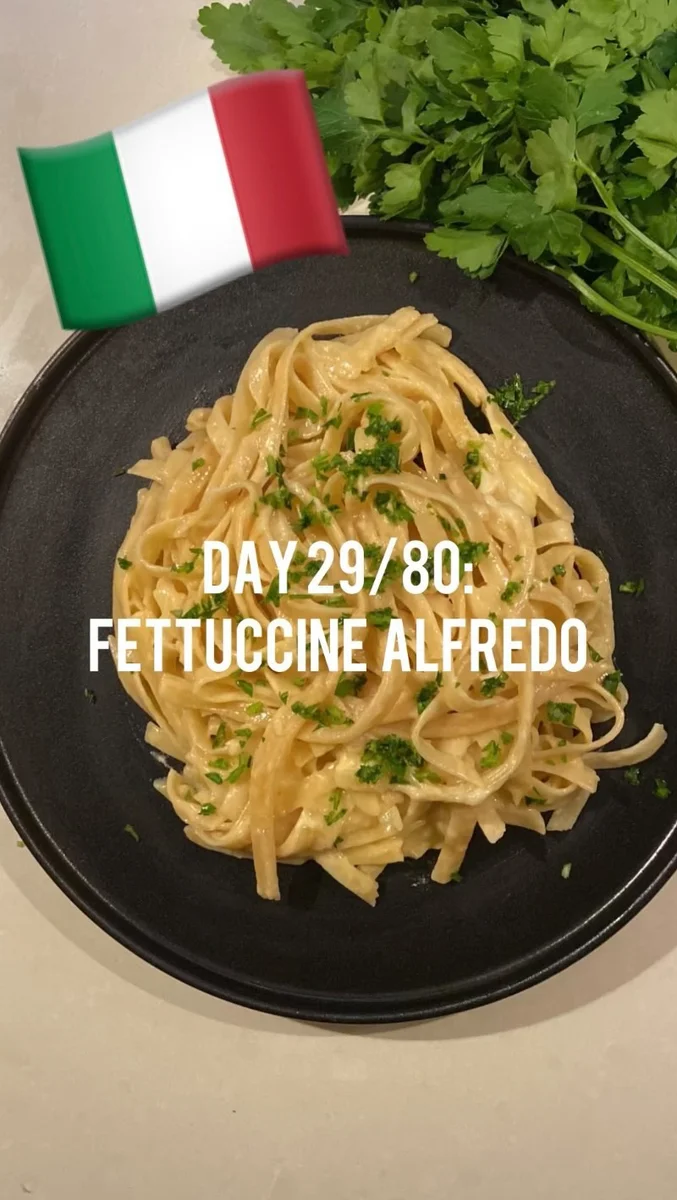
Fettuccine Alfredo is a quick pasta dish coated in a rich sauce of cream, butter and Parmesan. It makes a comforting meal from a short ingredient list, with pasta water helping the sauce cling to the noodles.
Ingredients
- 500 gcooked fettuccine
- 240 ml (1 cup)pasta water
- 300 mlthickened cream
- 4 tbspunsalted butter
- 100 g (1 cup)shredded Parmesan cheese
- to garnishparsley
- to tastesalt
Instructions
- 1
Melt the butter
Put some of the butter in a pan and let it melt.
- 2
Make the sauce
Add the thickened cream, Parmesan and pasta water to the pan.
- 3
Season and boil
Season the sauce with salt, then bring it to a boil.
- 4
Coat the pasta
Add the cooked fettuccine and stir until the pasta is combined with the sauce.
- 5
Add parsley
Sprinkle parsley over the pasta.
- 6
Serve the pasta
Serve and enjoy.
What is fettuccine Alfredo?
Fettuccine Alfredo is a pasta dish named for its broad ribbons of fettuccine and a creamy, cheese-rich coating. Its roots are in Italian cooking, though cream-based versions are especially familiar in restaurants and home kitchens outside Italy.
This version combines thickened cream, butter and Parmesan, with pasta water to bring the sauce together. It is best served straight from the pan while the sauce is warm and fluid.
Nutrition and macros by portion
The nutrition label shows one serving as written: 632 calories, 18g protein, 42g carbs, 41g fat.
| Portion | Adjustment | kcal | Protein | Carbs | Fat |
|---|---|---|---|---|---|
| Lighter | Less cream, more vegetables | 442 kcal | 13g | 29g | 29g |
| This serving | As written | 632 kcal | 18g | 42g | 41g |
| Hungry | Larger pasta portion | 948 kcal | 27g | 63g | 62g |
Most of the carbohydrates come from the fettuccine, while the cream and butter provide much of the fat; Parmesan contributes both fat and protein. Pair a portion with salad or vegetables for a more balanced plate.
The ingredients that shape the sauce
Thickened cream: its richness gives the sauce a smooth, substantial texture. Use it as listed rather than substituting a thinner milk, which would make the sauce less full-bodied.
Parmesan: shredded cheese melts into the cream and adds savoury depth. Finely grated cheese can also work, but add it gradually to help it disperse.
Pasta water: its starch helps the sauce cling to the fettuccine. Keep some aside when cooking the pasta so it is ready to use.
Bring the sauce together gently
Once the cream, cheese and pasta water are in the pan, stir as the sauce heats. A brief boil is specified in the method; avoid leaving it unattended, as cream sauces can bubble up quickly.
If the cheese gathers into clumps, lower the heat and stir until it is incorporated before adding the pasta.
Look for a coating texture
The finished sauce should coat the fettuccine rather than sit as a watery pool at the bottom of the pan. Stir thoroughly so the sauce reaches the folds and strands.
If it looks too thick, stir in a little more pasta water if available; if it looks loose, continue stirring over the heat briefly.
Use cooked pasta while it is warm
The recipe starts with cooked fettuccine, so have it ready before the sauce is finished. Warm pasta combines more easily with the cream and cheese than cold pasta straight from the fridge.
The total time is not specified, so use the sauce’s appearance and the pasta’s temperature as your cues rather than relying on a fixed cooking time.
Serve with something fresh
A simple green salad or steamed vegetables make a fresh contrast to the creamy pasta. Serve them alongside rather than stirring them into the sauce.
Add the parsley just before serving for a fresh finish, and bring the pasta to the table promptly while it is hot.
Recipe notes & tips
- Reserve the pasta water before draining the fettuccine.
- Have the cooked pasta ready before you start making the sauce.
- Stir the cheese into the warm cream mixture so it spreads through the sauce.
- Add salt gradually, since Parmesan already brings a savoury, salty taste.
- Garnish with parsley immediately before serving.
Variations
- Add black pepper: grind it over the finished pasta for a peppery note.
- Add garlic: cook it briefly in the melted butter before adding the cream.
- Add peas: stir in cooked peas with the fettuccine for a touch of sweetness.
- Add mushrooms: brown them separately and fold them through with the pasta.
- Use another pasta shape: choose a similarly sturdy noodle that holds the creamy sauce.
Common mistakes to avoid
- Forgetting pasta water: reserve it before draining so you can loosen and bring together the sauce.
- Adding cold pasta: warm the cooked fettuccine first so it combines readily with the sauce.
- Leaving the sauce unattended: stay by the pan as it heats because cream can bubble over.
- Adding too much salt at once: season gradually and taste, as Parmesan is already savoury.
- Serving it late: bring the pasta to the table promptly, before the sauce cools and thickens.
How to store
Refrigerate leftovers in a sealed container for up to 2 days. Reheat gently in a pan with a small splash of water or milk, stirring until warmed through; the sauce may be thicker after chilling.
Frequently asked questions
Can I make the sauce ahead?
It is best made just before serving, since the sauce thickens as it cools. If you prepare it ahead, reheat it gently and stir in a little liquid to loosen it.
What can I use instead of pasta water?
Pasta water is useful because its starch helps the sauce cling to the noodles. If you do not have any, use a little warm water, adding it gradually.
Why is my sauce too thick?
It can thicken as it heats or stands. Stir in a small splash of pasta water until it reaches a coating consistency.
Can I use grated Parmesan instead of shredded?
Yes. Finely grated Parmesan can be used; stir it in gradually so it mixes evenly into the cream.
How do I stop the cheese from clumping?
Stir it into the warm sauce gradually and keep the mixture moving. If it begins to clump, lower the heat and stir until it incorporates.
Cook it from the original
This recipe comes from fooooods.com. Their page has the author’s own photos, notes and tips — the best place to cook it from.
Open the recipe on fooooods.com