
Perfectly Soft Scrambled Eggs: Creamy Delight in Every Bite
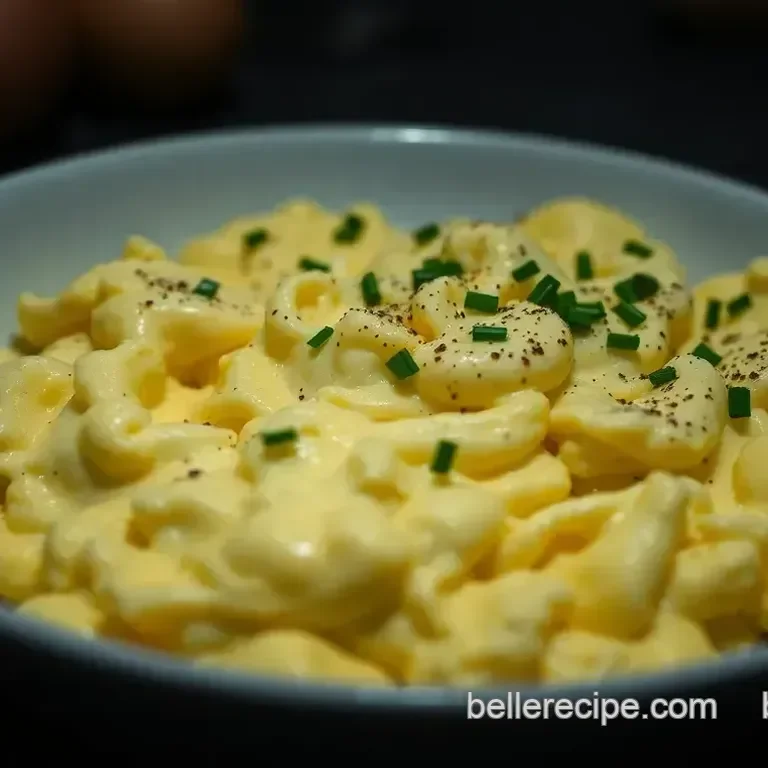
These French-style soft scrambled eggs are gently cooked in butter until creamy and just set. They make a quick, comforting breakfast, finished with fresh chives or herbs if you like.
Ingredients
- 200 g (4 large eggs)large eggs
- 28 g (2 tablespoons)unsalted butter
- to tastesalt
- to tastefreshly cracked black pepper
- optional, to tastechopped fresh chives or herbs of your choice, for garnish
Instructions
- 1
Whisk and season
Crack the eggs into a mixing bowl and whisk briskly until the whites and yolks are fully blended. Season with salt and pepper.
- 2
Melt the butter
Set a non-stick skillet over low heat. Add the butter and let it melt gently without browning, tilting the pan to coat its surface.
- 3
Add the eggs
Pour the beaten egg mixture into the skillet.
- 4
Fold gently
Stir continuously with a spatula, gently folding the eggs while scraping the bottom and sides of the skillet to keep them from sticking.
- 5
Cook until soft
Cook for about 6–8 minutes, until the eggs are softly set but still a little runny. Take the skillet off the heat before they are fully cooked; residual heat will continue to cook them.
- 6
Garnish and serve
Transfer the eggs to plates and add chopped herbs if using. Serve immediately.
What are soft scrambled eggs?
Scrambled eggs are a familiar breakfast dish, and gently cooked versions are often associated with French-style cooking. Here, the eggs are whisked together and stirred slowly in butter rather than left to form large, firm curds.
Low heat and steady folding help create a tender, creamy texture. The method is simple, but taking the pan off the heat while the eggs are still slightly loose is key.
Nutrition and macros by portion
The nutrition label shows one serving as written: 240 calories, 0g protein, 0g carbs, 20g fat.
| Portion | Adjustment | kcal | Protein | Carbs | Fat |
|---|---|---|---|---|---|
| Lighter | Use less butter | 168 kcal | 0g | 0g | 14g |
| This serving | As written | 240 kcal | 0g | 0g | 20g |
| Hungry | Add another egg | 360 kcal | 0g | 0g | 30g |
The eggs provide most of the protein and some of the fat, while the butter supplies additional fat; the dish contains very little carbohydrate. For a more balanced plate, serve the eggs with wholemeal toast and some fresh vegetables.
Why these ingredients work
Eggs: Whisking the whites and yolks until blended gives the mixture an even colour and texture.
Butter: It adds richness and helps coat the skillet. Melt it gently so it does not brown before the eggs go in.
Seasoning: Salt and freshly cracked black pepper bring out the eggs’ savoury flavour; chopped chives or other fresh herbs add a bright finish.
Keep the heat low
Low heat gives you time to fold the eggs as they thicken, reducing the chance of quickly overcooking the mixture. Keep the butter pale and the eggs moving gently rather than stirring aggressively.
Look for a soft set
Doneness: The eggs should be softly set but retain a little looseness when you take the pan off the heat. They will continue cooking briefly from the warmth of the skillet and the eggs themselves.
Texture: Scrape along the base and sides as you fold so the setting egg is incorporated without sticking or forming a dry layer.
Plan for the timing
The recipe takes about 15 minutes in total, including preparation, with 6–8 minutes of cooking over low heat. Allow for the eggs to thicken gradually rather than turning up the heat to hurry them along.
Serve straight away
These eggs are at their creamiest just after cooking, so have plates ready before you start. They pair well with toast and a simple side of tomatoes or greens for a more complete breakfast.
Recipe notes & tips
- Use a non-stick skillet so the eggs are easier to fold and release.
- Whisk until no separate streaks of white remain.
- Keep the skillet over low heat while the eggs cook.
- Scrape the base and sides continuously with a spatula.
- Remove the pan while the eggs still look slightly loose.
- Chop the herbs before cooking so you can serve the eggs at once.
Variations
- Add chives: Scatter chopped fresh chives over the eggs just before serving.
- Try soft herbs: Use chopped parsley, dill or another herb in place of chives.
- Add cheese: Fold a little finely grated cheese through the eggs near the end of cooking.
- Serve on toast: Spoon the eggs over toasted sourdough or wholemeal bread.
- Add vegetables: Serve with sliced tomatoes or sautéed greens alongside.
Common mistakes to avoid
- Using high heat: The eggs can set too quickly; keep the skillet over low heat.
- Browning the butter: It changes the gentle flavour; melt the butter without letting it colour.
- Leaving the eggs still: They may stick or cook unevenly; fold and scrape continuously.
- Cooking until fully firm: The residual heat keeps cooking them; remove the pan while they are still slightly runny.
- Serving later: The eggs continue to set as they stand; plate and serve them immediately.
How to store
Soft scrambled eggs are best eaten straight away. If needed, refrigerate leftovers in a covered container for up to 2 days and reheat gently in a pan over low heat, stirring until hot; the texture may become firmer.
Frequently asked questions
How do I know when the eggs are done?
They should be softly set but still slightly loose when you remove the skillet from the heat. Residual heat will finish cooking them.
Can I make soft scrambled eggs without a non-stick pan?
A non-stick skillet is easiest, but a well-seasoned pan can also work. Use low heat and keep scraping the base and sides with a spatula.
Why are my scrambled eggs watery?
They may need a little more time over low heat, with continuous gentle folding. Keep cooking until softly set, then take them off the heat before they become firm.
Can I prepare the eggs ahead?
They are best cooked just before serving because they continue to set as they cool. You can whisk and season the eggs shortly before cooking.
Which herbs work as a garnish?
Chives are suggested, but chopped parsley, dill or another fresh herb can also be used. Add them after cooking for a fresh finish.
Cook it from the original
This recipe comes from bellerecipe.com. Their page has the author’s own photos, notes and tips — the best place to cook it from.
Open the recipe on bellerecipe.com