
Boneless Pork Chops
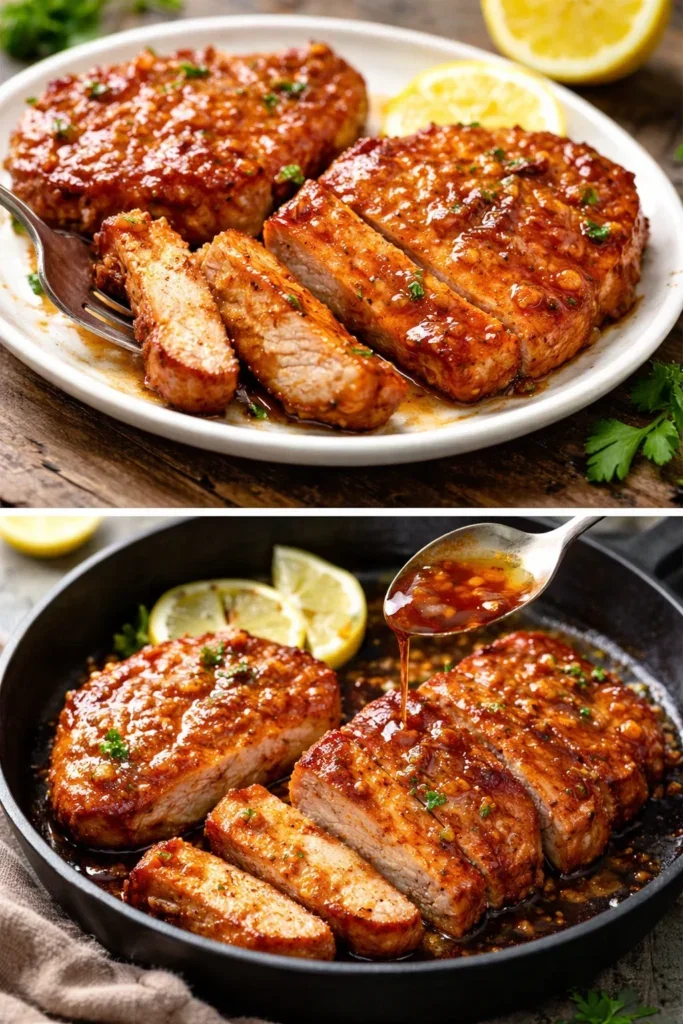
These American-style boneless pork chops are seared in a hot pan, then finished with a buttery sauce of chicken broth, Dijon mustard and lemon. They make a comforting meal in under 30 minutes, with a quick rest helping keep the meat juicy.
Ingredients
- 4 pieces (about 170 g each; 6 oz each)boneless pork chops, about 2.5 cm thick
- 5 ml (1 teaspoon)kosher salt
- 2.5 ml (1/2 teaspoon)black pepper, freshly ground
- 5 ml (1 teaspoon)smoked paprika
- 10 ml (2 teaspoons)garlic powder
- 30 ml (2 tablespoons)olive oil
- 30 ml (2 tablespoons)unsalted butter
- 120 ml (1/2 cup)low-sodium chicken broth
- 15 ml (1 tablespoon)Dijon mustard
- 15 ml (1 tablespoon)fresh lemon juice
- To taste, optionalfresh parsley, chopped
Instructions
- 1
Season the chops
Pat the pork chops dry with paper towels. Season both sides with the salt, pepper, smoked paprika and garlic powder.
- 2
Heat the oil
Set a large frying pan over medium-high heat and add the olive oil. Once the oil shimmers, place the chops in the pan, laying them away from you.
- 3
Sear both sides
Cook the chops without moving them for 3 to 4 minutes. Turn them over and sear the other side for 3 minutes.
- 4
Baste with butter
Lower the heat to medium and add the butter. As it melts, spoon it over the chops for 1 to 2 minutes.
- 5
Make the sauce
Add the chicken broth, Dijon mustard and lemon juice. Let the sauce bubble gently, spooning it over the chops.
- 6
Check and rest
Cook for a further 2 to 4 minutes, until the centre reaches 63°C (145°F). Take the chops out of the pan and leave them to rest for 5 minutes.
- 7
Finish and serve
Sprinkle with chopped parsley, if using, and spoon the pan sauce over each chop before serving.
What are boneless pork chops?
Boneless pork chops are cut from the loin and cook quickly in a frying pan. This American-style version pairs a straightforward sear with a buttery pan sauce rather than a long braise.
The seasoning builds savoury, gently smoky flavour, while broth, mustard and lemon make a quick sauce in the same pan. That keeps the method simple and gives the chops a glossy finish.
Nutrition and macros by portion
The nutrition label shows one serving as written: 320 calories, 25g protein, 1g carbs, 23g fat.
| Portion | Adjustment | kcal | Protein | Carbs | Fat |
|---|---|---|---|---|---|
| Lighter | Use less butter and oil | 224 kcal | 18g | 1g | 16g |
| This serving | As written | 320 kcal | 25g | 1g | 23g |
| Hungry | Add a larger side portion | 480 kcal | 38g | 2g | 35g |
The pork provides most of the protein, while the olive oil and butter account for much of the fat. The broth, seasonings and small amount of mustard contribute little carbohydrate; serve with vegetables and a measured portion of potatoes or another starch to round out the plate.
Choosing and seasoning the chops
Thickness matters: chops about 2.5 cm thick are less likely to overcook during the sear and sauce-making. If yours are thinner or thicker, use the temperature cue rather than relying only on the stated timing.
Dry surface: patting the meat dry helps it brown in the hot oil. Season both sides evenly so the paprika, pepper and garlic flavour each bite.
Getting a good sear
Hot oil: wait until it shimmers before adding the chops. Lay them away from you to reduce splashing.
Hands off: leave the first side undisturbed for 3 to 4 minutes, then turn and cook the other side for 3 minutes. Moving them around too soon can interrupt browning.
Basting and making the sauce
Butter baste: once the heat is reduced to medium, spoon the melted butter over the chops for 1 to 2 minutes. Keep the butter moving over the meat rather than letting it sit in one spot.
Gentle bubbles: add the broth, Dijon and lemon juice, then let the sauce bubble gently as you spoon it over the chops. A vigorous boil can reduce the liquid too quickly before the meat is ready.
How to tell when they are done
Temperature cue: check the thickest part of a chop with a food thermometer and cook until it reaches 63°C (145°F). The recipe’s final 2 to 4 minutes is a guide; the exact time varies with thickness and pan heat.
Rest: leave the chops for 5 minutes before serving. This gives the meat a short pause after cooking and leaves time to finish the sauce and parsley.
What to serve alongside
For a simple plate, pair the chops with potatoes, rice or bread to catch the pan sauce. Green vegetables such as broccoli, peas or green beans add colour and a fresh contrast.
Spoon the sauce over the chops just before serving so each portion gets some of the mustard-lemon flavour. Add parsley at the end for a bright, peppery finish.
Recipe notes & tips
- Choose chops of similar thickness so they cook at roughly the same rate.
- Dry the chops thoroughly before seasoning for better browning.
- Let the pan heat fully before adding the pork.
- Use a thermometer in the thickest part to check for 63°C (145°F).
- Rest the chops for the full 5 minutes before serving.
- Spoon the sauce over the chops at the table to make the most of it.
Variations
- Use sweet paprika: swap it for smoked paprika for a milder, less smoky seasoning.
- Add fresh garlic: use 2 minced cloves in place of the garlic powder, taking care not to let it burn.
- Try white wine: replace the chicken broth with white wine for a more festive pan sauce.
- Make it dairy-free: use ghee instead of butter, as suggested in the ingredient notes.
- Change the mustard: use plain mustard instead of Dijon for a simpler sauce.
Common mistakes to avoid
- Wet surface: the chops may steam instead of sear; pat them dry before seasoning.
- Crowded pan: the chops may not brown evenly; use a large skillet and leave space between them.
- Moving them too soon: the first side may not brown well; let it sear undisturbed for 3 to 4 minutes.
- High heat for the sauce: the liquid can reduce too quickly; lower the heat to medium and keep the bubbles gentle.
- Cooking by time alone: thickness changes the cooking time; check the centre with a thermometer.
- Skipping the rest: juices can escape when cut straight away; rest the chops for 5 minutes.
How to store
Refrigerate leftover chops and sauce in a covered container for up to 3 days. Reheat gently in a covered pan with a splash of broth or water, just until warmed through; avoid prolonged high heat, which can dry the pork.
Frequently asked questions
Can I use bone-in pork chops?
Yes, but they may take longer to cook than boneless chops. Check the thickest part with a thermometer and use 63°C (145°F) as the temperature cue.
Can I use fresh garlic instead of garlic powder?
Yes. The ingredient notes suggest using 2 minced cloves. Add them carefully, as fresh garlic can brown quickly in the pan.
What can I use instead of chicken broth?
The recipe suggests white wine as an alternative. You can also use water, though the sauce will have less savoury flavour.
How do I know when the chops are cooked?
Check the thickest part with a food thermometer; it should reach 63°C (145°F). Leave the chops to rest for 5 minutes before serving.
Can I make these pork chops ahead?
They are best freshly cooked, but you can refrigerate leftovers for up to 3 days. Reheat them gently with a splash of liquid to help keep them moist.
Cook it from the original
This recipe comes from benefitrecipes.com. Their page has the author’s own photos, notes and tips — the best place to cook it from.
Open the recipe on benefitrecipes.com