
10 Min Chilli Oil Noodles
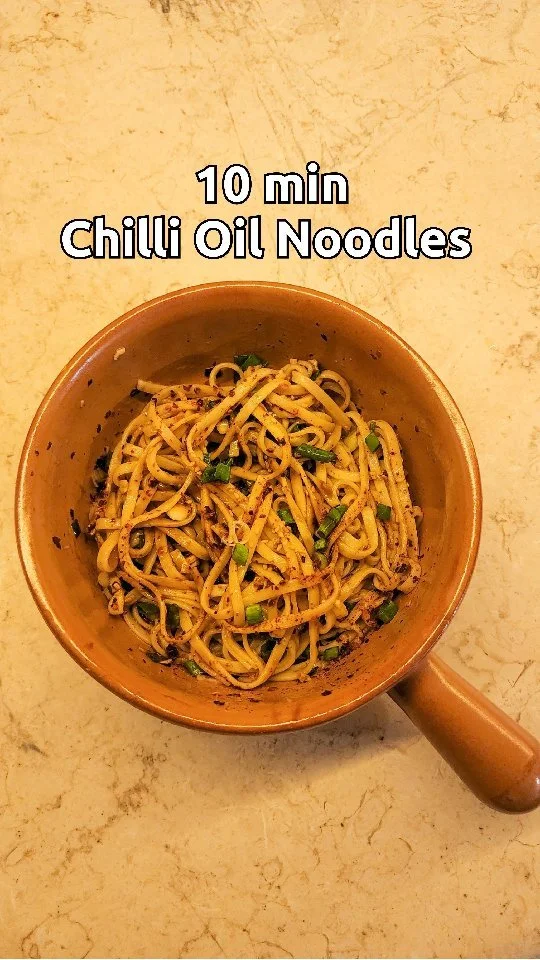
These quick chilli oil noodles toss flat rice noodles with garlic, spring onions, chilli flakes and savoury sauces, finished with hot sesame oil. They make a speedy meal with plenty of punch and very little preparation.
Ingredients
- 80–100 gflat rice noodles
- 3garlic cloves
- 3 tbspsesame oil, or a mixture of neutral oil and sesame oil
- 2–3spring onions
- 1 tbspSichuan or gochugaru chilli flakes
- 1 tbspdark soy sauce
- 1 tbspoyster sauce
- 1 tsprice vinegar
- 1/4 tspsalt
- 1/2 tbspsesame seeds
- to garnishspring onions, coriander and sesame seeds
Instructions
- 1
Cook the noodles
Cook the noodles according to the packet instructions. Drain, rinse under cold water and set aside.
- 2
Mix the seasonings
Chop the garlic and spring onions. Put them in a serving bowl with the chilli flakes, soy sauce, oyster sauce, salt and sesame seeds.
- 3
Heat the oil
Heat 3 tbsp oil in a saucepan until sizzling hot. Pour it over the seasonings, add the noodles straight away and stir well.
- 4
Garnish and serve
Garnish with spring onions, coriander and sesame seeds. Taste and add more seasoning if needed, then serve.
What are chilli oil noodles?
Chilli oil noodles are a quick noodle dish built around the contrast of hot oil, chilli and savoury seasonings. This version uses flat rice noodles with garlic, spring onions, soy and oyster sauce.
The recipe draws on familiar East Asian pantry flavours rather than a single named regional tradition. Pouring sizzling oil over the aromatics helps release their fragrance just before the noodles are mixed in.
Nutrition and macros by portion
The nutrition label shows one serving as written: 200 calories, 4g protein, 31g carbs, 10g fat.
| Portion | Adjustment | kcal | Protein | Carbs | Fat |
|---|---|---|---|---|---|
| Lighter | Use less sesame oil | 140 kcal | 3g | 22g | 7g |
| This serving | As written | 200 kcal | 4g | 31g | 10g |
| Hungry | Add more noodles | 300 kcal | 6g | 47g | 15g |
The noodles provide most of the carbohydrates, while the sesame oil supplies most of the fat. Soy sauce and oyster sauce contribute some protein, but this is not a protein-rich dish; serve it with tofu or egg and a portion of vegetables to round out the plate.
Choosing the noodles and chilli
Flat rice noodles: use the packet directions, as cooking times vary with noodle thickness and whether they are dried or fresh. The stated 80–100 g is a small quantity for four servings, so check that it matches the amount you intend to make.
Chilli flakes: Sichuan flakes and gochugaru have different flavours and heat levels, so use whichever the recipe calls for or you have to hand. For a milder bowl, start with less and adjust after mixing.
Getting the hot oil right
Hot oil: heat the oil until it is visibly shimmering and sizzling, but do not let it smoke. Pour it over the garlic, spring onion and chilli in the bowl so their aroma blooms in the oil.
Careful pouring: use a heatproof serving bowl and pour steadily; the oil can spit when it meets the moist aromatics. Add the noodles immediately so they can be coated while the oil is still hot.
Balancing the seasoning
Savoury base: dark soy sauce adds colour and saltiness, while oyster sauce brings a rounded savoury note. Rice vinegar gives the mixture a little sharpness.
Final adjustment: stir thoroughly before tasting, since sauces and chilli can collect at the bottom of the bowl. Add extra seasoning only after the noodles are evenly coated.
Texture and timing
Noodle doneness: follow the packet guidance and stop once the noodles are tender but still hold their shape. Rinsing them under cold water halts the cooking and helps keep them from clumping.
Quick finish: have the chopped ingredients ready before heating the oil. The mixing and garnishing happen quickly once the oil is poured.
Serving suggestions
Fresh finish: scatter over the spring onions, coriander and sesame seeds just before serving for a contrast with the glossy noodles.
To make the meal more substantial, serve alongside steamed greens or add a separate portion of tofu, egg or another protein. Keep additions separate if you want to follow the recipe as written.
Recipe notes & tips
- Prepare the aromatics and sauces before you start heating the oil.
- Rinse the cooked noodles with cold water to stop them cooking further.
- Use a heatproof bowl when pouring over the sizzling oil.
- Taste the noodles after mixing before adding extra salt or sauce.
- Keep the garnishes ready so you can serve the noodles straight away.
Variations
- Milder chilli: use less chilli flakes and add more only after tasting.
- Extra tang: add a little more rice vinegar to the mixed noodles.
- More greens: serve with steamed pak choi or another leafy vegetable.
- Add tofu: top with cooked tofu for a more filling bowl.
- Crunchy topping: add extra sesame seeds just before serving.
Common mistakes to avoid
- Overcooking the noodles: follow the packet timing and check them early so they keep their shape.
- Smoking the oil: take it off the heat once sizzling hot, before it begins to smoke.
- Pouring into a cold, unsuitable bowl: use a heatproof serving bowl to handle the hot oil safely.
- Adding oil too early: pour it over the aromatics just before adding the noodles so the mixture stays hot.
- Seasoning before mixing: stir everything together first, then taste and adjust.
How to store
Refrigerate leftovers in a sealed container and eat within 2 days. Reheat gently in a pan or microwave, adding a splash of water if the noodles have tightened; the fresh garnishes are best added just before serving.
Frequently asked questions
Can I use another type of noodle?
Yes, use noodles that cook in a similar time and follow their packet instructions. The texture will differ from flat rice noodles.
Can I make the dish less spicy?
Use less chilli flakes at first, then taste after mixing. You can add more later, but you cannot take the heat back out.
Why rinse the noodles with cold water?
Rinsing stops them cooking and helps reduce sticking while you prepare the seasoning.
Can I prepare the ingredients ahead?
You can chop the garlic and spring onions and measure the sauces ahead. Cook the noodles and pour on the hot oil close to serving time for the best texture.
What can I use instead of oyster sauce?
A vegetarian oyster-style sauce is a close alternative. The flavour and saltiness may vary, so taste before adding extra seasoning.
How do I know when the oil is hot enough?
It should be shimmering and sizzling, but not smoking. Keep it over the heat only until it reaches that point.
Cook it from the original
This recipe comes from fooooods.com. Their page has the author’s own photos, notes and tips — the best place to cook it from.
Open the recipe on fooooods.com