
Teriyaki Chicken
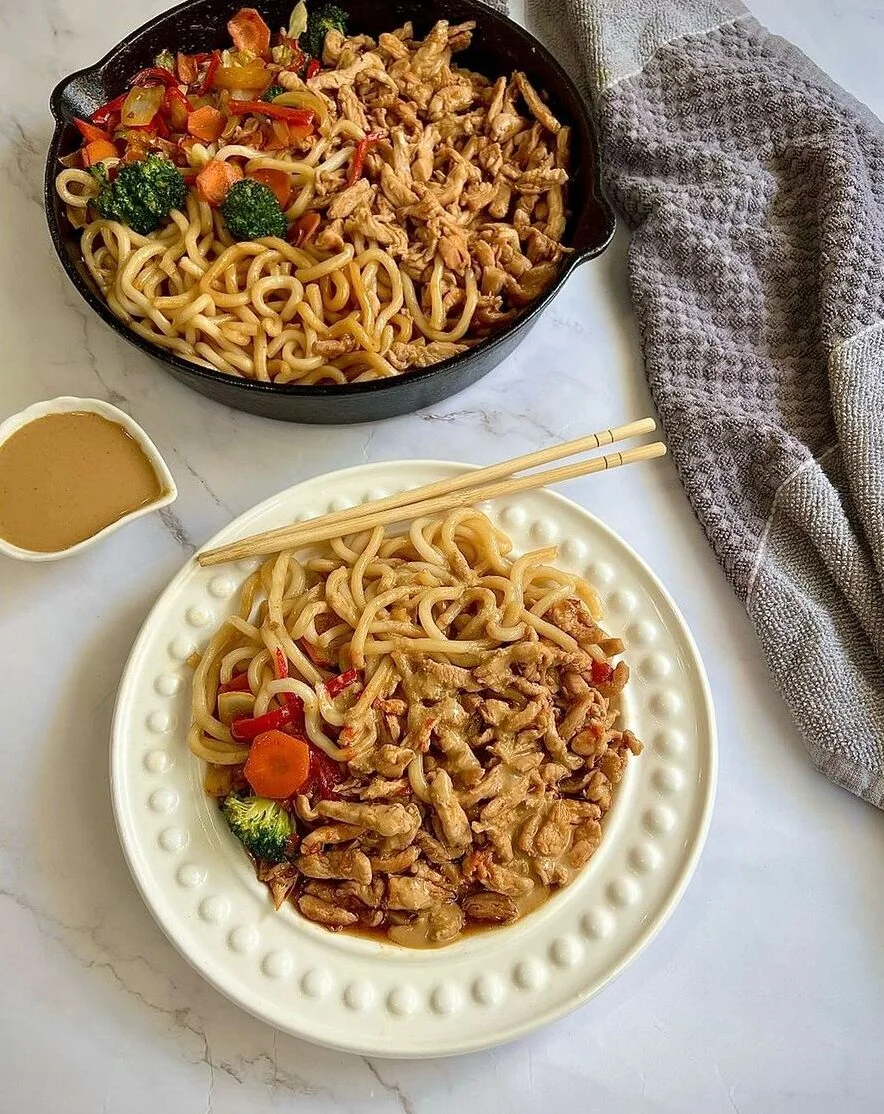
Teriyaki chicken with udon noodles and sautéed vegetables makes a savoury-sweet, filling one-pan-style meal. Cook the chicken in batches for good browning, then bring it together with a quick honey, soy and ginger sauce.
Ingredients
- 2 large (about 500 g)chicken breasts
- 1 tbsp (15 ml)ginger, minced
- 2 clovesgarlic, minced
- 1 tbsp (15 ml)soy sauce
- 2 tbsp (30 ml)oil, for cooking the chicken
- 120 ml (½ cup)soy sauce
- 120 ml (½ cup)water or chicken broth
- 80 ml (⅓ cup), or more to tastehoney
- 1 tbsp (15 ml)sesame oil
- 1 tbsp (15 ml)rice vinegar
- 1 tsp (5 ml)ginger, minced
- 1 tsp (5 ml)garlic, minced
- 1 tsp (5 ml)sriracha
- ½ tbsp (7.5 ml)cornflour
- 400 gudon noodles
- 2 tbsp (30 ml)soy sauce
- 1 tbsp (15 ml)sesame oil
- 2 tbsp (30 ml)prepared teriyaki sauce
- To tastebroccoli, carrot, sweet pepper, onion and cabbage, or other vegetables
- 1 tbsp (15 ml)oil, for sautéing the vegetables
- To tastesesame sauce, to serve
Instructions
- 1
Marinate the chicken
Cut the chicken into very thin, small strips. Toss with 1 tbsp (15 ml) soy sauce, 1 tbsp (15 ml) minced ginger and 2 minced garlic cloves.
- 2
Mix the sauce
Combine 120 ml soy sauce, 120 ml water or chicken broth, 80 ml honey, 1 tbsp sesame oil, 1 tbsp rice vinegar, 1 tsp minced ginger, 1 tsp minced garlic, 1 tsp sriracha and ½ tbsp cornflour.
- 3
Prepare the vegetables
Wash and cut the vegetables you have chosen.
- 4
Sauté the vegetables
Sauté the vegetables in 1 tbsp oil, then set them aside.
- 5
Cook the chicken
Heat the pan and cook the chicken over high heat in batches, taking care not to crowd the pan.
- 6
Thicken the sauce
Once the chicken is cooked, add the prepared sauce to the same pan. Cook for about 1 minute, until it thickens.
- 7
Dress the noodles
Place the udon noodles in hot water. Once they separate, drain them, then mix in a pan with 2 tbsp soy sauce, 1 tbsp sesame oil and 2 tbsp of the prepared teriyaki sauce.
- 8
Assemble and serve
Mix the chicken with its sauce. Serve it with the noodles and vegetables, topped with sesame sauce.
What is teriyaki chicken?
Teriyaki is a Japanese cooking style in which food is glazed with a shiny, savoury-sweet sauce. This version pairs chicken with udon noodles and vegetables for a complete meal inspired by teriyaki flavours.
The homemade sauce combines soy, honey, ginger, garlic and rice vinegar. Cornflour helps it thicken quickly so it can coat the chicken.
Nutrition and macros by portion
The nutrition label shows one serving as written: 770 calories, 49g protein, 91g carbs, 23g fat.
| Portion | Adjustment | kcal | Protein | Carbs | Fat |
|---|---|---|---|---|---|
| Lighter | More vegetables, fewer noodles | 539 kcal | 34g | 64g | 16g |
| This serving | As written | 770 kcal | 49g | 91g | 23g |
| Hungry | Larger noodle portion | 1155 kcal | 74g | 137g | 35g |
The udon and honey provide most of the carbohydrates, while chicken breast is the main source of protein. The cooking oils, sesame oil and sesame sauce contribute much of the fat, and soy sauce makes the dish high in sodium. For a more balanced plate, serve a generous amount of the vegetables alongside a moderate portion of noodles.
Choosing the ingredients
Chicken breast: Cutting it into thin strips helps it cook quickly, while marinating adds flavour before it reaches the pan.
Vegetables: Broccoli, carrot, sweet pepper, onion and cabbage are suggested, but the recipe also allows for other vegetables. Cut them into similar-sized pieces so they sauté evenly.
Udon: These thick wheat noodles are pleasantly chewy and hold up well when tossed with sauce. Use the 2 tablespoons of prepared teriyaki sauce set aside for the noodles.
Getting the sauce right
Cornflour: Mix it thoroughly into the sauce ingredients so it is distributed before the sauce goes into the hot pan. Stir the sauce again before adding it, as the cornflour can settle.
Thickening: The method calls for about 1 minute of cooking in the chicken pan. Look for a thicker, glossy consistency that clings to the chicken.
Sautéing without crowding
Vegetables: Sauté them in 1 tablespoon of oil, then take them out of the pan and set them aside. This keeps them separate while the chicken cooks.
Chicken: Cook it over high heat in batches rather than piling it all into the pan. A crowded pan releases moisture and makes it harder for the strips to brown.
Cooking the udon
Separation cue: Add the noodles to hot water and drain them when they have separated. The method does not give a fixed time, so use this visual cue rather than leaving them in the water unnecessarily.
Tossing: Mix the drained noodles with soy sauce, sesame oil and the reserved teriyaki sauce. Toss until the noodles are evenly coated.
Serving the meal
Serve the noodles with the sauced chicken and sautéed vegetables, then finish with sesame sauce as suggested in the recipe. Add the topping to taste, since no amount is specified.
The dish already combines noodles, chicken and vegetables in one serving. If you want an extra side, serve it with more steamed or sautéed vegetables.
Recipe notes & tips
- Slice the chicken into evenly thin strips so the pieces cook at a similar pace.
- Cook the chicken in batches to avoid overcrowding the pan.
- Stir the sauce again just before adding it to the pan so the cornflour is mixed in.
- Set the sautéed vegetables aside before cooking the chicken, as the method directs.
- Drain the udon as soon as the strands separate and toss them with the seasonings.
- Adjust the honey or sriracha to suit your preferred sweet-and-spicy balance.
Variations
- Use chicken thighs: Cut them into thin strips and cook them in batches as directed.
- Change the vegetables: Swap in other vegetables you enjoy, keeping the pieces a similar size.
- Adjust the sweetness: Add more honey to the sauce if you prefer it sweeter.
- Turn up the heat: Add extra sriracha to the sauce for a spicier result.
- Use broth: Choose chicken broth instead of water for the sauce liquid.
Common mistakes to avoid
- Crowding the chicken: It can release moisture instead of browning; cook it in batches.
- Skipping the marinade: Toss the chicken with the soy, ginger and garlic before cooking for the flavour described in the method.
- Adding sauce without mixing: Stir the sauce before it goes into the pan so the cornflour is not left at the bottom.
- Overcooking the sauce: Cook it for about 1 minute, stopping when it thickens.
- Leaving noodles in the water: Drain them once they separate so they are ready to toss with the seasonings.
- Forgetting the reserved sauce: Keep 2 tablespoons of the prepared teriyaki sauce for dressing the noodles.
How to store
Refrigerate leftovers in a covered container and use within 3 days. Reheat until piping hot in a pan or microwave; add a small splash of water if the noodles or sauce have thickened during storage.
Frequently asked questions
Can I use water instead of chicken broth?
Yes. The sauce ingredients specify either water or chicken broth, so use whichever you have.
How do I know when the udon is ready?
Drain the noodles when they separate in the hot water, as directed in the recipe.
Why should I cook the chicken in batches?
The method calls for batches so the pan is not overcrowded. This gives the thin strips room to cook properly over high heat.
Can I use different vegetables?
Yes. The recipe suggests broccoli, carrot, sweet pepper, onion and cabbage, and says you can use other vegetables you like.
What is the sesame sauce for?
It is used as a topping when serving. The recipe does not specify an amount, so add it to taste.
Can I make the teriyaki sauce sweeter?
Yes. The recipe says you can add more honey if you like; adjust it to your taste.
Cook it from the original
This recipe comes from fooooods.com. Their page has the author’s own photos, notes and tips — the best place to cook it from.
Open the recipe on fooooods.com