
Whipped Ricotta with Basil Oil Recipe
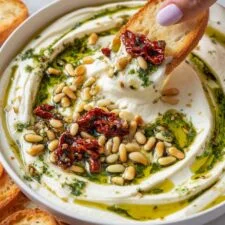
Whipped sheep’s ricotta is topped with toasted pine nuts, sun-dried tomatoes and a vivid basil oil for a creamy, savoury appetiser. It comes together quickly and is made for sharing with crusty bread, pita chips or crackers.
Ingredients
- 500 g (1.1 lb)full-fat sheep’s ricotta
- 15 ml (1 tablespoon)extra-virgin olive oil
- A good pinchsalt
- 2–3sun-dried tomatoes, finely chopped
- 30 g (3 tablespoons)pine nuts
- 30 ml (2 tablespoons)basil oil
- 12 g (½ cup)fresh basil leaves
- 60 ml (¼ cup)extra-virgin olive oil
- A pinchsalt
Instructions
- 1
Blend the basil
Put the basil leaves, 60 ml extra-virgin olive oil and a pinch of salt in a blender or use an immersion blender. Blend until completely smooth. For a clearer oil, strain it through a fine-mesh sieve; otherwise, leave it rustic. Pour into a small bowl or glass jar and set aside.
- 2
Whip the ricotta
Add the ricotta, 15 ml extra-virgin olive oil and a good pinch of salt to a blender or food processor. Blend until smooth and creamy, then taste and adjust the salt if needed.
- 3
Toast the pine nuts
Warm a small saucepan over low to medium heat. Toast the pine nuts lightly, stirring often to prevent them from burning. Remove them from the heat as soon as they turn golden brown.
- 4
Assemble the dish
Spoon the whipped ricotta into a serving bowl and use the back of a spoon to make a well or decorative swirls. Scatter the toasted pine nuts and chopped sun-dried tomatoes over the top, then drizzle with 30 ml of the prepared basil oil.
- 5
Serve straight away
Serve immediately with crusty bread, pita chips or crackers.
What is whipped ricotta?
Ricotta is an Italian whey cheese, traditionally made in a soft, mild style. Here, sheep’s ricotta is blended with olive oil until its texture turns smooth and spoonable.
The Mediterranean-inspired toppings bring contrasting flavours and textures: fresh basil oil, sweet-tart sun-dried tomatoes and crisp toasted pine nuts.
Nutrition and macros by portion
The nutrition label shows one serving as written: 120 calories, 5g protein, 2g carbs, 9g fat.
| Portion | Adjustment | kcal | Protein | Carbs | Fat |
|---|---|---|---|---|---|
| Lighter | Serve with fresh vegetables | 84 kcal | 4g | 1g | 6g |
| This serving | As written | 120 kcal | 5g | 2g | 9g |
| Hungry | Add more bread | 180 kcal | 8g | 3g | 14g |
The ricotta provides most of the protein and contributes much of the fat, while the olive oil and pine nuts add further fat. The sun-dried tomatoes contribute a little carbohydrate; serve with bread or crackers for a more substantial plate, or pair it with fresh vegetables for a lighter accompaniment.
Choosing the ingredients
Sheep’s ricotta: Full-fat ricotta gives the dip a rich, creamy base. If it looks very wet, drain it briefly before blending so the finished texture stays thick.
Basil and olive oil: Use fresh basil leaves and extra-virgin olive oil for the green herb oil. The recipe makes more than the 30 ml needed for the topping, so save the remainder for another use.
Getting the right texture
Blend the ricotta until no grainy curds remain and it looks creamy throughout. Scrape down the sides of the blender or processor if needed so the mixture blends evenly.
The basil oil can be left slightly rustic or strained for a clearer finish. Either way, blend it until the leaves are finely broken down.
Toasting the pine nuts
Low to medium heat gives the pine nuts time to colour without scorching. Stir them frequently and watch closely: their small size means they can go from golden to burnt quickly.
Take the pan off the heat as soon as they are golden brown. They will continue to toast slightly from the residual heat.
Assembling the bowl
Spread the ricotta in a serving bowl, then make a shallow well or swirls with the back of a spoon. These shapes give the oil places to settle and make the topping easy to distribute.
Add the pine nuts and tomatoes evenly, then finish with the measured basil oil. Assemble just before serving to keep the nuts crisp.
What to serve alongside
Crusty bread, pita chips and crackers are all suitable for scooping up the soft ricotta. Offer a mix of crisp and chewy options if serving a group.
For a larger spread, serve it alongside olives or fresh vegetables. The dip is rich and savoury, so simple accompaniments work well.
Recipe notes & tips
- Let the ricotta lose its chill briefly before blending for an easier, smoother mix.
- Taste the ricotta after blending and adjust the salt before transferring it to the serving bowl.
- Toast the pine nuts in a dry pan, stirring frequently and watching them closely.
- Make the basil oil ahead and keep it covered until you are ready to assemble the dish.
- Drizzle the oil over the ricotta just before serving to keep the topping looking fresh.
Variations
- Lemon finish: Add a little finely grated lemon zest over the top for a brighter note.
- Extra herbs: Blend a few leaves of parsley with the basil for a mixed-herb oil.
- Chilli heat: Add a pinch of chilli flakes over the assembled ricotta.
- Olive topping: Scatter chopped olives over the dip for a saltier, briny accent.
- Different nuts: Use toasted chopped almonds in place of the pine nuts.
Common mistakes to avoid
- Over-blending the oil: Excessive blending can warm it; stop once the basil is smoothly broken down.
- Burning the pine nuts: Stir often and remove them as soon as they turn golden.
- Using watery ricotta: Drain it briefly if it is very wet so the dip stays thick.
- Adding too much salt: Sun-dried tomatoes can be salty, so taste the ricotta before seasoning further.
- Assembling too early: Add the toppings close to serving so the pine nuts retain their crunch.
How to store
Refrigerate leftover whipped ricotta in a covered container and use within 2–3 days. Store leftover basil oil separately in a covered container in the fridge; stir or shake it before using. Serve the ricotta chilled or let it stand briefly at room temperature; it does not need reheating.
Frequently asked questions
Can I make the basil oil ahead?
Yes. Blend it ahead and keep it covered in the fridge until needed. Give it a stir before drizzling.
Can I use cow’s milk ricotta?
Yes. The flavour will be milder than with sheep’s ricotta, but it will still work well when whipped.
Do I need to strain the basil oil?
No. Straining is optional and gives a clearer oil; leaving it unstrained makes a more rustic topping.
How do I know when the pine nuts are toasted?
They are ready when lightly golden. Stir them often and take them off the heat promptly, as they can burn quickly.
What can I serve with whipped ricotta?
Serve it with crusty bread, pita chips or crackers, as specified in the recipe. Fresh vegetables also make an easy accompaniment.
Cook it from the original
This recipe comes from bakingwithmaya.com. Their page has the author’s own photos, notes and tips — the best place to cook it from.
Open the recipe on bakingwithmaya.com