
Rotisserie Chicken
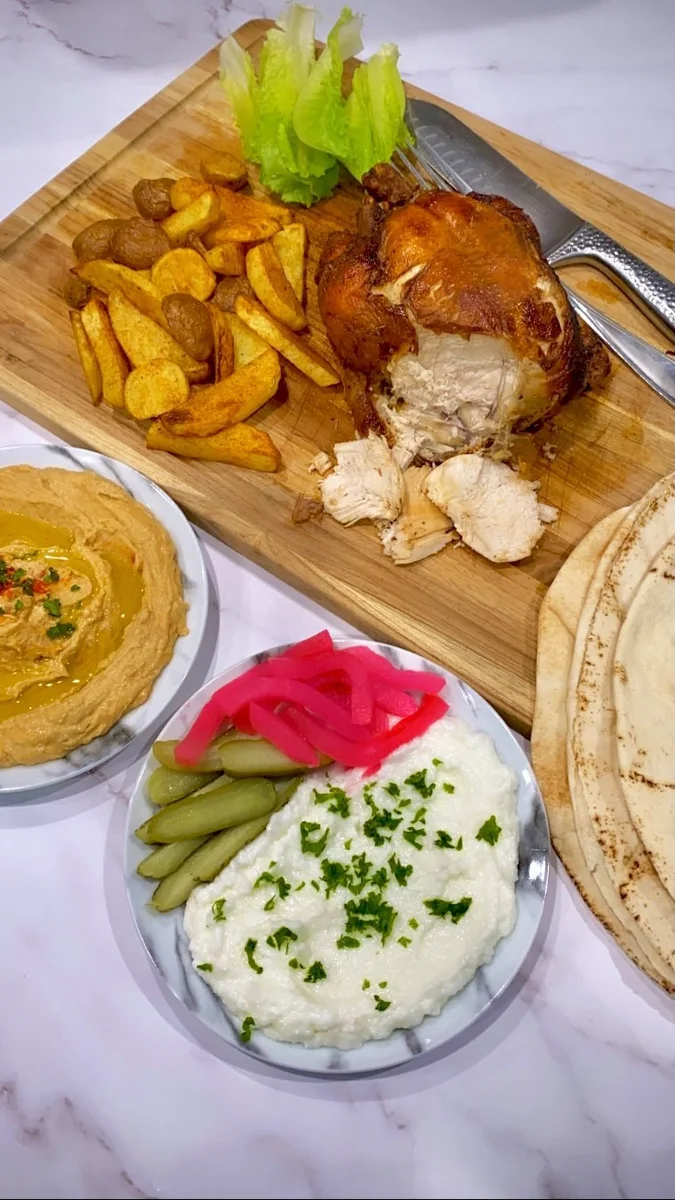
This air-fryer rotisserie chicken is brushed with olive oil and coated in a savoury mix of herbs and spices. It makes a flavourful centrepiece for a family meal, with hands-off cooking once the chicken is secured on the rotisserie spit.
Ingredients
- 1.36 kg (3 lb)whole chicken
- 45 ml (3 tbsp)olive oil, for brushing
- 10 ml (2 tsp)salt
- 5 ml (1 tsp)black pepper
- 5 ml (1 tsp)rosemary
- 5 ml (1 tsp)thyme
- 10 ml (2 tsp)garlic powder
- 10 ml (2 tsp)onion powder
- 15 ml (1 tbsp)paprika
- 2.5 ml (1/2 tsp)cayenne pepper
Instructions
- 1
Rinse the chicken
Clean and wash the chicken with water and vinegar.
- 2
Soak in brine
Put the chicken in a bowl of water with salt and leave it for about 30 minutes.
- 3
Pat it dry
Use kitchen paper to dry the chicken thoroughly, inside and out.
- 4
Brush with oil
Brush olive oil all over the chicken.
- 5
Mix the seasoning
Combine all the spices, then sprinkle the mixture over the chicken.
- 6
Secure on spit
Fit the chicken onto the stick supplied with the air fryer, then tie its wings and legs together.
- 7
Preheat the air fryer
Preheat the air fryer to 193°C (380°F) for 1 hour.
- 8
Add the chicken
When the air fryer prompts you to add food, open it and put the chicken inside.
- 9
Cook until done
Press the rotate setting and cook until the thickest part of the chicken reaches 74°C (165°F).
- 10
Rest and carve
Remove the chicken, leave it to rest for 10 minutes, then carve it.
What is rotisserie chicken?
Rotisserie chicken is cooked while turning on a spit, which helps it cook evenly and gives the outside time to brown. It is popular in many places as an easy roast-style meal, though this recipe uses an air fryer rather than a dedicated rotisserie oven.
The combination of paprika, garlic, onion and dried herbs gives this version a savoury, gently spiced coating. The brief salt-water soak is intended to help keep the meat moist.
Nutrition and macros by portion
The nutrition label shows one serving as written: 470 calories, 48g protein, 3g carbs, 29g fat.
| Portion | Adjustment | kcal | Protein | Carbs | Fat |
|---|---|---|---|---|---|
| Lighter | Less oil, skin removed | 329 kcal | 34g | 2g | 20g |
| This serving | As written | 470 kcal | 48g | 3g | 29g |
| Hungry | Larger chicken portion | 705 kcal | 72g | 5g | 44g |
The chicken supplies most of the protein and much of the fat, while the olive oil adds further fat. The seasoning contributes only a small amount of carbohydrate, but the salt affects the sodium considerably; the amount absorbed from the unspecified brine will vary. Pair a portion with vegetables and a measured serving of potatoes or rice for a balanced plate.
Preparing the chicken
Dry thoroughly: pat the skin and cavity with kitchen paper before adding oil and spices. A dry surface helps the oil and seasoning coat the bird rather than slide off.
Secure carefully: tie the wings and legs in as directed and check the chicken is firmly balanced on the spit before cooking.
Getting the seasoning on
Mix evenly: combine the rosemary, thyme, garlic powder, onion powder, paprika, cayenne, salt and pepper before sprinkling. This helps distribute the stronger spices across the whole chicken.
Coat all sides: brush on the olive oil, then season the outside all around so the turning chicken gets an even layer.
Checking for doneness
Use a thermometer: check the thickest part of the chicken and make sure it reaches 74°C (165°F), as the method specifies. Avoid touching bone with the thermometer tip.
Rest before carving: leave the chicken for 10 minutes after cooking. This gives you time to prepare to carve and helps keep the meat juicy.
Timing and air-fryer fit
The recipe does not give a separate total cooking time; it says to cook until the thickest part reaches the stated temperature. The listed 1 hour is the preheating instruction, so check your air fryer’s settings and instructions before using such a long preheat.
Check the fit: make sure the chicken can rotate freely without touching the sides or heating element. Follow the appliance guidance for loading the spit and using the rotate setting.
What to serve with it
Serve carved portions with potatoes, rice or bread to make a filling plate. A crisp salad or steamed vegetables add freshness alongside the seasoned chicken.
If you have pan juices or drippings collected by the appliance, serve them separately rather than pouring them over the skin, which can soften it.
Recipe notes & tips
- Pat the chicken dry inside and out before brushing it with oil.
- Mix the spices thoroughly so the cayenne and salt are spread evenly.
- Check that the chicken is securely attached to the spit before starting the rotisserie.
- Use a meat thermometer to check the thickest part rather than relying on a fixed cooking time.
- Rest the cooked chicken for the full 10 minutes before carving.
Variations
- Smoky paprika: use smoked paprika in place of the listed paprika for a smoky note.
- Herb-forward: increase the rosemary and thyme slightly for a more pronounced herbal coating.
- Milder seasoning: leave out the cayenne for a gentler flavour.
- Citrus finish: serve with lemon wedges for a bright contrast to the spices.
- Meal plates: carve the chicken and serve it with potatoes and a green salad.
Common mistakes to avoid
- Wet skin: the seasoning may not cling well; pat the chicken dry before oiling.
- Loose trussing: wings or legs can catch as the bird turns; tie them securely before cooking.
- Crowded air fryer: the chicken may not rotate freely; check the clearance before switching it on.
- Guessing doneness: cooking time can vary; check that the thickest part reaches 74°C (165°F).
- Carving too soon: juices can run out; let the chicken rest for 10 minutes first.
How to store
Refrigerate leftover chicken in a covered container within 2 hours and use within 3–4 days. Reheat portions until steaming hot throughout; remove the meat from the bones first for more even reheating.
Frequently asked questions
How long does the chicken take to cook?
The recipe does not specify a cooking duration; it says to cook until the thickest part reaches 74°C (165°F). Check the temperature with a thermometer rather than relying on a set time.
Can I use this recipe without a rotisserie spit?
The method is written for an air fryer with a rotisserie stick. For an air fryer without one, follow the appliance maker’s guidance for roasting a whole chicken and turn it as directed.
How much salt should go in the soaking water?
The method calls for water and salt but does not state a separate amount for the soak. The listed 2 tsp is for the recipe’s seasoning, so the brine quantity is unspecified.
Why does the method use vinegar to wash the chicken?
Vinegar is mentioned in the washing instruction, but no amount is provided. Keep raw chicken and any wash water away from other foods and clean the sink and surrounding surfaces afterwards.
Can I prepare the chicken ahead?
You can mix the dry seasoning ahead, but keep the raw chicken refrigerated and separate from ready-to-eat foods. Cook it promptly after preparation and check it reaches 74°C (165°F).
Cook it from the original
This recipe comes from fooooods.com. Their page has the author’s own photos, notes and tips — the best place to cook it from.
Open the recipe on fooooods.com