
Classic Poulet Au Moutarde: French Mustard Chicken Delight
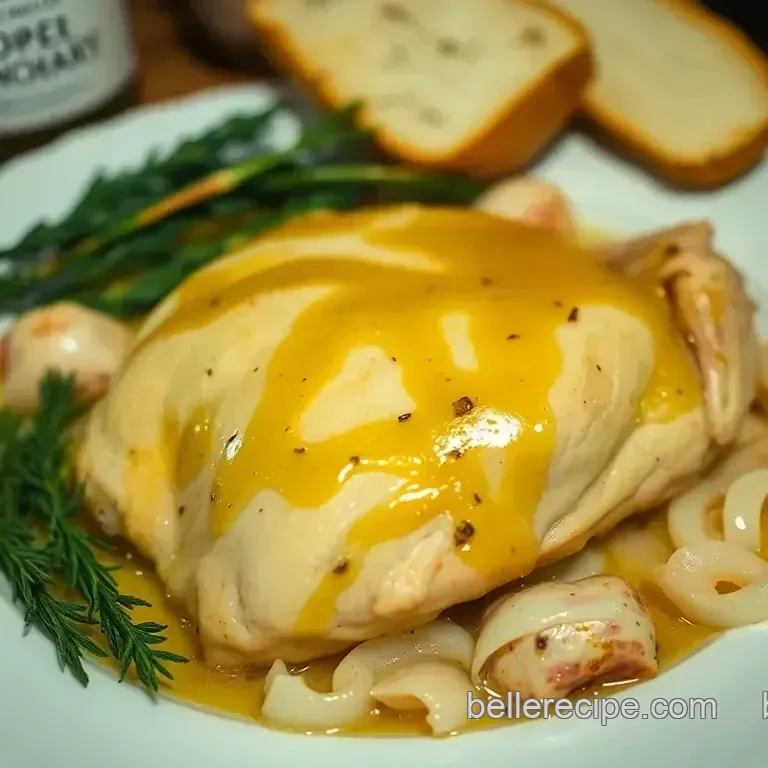
Poulet au moutarde is French chicken cooked in a creamy mustard sauce, here made with bone-in thighs, white wine and two kinds of mustard. It’s a satisfying one-pan supper, with a sauce that comes together while the chicken simmers.
Ingredients
- 4 (about 680 g / 1.5 lb)bone-in, skin-on chicken thighs
- to tastesalt and black pepper
- 30 ml (2 tablespoons)olive oil
- 1 mediumonion, finely chopped
- 3 clovesgarlic, minced
- 240 ml (1 cup)dry white wine
- 240 ml (1 cup)chicken broth
- 45 g (3 tablespoons)Dijon mustard
- 15 g (1 tablespoon)wholegrain mustard
- 120 ml (1/2 cup)heavy cream
- to garnishfresh thyme sprigs
Instructions
- 1
Season the chicken
Season the chicken thighs with salt and black pepper.
- 2
Brown the thighs
Warm the olive oil in a large skillet over medium heat. Put the thighs in skin-side down and sear for about 5–7 minutes, until golden brown. Turn them over and cook for another 5 minutes, then remove from the skillet and set aside.
- 3
Cook the aromatics
Add the onion to the same skillet and sauté for about 3–4 minutes, until translucent. Stir in the garlic and cook for about 1 minute, until fragrant.
- 4
Simmer the wine
Pour in the dry white wine, scraping the browned bits from the bottom of the skillet. Simmer for 2–3 minutes.
- 5
Stir in mustard
Add the chicken broth, Dijon mustard and wholegrain mustard, then stir to combine.
- 6
Cook the chicken
Return the seared thighs to the skillet. Cover and simmer for 15–20 minutes, until cooked through and the internal temperature reaches 74°C (165°F).
- 7
Thicken the sauce
Remove the cooked chicken from the skillet. Stir in the heavy cream and simmer for another 5 minutes, until the sauce has thickened slightly.
- 8
Finish and serve
Return the chicken to the sauce, garnish with fresh thyme and serve.
What is poulet au moutarde?
Poulet au moutarde means mustard chicken in French and describes chicken served in a mustard-rich sauce. This version combines Dijon and wholegrain mustard with wine, broth and cream.
The method builds flavour in one skillet: the chicken browns first, then the sauce uses the same pan. Bone-in thighs suit the covered simmer, while the two mustards bring both a smooth tang and a more textured bite.
Nutrition and macros by portion
The nutrition label shows one serving as written: 430 calories, 0g protein, 0g carbs, 28g fat.
| Portion | Adjustment | kcal | Protein | Carbs | Fat |
|---|---|---|---|---|---|
| Lighter | Use less cream | 301 kcal | 0g | 0g | 20g |
| This serving | As written | 430 kcal | 0g | 0g | 28g |
| Hungry | Add extra potatoes | 645 kcal | 0g | 0g | 42g |
The chicken contributes most of the protein, while the cream and olive oil supply much of the fat; the wine, broth and mustard add smaller amounts. Serve a thigh with a generous portion of green vegetables and a measured side of potatoes or bread to round out the plate.
Why use two mustards?
Dijon mustard: it blends readily into the sauce and gives it a sharp, even mustard flavour.
Wholegrain mustard: its visible seeds add texture and a milder mustard note. Stir both into the broth before returning the chicken to the pan.
Get a good sear
Skin-side down: give the thighs about 5–7 minutes over medium heat to develop a golden surface. Turn them and cook for another 5 minutes before setting them aside.
Pan space: arrange the chicken so it can make contact with the skillet. If the pieces are crowded, browning may be uneven.
Build the sauce in stages
Onion and garlic: cook the onion until translucent, then add garlic for about a minute, just until fragrant.
Wine and browned bits: scrape the bottom of the pan as the wine goes in, then simmer for 2–3 minutes. Those browned bits become part of the sauce rather than being left behind.
Check the chicken and sauce
Chicken: after 15–20 minutes of covered simmering, check that the thickest part reaches 74°C (165°F). The recipe’s timing is a guide; the temperature is the doneness cue.
Cream: add it after removing the cooked chicken and simmer for 5 minutes. The sauce should thicken slightly before the chicken goes back in.
What to serve alongside
Potatoes: boiled or mashed potatoes make an easy partner for the creamy mustard sauce.
Greens: serve with green beans or a simple salad to add freshness and contrast. Spoon the sauce over the chicken and accompanying sides at the table.
Recipe notes & tips
- Pat the chicken skin dry before seasoning if it is wet, to help it brown in the skillet.
- Keep the heat at medium while searing so the skin can colour without rushing the process.
- Scrape the pan thoroughly when adding the wine to loosen the browned pieces.
- Stir the mustards into the broth so they are distributed through the sauce.
- Use a thermometer to check the thickest part of a thigh reaches 74°C (165°F).
Variations
- Add mushrooms: sauté sliced mushrooms after removing the chicken and before cooking the onion.
- Use crème fraîche: swap it for the heavy cream for a tangier finish.
- Try tarragon: use a little tarragon as the garnish instead of thyme.
- Choose boneless thighs: reduce the simmering time as needed and check the internal temperature.
- Make it alcohol-free: replace the white wine with additional chicken broth.
Common mistakes to avoid
- Crowding the skillet: the chicken may brown unevenly; sear in batches if needed.
- Turning too soon: the skin may not have browned; let it sear for about 5–7 minutes before flipping.
- Skipping the pan scrape: browned bits stay stuck; loosen them with the wine before simmering.
- Boiling the sauce hard: it can reduce too quickly; keep it at a simmer after adding the cream.
- Guessing doneness: cooking time can vary; check for an internal temperature of 74°C (165°F).
How to store
Refrigerate leftovers in a covered container and use within 3 days. Reheat gently in a covered pan over low heat until hot throughout, loosening the sauce with a splash of broth if needed.
Frequently asked questions
Can I make this with boneless chicken thighs?
Yes. They can be used, but may cook faster than bone-in thighs, so check them sooner and use an internal temperature of 74°C (165°F) as the doneness guide.
Can I use chicken stock instead of broth?
Yes, chicken stock can replace the chicken broth in the same quantity.
What can I use instead of white wine?
Use additional chicken broth in place of the wine. The sauce will have a different flavour, but the method stays the same.
How can I tell when the chicken is done?
Check the thickest part of a thigh with a thermometer; it should reach 74°C (165°F).
Can I prepare the sauce ahead?
For the best texture, finish the cream sauce shortly before serving. If reheating leftovers, warm them gently so the sauce does not boil hard.
Cook it from the original
This recipe comes from bellerecipe.com. Their page has the author’s own photos, notes and tips — the best place to cook it from.
Open the recipe on bellerecipe.com