
Salmon Onigiri
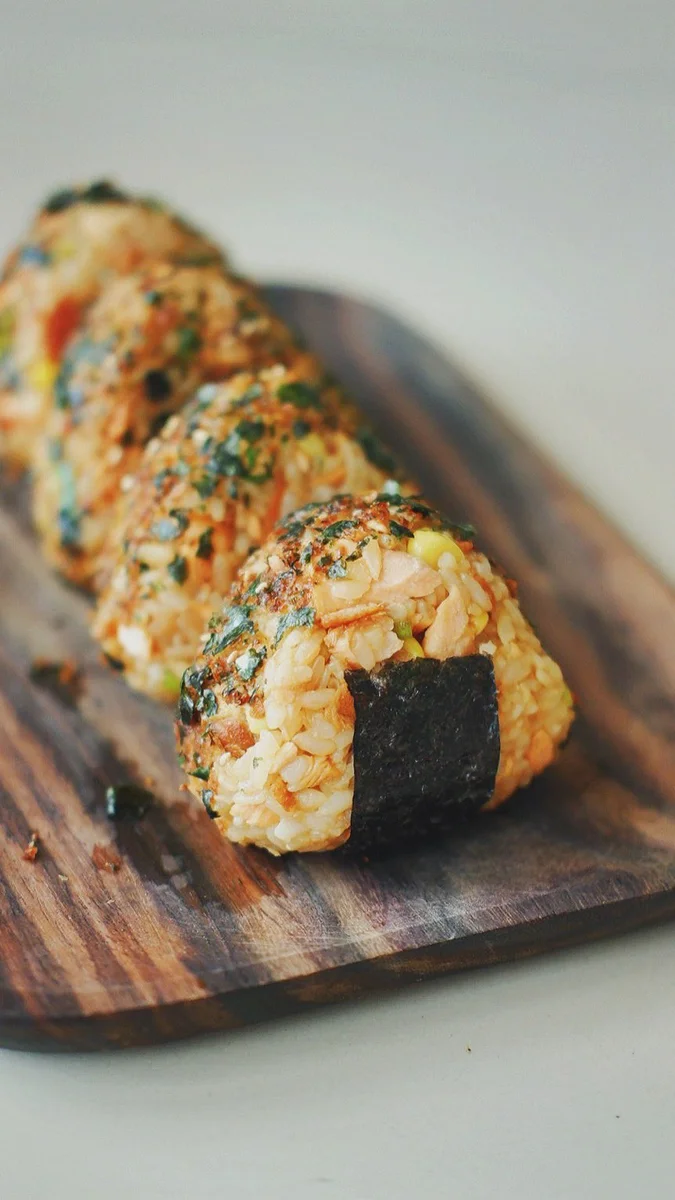
Salmon onigiri are Japanese rice balls filled with savoury salmon and shaped into triangles, then wrapped with nori and coated in furikake. They make a handy lunch or snack, with sweet-salty salmon mixed right through the rice.
Ingredients
- 150 gskinless salmon fillet, sliced
- 320 g (2 cups)warm cooked short-grain rice
- 40 g (¼ cup)corn kernels
- 2 tbspchopped spring onions
- to tastefurikake
- to tastenori seaweed sheets
- ½ tbspoil
- 1garlic clove, grated
- 2 tbspsake
- 2 tsphoney
- 2 tbspsoy sauce
Instructions
- 1
Brown the salmon
Heat the oil in a pan and fry the salmon on both sides until lightly browned.
- 2
Simmer the sauce
Mix the garlic, sake, honey and soy sauce, then add the mixture to the pan. Simmer until the sauce has thickened slightly.
- 3
Flake the salmon
Transfer the salmon to a bowl with ½–1 tbsp of the sauce.
- 4
Mix the filling
Roughly mash the salmon, then add the rice, corn and spring onions. Mix well.
- 5
Shape into balls
Take a handful of the rice mixture and form it into a ball.
- 6
Form the triangles
Press the rice into a triangle, using your thumb, index finger and middle finger to shape the corners. Repeat with the remaining mixture.
- 7
Wrap and season
Wrap each onigiri with a piece of nori, then press it into the furikake. Serve.
What is salmon onigiri?
Onigiri are Japanese rice balls, commonly shaped by hand and eaten as a portable snack or simple meal. This version mixes salmon, corn and spring onions through the rice rather than keeping the filling in the centre.
The sweet-savoury salmon and a little reduced sauce season the rice throughout. Nori and furikake add a crisp, savoury finish.
Nutrition and macros by portion
The nutrition label shows one serving as written: 240 calories, 13g protein, 30g carbs, 7g fat.
| Portion | Adjustment | kcal | Protein | Carbs | Fat |
|---|---|---|---|---|---|
| Lighter | Use less rice | 168 kcal | 9g | 21g | 5g |
| This serving | As written | 240 kcal | 13g | 30g | 7g |
| Hungry | Serve a larger onigiri | 360 kcal | 20g | 45g | 11g |
Rice and corn provide most of the carbohydrates, while salmon contributes protein and some fat; the oil and honey add further energy. Soy sauce and furikake contribute much of the salt. Serve with vegetables or a simple salad to round out the plate.
Build flavour with the sauce
Salmon: Fry it until lightly browned before adding the sauce; this gives the fish some colour while it cooks.
Sauce: The sake, honey, soy sauce and garlic simmer together until slightly thickened. Keep some of it with the salmon when transferring it, but avoid adding so much that the rice turns wet.
Use warm, sticky rice
Short-grain rice: Its natural stickiness helps the onigiri hold together. Use it warm, as cooled rice is harder to shape.
Mixing: Break the salmon into rough flakes and distribute the corn and spring onions evenly. Mix gently so the rice remains cohesive rather than becoming pasty.
Shape without squeezing
First form each handful into a ball so the rice is compact enough to handle. Then use your thumb, index finger and middle finger to press it into a triangle.
Press firmly enough to hold the shape, but not so hard that the rice becomes dense. If the rice sticks to your hands, dampen them lightly.
Finish with nori and furikake
Nori: Wrap each onigiri with a piece of seaweed after shaping. The recipe does not specify a sheet size, so use pieces that fit around your rice balls.
Furikake: Press the wrapped onigiri into the seasoning so it adheres to the outside. Add it to taste, since furikake blends vary in saltiness.
Serve as a snack or meal
These rice balls can be served on their own or alongside a simple soup or crisp vegetables. For a more substantial meal, add a side of greens or edamame.
They are easiest to eat soon after shaping, while the rice is still soft and the nori has not had time to soften.
Recipe notes & tips
- Keep the rice warm while shaping so it stays easy to mould.
- Use lightly damp hands to stop the rice sticking to your fingers.
- Simmer the sauce only until it thickens slightly, as it will continue to cling to the salmon.
- Reserve just ½–1 tbsp of sauce for mixing so the rice does not become soggy.
- Shape the onigiri with steady pressure to help them hold together.
- Add furikake to taste, particularly if your blend is already salty.
Variations
- Add sesame: Mix toasted sesame seeds into the rice for extra nuttiness.
- Use edamame: Swap the corn for cooked edamame for a different bite.
- Make it spicy: Add a little chilli to the salmon sauce.
- Try another fish: Use cooked flaked tuna in place of the salmon.
- Change the seasoning: Use a different furikake blend to vary the savoury finish.
Common mistakes to avoid
- Cold rice: It is harder to shape, so work with the rice while it is warm.
- Too much sauce: Excess liquid can make the rice loose; add only the stated amount when mixing.
- Over-mashing: Breaking the salmon into rough flakes keeps some texture in the rice.
- Loose shaping: Compact each ball before pressing it into a triangle so it holds its form.
- Over-squeezing: Too much pressure makes dense onigiri; press only enough to bind the rice.
How to store
Store the onigiri in an airtight container in the fridge and eat within 1 day. The rice may firm up when chilled; allow it to come closer to room temperature before eating, or reheat gently until warm. Nori is best added just before serving if you want it to stay crisp.
Frequently asked questions
Can I make the salmon mixture ahead?
Yes. Cook and flake the salmon with the sauce, then refrigerate it in a covered container and mix it with warm rice when ready to shape.
Why are my onigiri falling apart?
The rice may be too cool, or the shapes may not be compact enough. Use warm short-grain rice and press each one firmly enough to bind.
Can I use leftover rice?
Yes, provided it is short-grain rice and has been stored safely. Warm it before mixing so it is easier to shape.
When should I add the nori?
Wrap the onigiri after shaping, as directed. For a crisper texture, add the nori shortly before serving.
How much furikake should I use?
Use it to taste and press the onigiri into it to coat the outside. Start with a little, as some blends are saltier than others.
Cook it from the original
This recipe comes from fooooods.com. Their page has the author’s own photos, notes and tips — the best place to cook it from.
Open the recipe on fooooods.com