
Spicy Tuna Mayo Onigiri
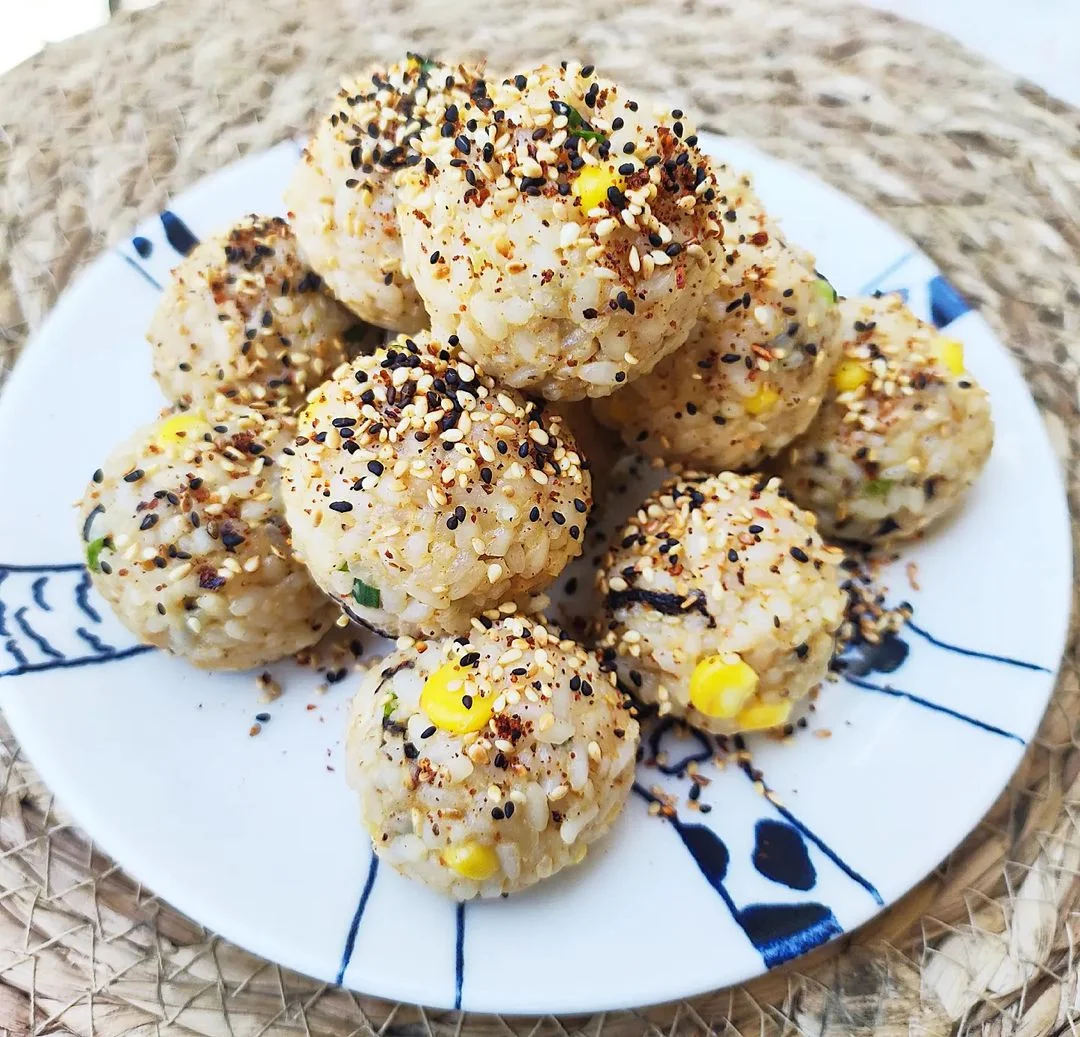
These Japanese-style onigiri combine seasoned short-grain rice with tuna, corn, wasabi and shichimi togarashi for a savoury, gently spicy bite. They make a handy lunch or snack, and the seasoning can be adjusted before shaping.
Ingredients
- 370 g (2 cups)short-grain rice
- 590 ml (2½ cups)water
- 15 ml (1 tbsp)sesame oil
- 15 ml (1 tbsp)rice vinegar
- 120 g (½ cup)tuna, fresh or canned
- 80 g (½ cup)corn kernels, fresh or frozen and boiled
- 2.5–5 ml (½–1 tsp)wasabi, depending on preferred spice level
- 7.5–15 ml (½–1 tbsp)shichimi togarashi, depending on preferred spice level
- 15 ml (1 tbsp)soy sauce
- 18 g (2 tbsp)toasted white sesame seeds
- 30 ml (2 tbsp)nori strips
- 3 g (½ tsp)salt, or to taste
Instructions
- 1
Wash the rice
Rinse the rice until the water runs clear, then drain it. Cook it on the stovetop or in a rice cooker.
- 2
Season the rice
Once the rice is cooked and has cooled slightly, add the sesame oil and mix well.
- 3
Cool the rice
Transfer the rice to a large bowl and leave it to cool.
- 4
Mix the ingredients
Add the remaining ingredients and mix well with your hands or a spatula. Taste and adjust the seasoning.
- 5
Shape the onigiri
Wet your hands, scoop up about 1½ tbsp of the rice mixture and shape it into a ball. Repeat with the mixture.
- 6
Garnish and serve
Arrange the rice balls on a serving plate. Garnish with more shichimi togarashi and a mixture of toasted white and black sesame seeds.
What is onigiri?
Onigiri are Japanese rice balls, commonly shaped by hand and eaten as a portable snack or part of a meal. They can be plain or seasoned, and are often paired with savoury fillings or nori.
This version mixes tuna, corn and spices through the rice rather than enclosing them as a separate centre. Sesame oil and vinegar add flavour, while the rice’s natural stickiness helps the balls hold their shape.
Nutrition and macros by portion
The nutrition label shows one serving as written: 440 calories, 15g protein, 76g carbs, 7g fat.
| Portion | Adjustment | kcal | Protein | Carbs | Fat |
|---|---|---|---|---|---|
| Lighter | Use less sesame oil | 308 kcal | 11g | 53g | 5g |
| This serving | As written | 440 kcal | 15g | 76g | 7g |
| Hungry | Serve a larger portion | 660 kcal | 23g | 114g | 11g |
Most of the carbohydrates come from the rice, with additional carbohydrate from the corn. Sesame oil and seeds contribute much of the fat, while tuna provides most of the protein. Pair a portion with vegetables or salad for a more rounded plate.
Choosing the rice
Short-grain rice: its sticky texture makes it easier to shape than long-grain rice. Rinsing until the water runs clear helps remove loose surface starch.
Cooking: use either a rice cooker or the stovetop, as directed. The method does not specify a cooking time, so follow the guidance for your equipment and rice.
Balancing the seasoning
Heat: start at the lower end of the wasabi and shichimi ranges if you prefer a milder result. Taste the mixture before shaping and add more gradually if wanted.
Saltiness: soy sauce and salt both season the rice, so taste before adding extra salt. The recipe leaves the final amount to preference.
Getting the texture right
Cool slightly: the rice should no longer be piping hot when the sesame oil is mixed in and the remaining ingredients are added. It still needs to be warm enough to handle and shape.
Wet hands: damp palms help keep sticky rice from clinging as you form the balls. Re-wet them as needed, without making the rice mixture soggy.
Shaping and serving
Portioning: the method suggests about 1½ tbsp of mixture per ball, which makes small bites. Shape gently so the rice holds together without becoming compacted.
Finishing: add the listed shichimi and sesame garnish just before serving. A little nori on the side can provide a crisp, savoury contrast.
What to serve alongside
Fresh sides: serve the onigiri with sliced cucumber or a simple green salad for a crisp contrast to the seasoned rice.
A fuller meal: miso soup or lightly dressed vegetables make an easy accompaniment. Keep sauces on the side so the rice balls are easier to handle.
Recipe notes & tips
- Rinse the rice thoroughly before cooking, as the method specifies.
- Let the cooked rice cool slightly before mixing in the sesame oil.
- Taste the mixture before shaping so you can adjust the heat and salt.
- Keep a small bowl of water nearby to wet your hands while shaping.
- Add the garnish just before serving to keep its texture distinct.
Variations
- Milder heat: use the lower amounts of wasabi and shichimi.
- Extra spice: add more shichimi gradually after tasting the mixture.
- Canned tuna: drain it well before mixing so it does not add excess moisture.
- More nori: serve extra nori strips alongside for a stronger seaweed flavour.
- Seed garnish: follow the suggested mix of toasted white and black sesame seeds when serving.
Common mistakes to avoid
- Skipping the rinse: cloudy water indicates loose surface starch remains; continue rinsing until it runs clear.
- Mixing while piping hot: the rice is harder to handle; let it cool slightly first.
- Adding too much heat at once: wasabi and shichimi can dominate; begin with the lower amounts and taste.
- Dry hands: sticky rice clings to your palms; wet them before scooping and shaping.
- Packing too firmly: pressing hard can make the balls dense; shape them gently until they hold together.
How to store
Refrigerate leftovers in an airtight container and eat within 1 day for the best texture. The rice will firm up when chilled; allow it to come towards room temperature before eating, or reheat gently until warm.
Frequently asked questions
Can I use a rice cooker?
Yes. The method allows either a rice cooker or stovetop cooking; use the instructions for your appliance and rice.
How spicy are these onigiri?
The heat depends on how much wasabi and shichimi you use. Start with the lower amounts, taste the mixture and add more if you like.
Can I use canned tuna?
Yes, canned tuna is listed as an option. Drain it well before mixing it into the rice.
Why is the rice difficult to shape?
It may not be sticky enough, or your hands may be dry. Short-grain rice is recommended, and wet hands help shape it without sticking.
Does this recipe contain mayonnaise?
No mayonnaise is included in the ingredient list or method, despite the familiar spicy tuna mayo name. The tuna is mixed with the rice, corn and seasonings.
Cook it from the original
This recipe comes from fooooods.com. Their page has the author’s own photos, notes and tips — the best place to cook it from.
Open the recipe on fooooods.com