
Classic Steak Au Poivre: a French Culinary Delight
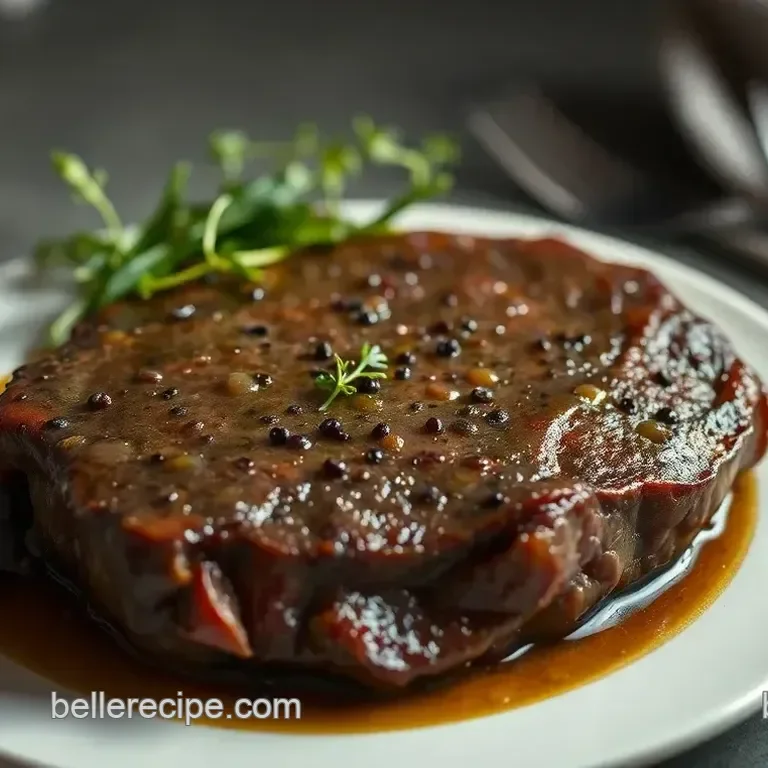
Steak au poivre pairs seared ribeye with crushed black pepper and a creamy Cognac sauce. It makes a classic French-style dinner for two, with a rich pan sauce that comes together in the same skillet as the steaks.
Ingredients
- 2 steaks, about 250 g each and 2.5 cm thickBoneless ribeye steaks
- To tasteSalt
- 30 g (2 tablespoons)Whole black peppercorns, roughly crushed
- 28 g (2 tablespoons)Unsalted butter
- 15 ml (1 tablespoon), plus more if neededVegetable oil
- 1 shallot, about 50 gShallot, finely chopped
- 120 ml (½ cup)Cognac or brandy
- 120 ml (½ cup)Double cream
- To tasteSalt and cracked black pepper
Instructions
- 1
Season the steaks
Pat the steaks dry with paper towels and season both sides generously with salt. Crush the peppercorns and press them onto the steaks to coat.
- 2
Sear the steaks
Heat a skillet over medium-high heat and add the vegetable oil. When it is hot, add the steaks and cook for 4–5 minutes on each side for medium-rare.
- 3
Reduce the Cognac
In the same skillet, add the chopped shallot and sauté until translucent. Pour in the Cognac and scrape up the browned bits from the pan; let the liquid reduce by half.
- 4
Finish and serve
Stir in the double cream, salt and pepper, then simmer until the sauce thickens slightly. Slice the steaks against the grain, arrange them on plates and drizzle with the sauce.
What is steak au poivre?
Steak au poivre is a French bistro dish of steak coated in crushed peppercorns and served with a creamy pan sauce. Its name means pepper steak, and the pepper gives the browned meat a fragrant, gently piquant crust.
This version uses ribeye, whose marbling suits a quick, hot sear, and Cognac to lift the browned flavour from the skillet. The cream softens the pepper’s bite and turns those pan juices into a sauce.
Nutrition and macros by portion
The nutrition label shows one serving as written: 500 calories, 42g protein, 5g carbs, 36g fat.
| Portion | Adjustment | kcal | Protein | Carbs | Fat |
|---|---|---|---|---|---|
| Lighter | Less cream, extra greens | 350 kcal | 29g | 4g | 25g |
| This serving | As written | 500 kcal | 42g | 5g | 36g |
| Hungry | Add potatoes and bread | 750 kcal | 63g | 8g | 54g |
The ribeye provides most of the protein and much of the fat, while the cream and oil add further fat; the small amount of carbohydrate comes mainly from the shallot and cream. Balance the plate with green vegetables or salad, and add a modest portion of potatoes if you want a more substantial meal.
Choosing the steak and pepper
Ribeye: Choose steaks of a similar thickness so they cook at roughly the same rate. Patting them dry helps them brown in the hot pan.
Peppercorns: Crush them roughly rather than grinding them to a fine powder. Larger pieces give the steak its characteristic peppery crust.
Getting a good sear
Hot pan: Heat the skillet over medium-high before adding the oil and steaks. The recipe’s 4–5 minutes per side is a guide for medium-rare steaks about 2.5 cm thick.
Space: If the steaks do not fit comfortably in the pan, cook them without crowding so they can sear rather than steam.
Making the pan sauce
Shallot: Sauté it in the same skillet until translucent, using the browned bits left by the steak for flavour. Keep it moving so it softens without taking on too much colour.
Cognac: Scrape the skillet as you pour in the spirit, then reduce the liquid by half before adding the cream. This concentrates the pan flavour and leaves room for the cream to thicken the sauce.
Checking doneness and texture
Steak: Follow the stated 4–5 minutes on each side for medium-rare, adjusting only if the steaks differ noticeably in thickness or the pan is much hotter or cooler. Resting the meat briefly before slicing can help keep the juices from running straight onto the plate.
Sauce: Simmer the cream mixture until it thickens slightly; it should coat the steak rather than become stiff. Slice against the grain for more tender bites.
Timing the meal
The stated total time is 60 minutes, but the searing and sauce stages move quickly once the ingredients are ready. Chop the shallot and crush the peppercorns before heating the skillet so you can tend to the steaks and sauce in sequence.
Make the sauce after searing, in the same pan, and serve as soon as the steak is sliced so the crust and sauce are at their best.
What to serve with it
A simple green salad or steamed green vegetables bring freshness alongside the rich steak and cream sauce. For a heartier plate, serve with mashed potatoes or chips to catch any extra sauce.
Keep other accompaniments simply seasoned; the steak already has a pepper crust and the sauce is finished with salt and cracked black pepper.
Recipe notes & tips
- Pat the steaks thoroughly dry before seasoning for better browning.
- Crush the peppercorns roughly so they cling to the meat and retain some texture.
- Have the shallot and Cognac ready before the steaks go into the hot skillet.
- Scrape up the browned bits when adding the Cognac to incorporate them into the sauce.
- Slice the steaks against the grain for more tender pieces.
Variations
- Use brandy: Substitute it for Cognac in the pan sauce.
- Add a little butter: Whisk a small knob into the finished sauce for extra gloss.
- Use a different steak: Choose another boneless steak of similar thickness and adjust cooking to suit its size.
- Make it less peppery: Use fewer crushed peppercorns for a milder crust.
- Serve with greens: Pair the steak with steamed vegetables or a dressed salad to bring freshness to the plate.
Common mistakes to avoid
- Wet steaks: Pat them dry before seasoning so they can brown properly.
- Finely ground pepper: Use roughly crushed peppercorns for a more textured crust.
- Cool pan: Wait until the skillet and oil are hot before adding the steaks.
- Skipping the reduction: Let the Cognac reduce by half before adding cream so the sauce is not too thin.
- Over-reducing the sauce: Stop when it thickens slightly; continued simmering can make it too thick.
How to store
Refrigerate leftover steak and sauce in a covered container and use within 2–3 days. Reheat gently in a covered pan over low heat, adding a small splash of cream or water if the sauce has thickened; avoid prolonged heating, which can toughen the steak.
Frequently asked questions
Can I use brandy instead of Cognac?
Yes. The ingredients list allows either Cognac or brandy, and both can be used to deglaze the pan.
How long should I cook the steaks?
The method gives 4–5 minutes per side for medium-rare steaks about 2.5 cm thick. Thicker or thinner steaks may need a different cooking time.
How should I crush the peppercorns?
Crush them roughly with a mortar and pestle or another sturdy tool. Aim for coarse pieces rather than a fine powder.
Can I make the sauce without alcohol?
The recipe relies on Cognac or brandy to deglaze the skillet. Leaving it out changes the sauce; you can use a little water to lift the browned bits, though the flavour will differ.
What should I serve with steak au poivre?
Green vegetables or salad provide a fresh contrast. Potatoes or bread also work well for a heartier meal and to catch the sauce.
Cook it from the original
This recipe comes from bellerecipe.com. Their page has the author’s own photos, notes and tips — the best place to cook it from.
Open the recipe on bellerecipe.com