
Juicy Cajun Butter Roast Turkey Recipe
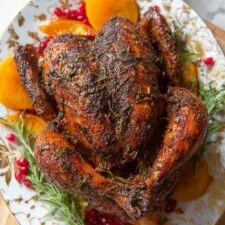
A whole roast turkey gets its Cajun flavour from a dry brine and a generously seasoned butter rubbed over and under the skin. Aromatic vegetables, herbs and beer in the roasting pan add savoury depth, while basting helps keep the bird moist.
Ingredients
- 1 (5.4–6.4 kg; 12–14 lb)whole turkey, fresh or thawed
- to tastekosher salt
- to tastefreshly ground black pepper
- 30 ml (2 tablespoons), packeddark brown sugar
- 2 largeyellow onions, roughly chopped
- 6 stalkscelery, roughly chopped
- 6 wholecarrots, roughly chopped
- 1 large, cut into quarterslemon
- 1 heaped bundlefresh hardy herbs such as rosemary, thyme and sage
- 355 ml (12 oz) beer, or 360 ml (1½ cups) turkey or chicken stock as a substitutebeer or stock
- 60 ml (¼ cup)neutral oil, such as avocado, grapeseed or algae oil
- 680 g (1½ lb; 6 sticks), at room temperatureunsalted butter
- 45 ml (3 tablespoons)Creole Cajun seasoning, homemade or shop-bought
- 30 ml (2 tablespoons)lemon pepper seasoning
- 8 sprigs, leaves removed and finely choppedfresh rosemary
- 15 ml (1 tablespoon)ground sage
- 15 ml (1 tablespoon)dried thyme
- 5 ml (1 teaspoon)ground allspice
- to tastekosher salt and freshly ground black pepper
Instructions
- 1
Prepare the turkey
Remove the turkey from its packaging and discard the giblets and neck, or save them for gravy. Pat the bird thoroughly dry inside and out with paper towels.
- 2
Dry-brine the bird
Set the turkey on a wire rack in a large dish. Season all over, including the cavity, with a generous amount of kosher salt, black pepper and brown sugar, rubbing the mixture over the skin. Position the turkey breast-side up.
- 3
Refrigerate uncovered
Place the turkey, uncovered, in the refrigerator for at least 24 hours and up to 3 days.
- 4
Take off the chill
On cooking day, remove the turkey from the refrigerator several hours before roasting to let it come towards room temperature, particularly if it weighs 5.4–6.4 kg (12–14 lb).
- 5
Mix Cajun butter
In a large bowl, combine the softened butter with the Cajun seasoning, lemon pepper, chopped rosemary, sage, thyme, allspice, salt and pepper. Mix until smooth, transfer to a microwave-safe container and set aside.
- 6
Heat the oven
Adjust the oven racks so the turkey will sit in the centre, then preheat the oven to 220°C (425°F).
- 7
Butter the turkey
Pat the dry-brined turkey again to remove excess moisture. Use half the compound butter to coat the outside, front and back, and carefully loosen the breast skin to spread some butter underneath. Keep the rest of the butter for later.
- 8
Fill the cavity
Put half the onions, celery, carrots, lemon quarters and herb bundle inside the turkey. Tie the legs together with kitchen twine.
- 9
Set up the pan
Arrange the remaining onions, celery and carrots in the bottom of a roasting pan and pour in the beer or stock. Place a roasting rack over the vegetables and set the turkey on the rack.
- 10
Start roasting
Roast the turkey uncovered at 220°C (425°F) for 30 minutes to develop a crust.
- 11
Make the basting butter
Reduce the oven temperature to 165°C (325°F). Microwave the remaining compound butter until melted, then stir in the neutral oil.
- 12
Inject and cover
Use a meat injector to inject the melted butter mixture into several spots in the turkey, focusing mainly on the breast. Soak cheesecloth in the mixture and drape it over the bird.
- 13
Roast until done
Continue roasting at 165°C (325°F) for approximately 3 hours total, allowing 13–15 minutes per pound, until the breast or thigh reaches 74°C (165°F) internally. Every 30–45 minutes, take the turkey out to inject it again, baste it and re-soak the cheesecloth.
- 14
Rest before carving
When the turkey is done, remove the cheesecloth and leave the bird to rest for 30–45 minutes before carving. Baste it with the pan juices just before serving.
- 15
Serve the turkey
Transfer the turkey to a large platter and garnish if desired. Use the pan drippings to make gravy.
What is Cajun butter roast turkey?
Roast turkey is a familiar centrepiece of American Thanksgiving, while Cajun seasoning brings a Louisiana-inspired mix of herbs and spices to the table. This version layers flavour in stages: a dry brine seasons the bird ahead, then seasoned butter coats the skin and breast meat.
The beer or stock, vegetables and herbs in the roasting pan provide a savoury base for the drippings. The result is a richly seasoned turkey with pan juices that can also be used for gravy.
Nutrition and macros by portion
The nutrition label shows one serving as written: 550 calories, 40g protein, 6g carbs, 45g fat.
| Portion | Adjustment | kcal | Protein | Carbs | Fat |
|---|---|---|---|---|---|
| Lighter | Less butter on the skin | 385 kcal | 28g | 4g | 31g |
| This serving | As written | 550 kcal | 40g | 6g | 45g |
| Hungry | Larger turkey portion | 825 kcal | 60g | 9g | 68g |
Most of the protein comes from the turkey, while the butter and oil supply most of the fat. The vegetables and seasonings contribute a small amount of carbohydrate; serve a portion with vegetables and a suitable starchy side to round out the plate.
The dry brine sets the foundation
Salt and brown sugar: rub them over the whole bird and inside the cavity so the seasoning has time to settle in during refrigeration. Leaving the turkey uncovered also helps dry the skin before roasting.
Timing: the recipe calls for at least 24 hours and up to 3 days in the fridge. Keep the bird on a rack in a dish to catch any liquid.
Seasoned butter does several jobs
Cajun butter: mix the butter thoroughly with the seasonings and herbs so each portion is evenly flavoured. Coat the outside of the bird and work some carefully beneath the breast skin.
Basting mixture: reserve half the butter, then melt it with the oil after the initial roasting stage. The recipe uses this mixture for injecting and for soaking the cheesecloth.
Aromatics flavour the bird and pan
Inside the cavity: the onions, celery, carrots, lemon and herb bundle scent the turkey as it roasts. Fill the cavity loosely rather than packing it tightly.
In the pan: the remaining vegetables sit beneath the roasting rack alongside beer or stock. They catch the drippings and make a flavourful base for gravy.
Watch the temperature and timing
Initial heat: the first 30 minutes at 220°C (425°F) helps the exterior develop colour. The oven is then reduced to 165°C (325°F) for the longer roasting stage.
Doneness: use a meat thermometer to check the breast or thigh reaches 74°C (165°F), as directed in the recipe. The stated roasting estimate is approximately 3 hours at the lower temperature, with basting every 30–45 minutes.
Resting makes carving easier
Rest: remove the cheesecloth once the turkey is cooked and leave the bird for 30–45 minutes before carving. This also gives you time to finish the gravy from the pan drippings.
Serving: pair slices with roast potatoes, vegetables or a fresh salad. Spoon some pan juices over the carved meat just before serving.
Recipe notes & tips
- Use a roasting dish large enough to hold the turkey and vegetables without crowding them.
- Pat the skin dry before applying the butter to help it coat the bird evenly.
- Keep the remaining compound butter covered while the turkey begins roasting.
- Have the meat injector and cheesecloth ready before the first roasting stage ends.
- Use a thermometer to check the breast or thigh rather than relying only on the estimated cooking time.
- Rest the turkey before carving and save the pan drippings for gravy.
Variations
- Use stock: replace the beer with turkey or chicken stock as specified in the ingredient list.
- Adjust the heat: choose a milder or hotter Cajun seasoning to suit your preferred spice level.
- Change the herbs: use the suggested rosemary, thyme and sage combination in the cavity.
- Make gravy: use the roasting-pan drippings as the base for gravy.
- Season the butter: use homemade or shop-bought Creole Cajun seasoning in the compound butter.
Common mistakes to avoid
- Skipping the dry brine: leave the seasoned turkey uncovered in the fridge for at least 24 hours as directed.
- Leaving the skin damp: pat the turkey dry before applying the compound butter.
- Packing the cavity tightly: add the aromatics without compressing them into the bird.
- Skipping thermometer checks: check the breast or thigh for 74°C (165°F) before removing the turkey.
- Carving straight away: rest the bird for 30–45 minutes before slicing.
- Forgetting to baste: repeat the injecting, basting and cheesecloth soaking every 30–45 minutes during the lower-temperature roast.
How to store
Refrigerate leftover turkey promptly in a covered container and use within 3–4 days. Reheat portions until steaming hot, adding a little gravy or pan juice to help keep the meat moist.
Frequently asked questions
Can I use frozen turkey?
Yes, but thaw it completely before starting the recipe. The ingredient list specifies a fresh or thawed turkey.
How long should I dry-brine the turkey?
Refrigerate it uncovered for at least 24 hours and up to 3 days.
Can I use stock instead of beer?
Yes. The recipe gives 360 ml (1½ cups) of turkey or chicken stock as the substitute for the 355 ml (12 oz) bottle of beer.
Do I need a meat injector?
The method uses one to inject the melted butter mixture into several spots, mainly the breast. If you do not have one, the recipe does not specify an alternative injection method.
How do I know when the turkey is cooked?
Check the breast or thigh with a meat thermometer; the method gives 74°C (165°F) as the target internal temperature.
Can I make gravy from the pan?
Yes. The recipe calls for using the pan drippings to make gravy.
Cook it from the original
This recipe comes from bakingwithmaya.com. Their page has the author’s own photos, notes and tips — the best place to cook it from.
Open the recipe on bakingwithmaya.com