
Basic Bolognese Sauce
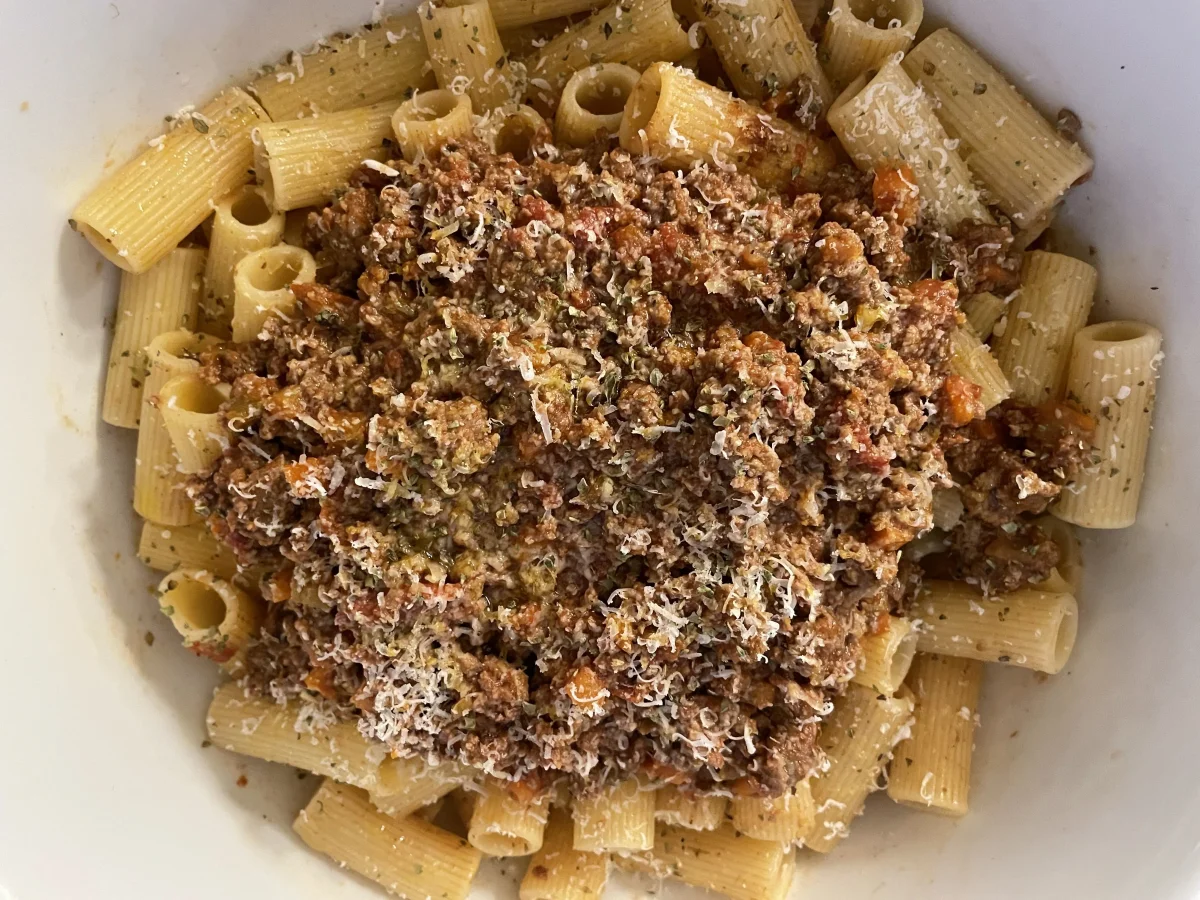
This slow-simmered Bolognese-style sauce combines browned beef, softened vegetables, red wine and tomatoes. Make a generous batch for serving with pasta, or freeze portions for another meal.
Ingredients
- 150 g (1 cup)chopped carrot
- 160 g (1 cup)chopped onion
- 100 g (1 cup)chopped celery
- 907 g (2 pounds)ground chuck
- 473 ml (2 cups)dry red wine
- 794 g (1 can, 28 oz)whole San Marzano tomatoes
- 30 ml (2 tablespoons)dried oregano
- To tastesalt and pepper
- 118 ml (1/2 cup)extra virgin olive oil
Instructions
- 1
Heat the oil
Warm the oil in a large, wide pan or Dutch oven over medium heat.
- 2
Add the vegetables
Once the oil shimmers, add the carrot, onion and celery.
- 3
Season the soffritto
Add salt and pepper to taste, then stir the vegetables.
- 4
Lower the heat
Reduce the heat so the vegetables soften gradually.
- 5
Soften the vegetables
Stir every five minutes until the soffritto is almost paste-like, about 20 minutes in total.
- 6
Add the beef
Turn the heat up to medium-high and add the ground meat.
- 7
Season the meat
Season the beef with salt and pepper.
- 8
Brown the beef
Cook for about 20 minutes, stirring occasionally, until the meat is evenly browned.
- 9
Add the wine
Pour in the wine and stir to lift the browned bits from the pan, until the wine begins to boil.
- 10
Reduce the wine
Lower the heat slightly and let the wine reduce almost completely, about five minutes.
- 11
Add the tomatoes
Add the tomatoes, crush them with a fork, season with salt and pepper, and stir until the mixture just boils.
- 12
Stir in oregano
Add the oregano and stir it through the sauce.
- 13
Cover the pan
Lower the heat and cover the pan until the sauce reaches a simmer.
- 14
Simmer the sauce
Cook for roughly 90 minutes, checking that the sauce continues to simmer, until the meat is tender and flavourful.
- 15
Serve the sauce
Serve the sauce as you like.
What is Bolognese sauce?
Bolognese is a meat sauce associated with Bologna and the Emilia-Romagna region of Italy. This version builds flavour from beef, a slowly softened vegetable base, wine and tomatoes.
The long, gentle simmer helps the ingredients meld and gives the beef time to become tender. Serve it with pasta or use it as a sauce for another dish.
Nutrition and macros by portion
The nutrition label shows one serving as written: 530 calories, 23g protein, 15g carbs, 46g fat.
| Portion | Adjustment | kcal | Protein | Carbs | Fat |
|---|---|---|---|---|---|
| Lighter | Use less olive oil | 371 kcal | 16g | 11g | 32g |
| This serving | As written | 530 kcal | 23g | 15g | 46g |
| Hungry | Serve a larger portion | 795 kcal | 35g | 23g | 69g |
The beef and olive oil provide most of the protein and fat, while the vegetables and tomatoes contribute much of the carbohydrate. To balance the plate, serve a moderate amount of sauce with pasta and add a generous side of vegetables or salad.
Build the vegetable base
Soffritto: carrot, onion and celery make the aromatic foundation of the sauce. Chopping them evenly helps them soften at a similar pace.
Slow softening: cook the vegetables gently until almost paste-like, as directed. Stir regularly so they soften without catching on the pan.
Brown the beef well
Room to cook: a large, wide pan gives the meat more contact with the hot surface. If it is crowded, the beef can release liquid and steam rather than brown.
Even colour: stir from time to time during the roughly 20-minute browning stage. This helps the meat cook evenly and leaves browned bits that the wine can loosen.
Reduce the wine before adding tomatoes
Deglaze: stir the wine into the pan once the beef is browned, scraping up the savoury bits. Let it reach a boil before reducing the heat.
Reduction: the recipe calls for the wine to reduce almost entirely, which takes about five minutes. Add the tomatoes after that stage, rather than leaving a large amount of wine in the pan.
Check the simmer and texture
Gentle bubbles: after covering the pan, keep the heat low enough for a steady simmer rather than a vigorous boil. Check occasionally, as the recipe directs.
Tender meat: after roughly 90 minutes, the meat should be tender and the sauce should taste well melded. If it is still loose, continue cooking gently until it reaches the consistency you prefer.
Plan the long cooking time
Early stages: allow about 20 minutes for the soffritto and about 20 minutes to brown the beef, followed by the brief wine reduction.
Final simmer: set aside roughly 90 minutes for the covered cooking stage. Keep an eye on the pan so the sauce maintains a simmer and does not stick.
How to serve it
Pasta: serve the sauce with your preferred pasta, adding enough sauce to coat each portion. The recipe does not specify a pasta shape or quantity.
Balance: add a side of vegetables or salad for freshness, and adjust the pasta portion to suit your meal.
Recipe notes & tips
- Chop the carrot, onion and celery to a similar size so they soften evenly.
- Keep the soffritto on low heat and stir every five minutes during its 20-minute cooking time.
- Use a wide pan to give the beef space to brown.
- Let the wine reduce almost entirely before adding the tomatoes.
- Check the simmer during the 90-minute cooking period and adjust the heat if needed.
Variations
- Fresh oregano: use fresh oregano in place of dried, adding it to taste.
- More vegetables: increase the chopped carrot, onion or celery for a more vegetable-forward sauce.
- Different beef: use another type of ground beef, keeping in mind that its fat content may change the sauce's richness.
- Chunkier tomatoes: crush the whole tomatoes less thoroughly for a more textured sauce.
- Wine-free option: replace the wine with water, though the finished sauce will have a different flavour.
Common mistakes to avoid
- Rushing the soffritto: cook it gently for about 20 minutes until nearly paste-like.
- Crowding the beef: use a wide pan so the meat can brown instead of steaming.
- Skipping the seasoning: season the vegetables and beef as directed, tasting carefully as you go.
- Adding tomatoes too soon: reduce the wine almost entirely before adding the tomatoes.
- Boiling too hard: lower the heat after the sauce begins to simmer and check it during cooking.
How to store
Cool leftover sauce promptly and refrigerate it in a covered container for up to 3 days, or freeze it for up to 3 months. Reheat gently in a saucepan until steaming hot, adding a little water if it has thickened.
Frequently asked questions
Can I make this sauce ahead?
Yes. Cool it and refrigerate it in a covered container, then reheat gently before serving. The recipe also makes a batch that can be frozen in portions.
How do I know when the sauce is ready?
After roughly 90 minutes of simmering, the meat should be tender and the flavours should be well melded. Keep the heat low and check that the sauce is simmering rather than boiling hard.
Can I use a different pan?
Yes, use a large, wide pan or a Dutch oven, as the method specifies. A wide cooking surface also helps the beef brown.
What should I serve with Bolognese sauce?
Serve it with pasta, or use it wherever you would serve a meat-and-tomato sauce. A side of vegetables or salad makes a fresh accompaniment.
Can I leave out the red wine?
You can replace it with water, but the flavour will be different. Follow the same instruction to let the liquid reduce before adding the tomatoes.
Cook it from the original
This recipe comes from appetitomagazine.com. Their page has the author’s own photos, notes and tips — the best place to cook it from.
Open the recipe on appetitomagazine.com