
Quinoa Veggie Stir-Fry
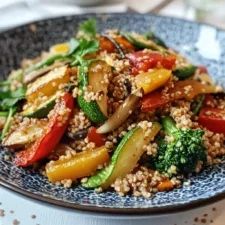
Quinoa Veggie Stir-Fry pairs fluffy quinoa with crisp-tender vegetables and a savoury, tangy sauce. It’s a colourful one-pan meal that’s useful for getting dinner on the table with plenty of vegetables and satisfying texture.
Ingredients
- 170 g (1 cup)quinoa (tricolour or white), thoroughly rinsed
- 475 ml (2 cups)vegetable stock or water
- A pinchsalt
- 15 ml (1 tablespoon)sesame oil
- 15 ml (1 tablespoon)avocado oil or another high-heat oil
- 1 mediumred onion, thinly sliced
- 2 clovesgarlic, minced
- 15 ml (1 tablespoon)fresh ginger, grated or minced
- 1red pepper, deseeded and thinly sliced
- 1yellow or orange pepper, deseeded and thinly sliced
- 1 largecarrot, cut into matchsticks or thinly sliced diagonally
- 1 headbroccoli, cut into small florets
- 150 g (1 cup)mangetout or sugar snap peas, trimmed
- 75 g (1 cup)sliced mushrooms (chestnut or shiitake recommended)
- Optional, to tastebaby corn, water chestnuts, edamame or pak choi
- 60 ml (¼ cup)reduced-salt soy sauce or tamari
- 30 ml (2 tablespoons)rice vinegar
- 15 ml (1 tablespoon)maple syrup or agave nectar
- 15 ml (1 tablespoon)toasted sesame oil
- 3 g (1 teaspoon) mixed with 15 ml (1 tablespoon) watercornflour or arrowroot powder
- 2.5 ml (½ teaspoon), optionalsriracha or chilli flakes
- To taste, optionaltoasted sesame seeds
- To taste, optionalspring onions, thinly sliced
- To taste, optionalfresh coriander, chopped
Instructions
- 1
Cook the quinoa
Rinse the quinoa thoroughly under cold running water in a fine-mesh sieve. Put it in a medium saucepan with the stock or water and a pinch of salt. Bring to the boil over a medium-high heat, then cover, reduce the heat to low and simmer for 15–20 minutes, until the liquid is absorbed and the quinoa is tender. Take the pan off the heat and leave it covered for 5 minutes, then fluff the quinoa with a fork and set aside.
- 2
Mix the sauce
While the quinoa cooks, whisk the soy sauce or tamari, rice vinegar, maple syrup or agave, toasted sesame oil and optional sriracha or chilli flakes in a small bowl. In a separate small bowl, mix the cornflour or arrowroot with 15 ml (1 tablespoon) cold water until smooth. Keep the sauce and slurry separate.
- 3
Prepare vegetables
Wash and cut the vegetables as listed. Mince the garlic and grate or mince the ginger. Have everything ready before you begin stir-frying.
- 4
Heat the pan
Set a large frying pan or wok over a medium-high heat and let it get properly hot. A drop of water should sizzle and evaporate straight away.
- 5
Cook aromatics
Add the avocado oil or other high-heat oil and swirl to coat the pan. Add the red onion and cook for 1–2 minutes, until it starts to soften. Add the garlic and ginger and stir-fry for 30–60 seconds, until fragrant, taking care not to burn the garlic.
- 6
Stir-fry firm vegetables
Add the carrot and broccoli. Stir-fry continuously for 3–4 minutes, tossing often so they cook evenly.
- 7
Add remaining vegetables
Add the peppers, mangetout or sugar snap peas, and mushrooms. Stir-fry for a further 3–5 minutes, until the vegetables are bright and crisp-tender. If the pan seems dry, add 15 ml (1 tablespoon) water or vegetable stock to help steam them slightly.
- 8
Thicken the sauce
Push the vegetables to the sides of the pan to leave a space in the centre. Quickly whisk the sauce, pour it into the space and bring it to a simmer. Stir the slurry again, add it to the simmering sauce and whisk continuously; the sauce should thicken slightly in about 30 seconds.
- 9
Toss with quinoa
Add the cooked, fluffed quinoa and gently toss until the vegetables and quinoa are evenly coated. Stir-fry for 1–2 minutes, just until heated through. Taste and adjust the seasoning if needed, adding a little more soy sauce for saltiness or maple syrup for sweetness.
- 10
Finish and serve
Take the pan off the heat and stir in the sesame oil listed for the stir-fry vegetables. Serve straight away, with sesame seeds, spring onions and/or fresh coriander if desired.
What is quinoa veggie stir-fry?
Stir-frying is a quick cooking method associated with Chinese cooking, in which ingredients are tossed over high heat. This version uses quinoa in place of the more familiar rice, combining it with a variety of vegetables and a glossy, savoury sauce.
Quinoa is a seed that cooks up light and fluffy, while the staggered cooking order helps the vegetables keep some bite. A little vinegar and sweetener balance the salty soy-based sauce.
Nutrition and macros by portion
The nutrition label shows one serving as written: 450 calories, 18g protein, 0g carbs, 0g fat.
| Portion | Adjustment | kcal | Protein | Carbs | Fat |
|---|---|---|---|---|---|
| Lighter | Use less sesame oil | 315 kcal | 13g | 0g | 0g |
| This serving | As written | 450 kcal | 18g | 0g | 0g |
| Hungry | Add extra quinoa | 675 kcal | 27g | 0g | 0g |
The quinoa provides most of the carbohydrates and some of the protein, with additional protein coming from the vegetables and any optional edamame. Sesame and cooking oils contribute most of the fat, while the vegetables add fibre. For a more balanced plate, serve a generous portion of vegetables alongside the quinoa and include edamame if you want to add another protein-containing ingredient.
Quinoa for a fluffy base
Rinsing: Rinse the quinoa thoroughly before cooking to wash away its naturally occurring bitter coating. A fine-mesh sieve keeps the small grains from escaping.
Cooking: Simmer it covered until the liquid has been absorbed, then leave it to stand off the heat for 5 minutes. Fluff gently with a fork so the grains stay separate.
Get everything ready first
Prep: Slice and chop all the vegetables, and prepare the garlic and ginger before heating the pan. Stir-frying moves quickly, so measuring the sauce and making the slurry ahead makes the final steps easier.
Cutting: Keep the carrot and broccoli pieces small enough to cook in the same short window as the other vegetables. Try to slice the peppers and onion evenly for consistent cooking.
Cook vegetables in stages
Aromatics: Give the onion a short head start, then add the garlic and ginger briefly. Their fragrance develops quickly, but the garlic can scorch if left too long in a very hot pan.
Firm vegetables: Carrot and broccoli go in first because they take longer to soften. Add the peppers, peas and mushrooms afterwards so they retain colour and texture.
Use a hot pan
Heat: Let the pan become properly hot before adding the oil and vegetables. If you add too much at once or use a pan that is not hot enough, the vegetables are more likely to steam than stir-fry.
Doneness: Look for bright, crisp-tender vegetables with a little bite rather than soft, dull ones. If the pan becomes dry, a small splash of water or stock can help without adding more oil.
Make the sauce cling
Balance: Soy sauce brings savouriness, rice vinegar adds tang, and maple syrup or agave rounds out the flavour. Taste the finished dish before adjusting, as the soy sauce already contributes salt.
Thickening: Mix the cornflour or arrowroot with cold water separately, then stir it again just before adding it to the simmering sauce. It thickens quickly, so keep whisking and move on once it lightly coats the pan.
Serve it straight away
Finish: Toss in the cooked quinoa only after the vegetables and sauce are ready, then heat everything together for 1–2 minutes. Stir in the final sesame oil off the heat to preserve its aroma.
Pairing: Serve the stir-fry on its own or with extra vegetables on the side. Sesame seeds, spring onions and coriander add crunch, freshness and colour.
Recipe notes & tips
- Rinse the quinoa in a fine-mesh sieve so the grains do not wash away.
- Prepare all the vegetables and sauce before turning on the heat.
- Use a large pan or wok so the vegetables have room to toss.
- Stir the cornflour slurry again just before adding it to the sauce.
- Add the optional chilli gradually and taste as you go.
- Keep the final sesame oil for stirring in after the pan comes off the heat.
Variations
- Add edamame: Stir it in with the softer vegetables for an extra bite.
- Use tamari: Choose it in place of soy sauce for a gluten-free alternative.
- Change the greens: Swap the peas for sliced pak choi or another quick-cooking vegetable.
- Make it hotter: Increase the sriracha or chilli flakes to suit your taste.
- Try another grain: Use cooked rice in place of quinoa, adding it at the same stage.
- Add crunch: Toss in water chestnuts or baby corn with the softer vegetables.
Common mistakes to avoid
- Skipping the rinse: Unrinsed quinoa can taste bitter; rinse it well before cooking.
- Crowding the pan: The vegetables may steam instead of stir-fry; use a large pan and cook in batches if needed.
- Burning the garlic: It cooks quickly; add it after the onion and stir for only 30–60 seconds.
- Overcooking the vegetables: They lose their crisp bite; stop when they are bright and just tender.
- Adding the slurry all at once without mixing: The starch can settle; stir it just before pouring it into the sauce.
- Leaving the quinoa too long in the pan: It can become soft; toss it in at the end and heat for only 1–2 minutes.
How to store
Cool leftovers promptly and store them in an airtight container in the fridge for up to 3 days. Reheat in a frying pan over a medium heat until piping hot, adding a splash of water if needed to loosen the sauce.
Frequently asked questions
Can I cook the quinoa ahead?
Yes. Cook it in advance, cool it and refrigerate it in a covered container. Fluff it with a fork before adding it to the stir-fry.
Can I use water instead of vegetable stock?
Yes. Water works in place of stock, though the quinoa will have a milder flavour.
How do I keep the vegetables crisp?
Use a properly heated, roomy pan and cook the vegetables in stages. Stop when they are bright and crisp-tender rather than completely soft.
Can I make this gluten-free?
Use tamari instead of soy sauce and check that the other ingredients, including the stock, are labelled gluten-free.
What can I use instead of cornflour?
The recipe lists arrowroot as an alternative. Mix it with cold water to make a smooth slurry, just as you would with cornflour.
Can I leave out the chilli?
Yes. The sriracha or chilli flakes are optional, so omit them for a milder sauce.
Cook it from the original
This recipe comes from betterhomerecipes.com. Their page has the author’s own photos, notes and tips — the best place to cook it from.
Open the recipe on betterhomerecipes.com