
Perfect Scraper Spaghetti: the Ultimate Easy Pasta Dish
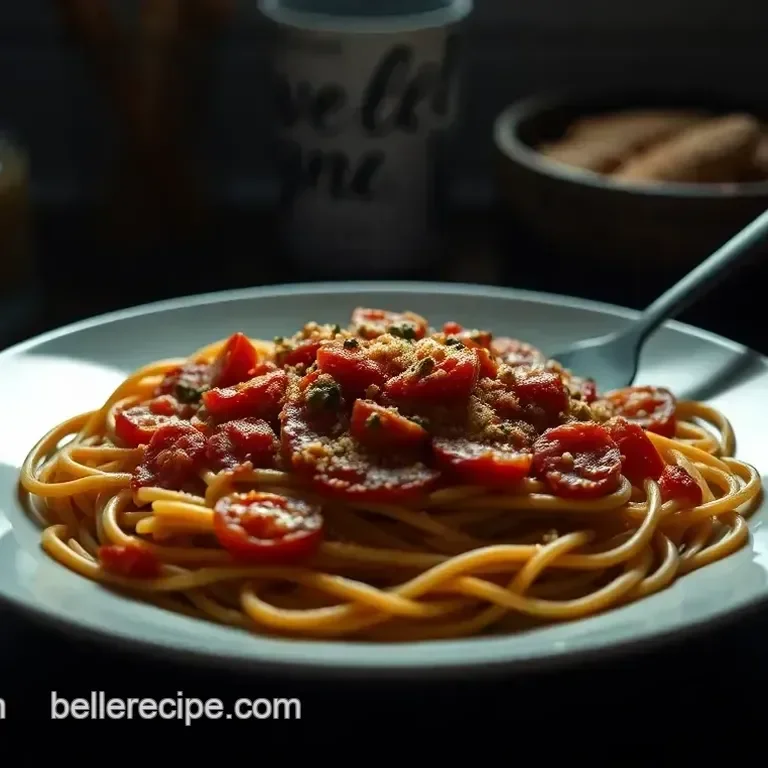
This quick tomato spaghetti pairs garlic, oregano and chilli with a simple crushed-tomato sauce. A rubber scraper helps gather the sauce from the pan and coat the pasta before serving.
Ingredients
- 2 tablespoons (30 ml)olive oil
- 3 cloves, mincedgarlic
- 1 can (400 g)crushed tomatoes
- 1 teaspoon (5 g)dried oregano
- 1 teaspoonred pepper flakes
- to tastesalt and pepper
- 340 gspaghetti
- to tastefresh basil leaves, for garnish
Instructions
- 1
Boil the pasta
Bring a large pot of salted water to the boil. Add the spaghetti and cook until al dente. Reserve 1 cup of pasta water, then drain the pasta and set it aside.
- 2
Make the sauce
Heat the olive oil in a skillet over medium heat. Add the minced garlic and cook for about 1 minute, until fragrant. Stir in the crushed tomatoes, oregano, red pepper flakes, salt and pepper. Simmer for 10 minutes, stirring occasionally.
- 3
Combine pasta and sauce
Add the cooked spaghetti to the skillet and toss to coat. Use a rubber scraper to gather the sauce from the pan. If it is too thick, add some of the reserved pasta water until it reaches the consistency you want.
- 4
Garnish and serve
Divide the spaghetti between plates and finish with fresh basil leaves.
What is tomato spaghetti?
Spaghetti with tomato sauce is a familiar Italian-style pasta dish, built around pasta tossed with a seasoned tomato base. This version keeps the sauce simple, with garlic, oregano and chilli bringing flavour without a long cooking time.
The rubber scraper is a practical touch: it helps collect sauce clinging to the skillet so more of it ends up coating the pasta.
Nutrition and macros by portion
The nutrition label shows one serving as written: 350 calories, 10g protein, 0g carbs, 8g fat.
| Portion | Adjustment | kcal | Protein | Carbs | Fat |
|---|---|---|---|---|---|
| Lighter | Use less olive oil | 245 kcal | 7g | 0g | 6g |
| This serving | As written | 350 kcal | 10g | 0g | 8g |
| Hungry | Serve a larger portion | 525 kcal | 15g | 0g | 12g |
The spaghetti provides most of the dish’s carbohydrates, while olive oil contributes much of its fat. The pasta and tomatoes provide some protein, but a protein-rich side can make the meal more filling; adding vegetables or salad is another practical way to round out the plate.
The ingredients that shape the sauce
Tomatoes: Crushed tomatoes make a quick, spoonable sauce that needs only a short simmer. Stir them well with the seasonings so the flavours are evenly distributed.
Garlic and oil: Warm the garlic gently in olive oil to release its aroma. Keep it moving and take care not to let it brown too much, which can make it taste bitter.
Oregano and chilli: Dried oregano gives the sauce a savoury herbal note, while red pepper flakes add heat. Adjust the chilli to suit the people at the table.
Get the pasta water ready
Reserve some pasta water before draining the spaghetti, as the recipe directs. Its starch can help loosen the sauce and help it cling to the pasta when the two are tossed together.
Add the water a little at a time if the sauce seems too thick. You may not need to use all of the reserved amount.
Check for al dente pasta
Start checking the spaghetti towards the end of its cooking time, following the packet guidance. Al dente pasta should be cooked through but still have a slight firmness when bitten.
Drain it promptly once it reaches that point, then toss it with the sauce. The pasta will pick up flavour as it is coated in the skillet.
Finish the sauce in the pan
Toss the drained spaghetti through the simmered sauce rather than spooning the sauce over plain pasta on the plate. A broad skillet gives you room to mix without breaking the strands.
Scrape around the base and sides of the skillet as you toss. Add pasta water only as needed to make the sauce easier to distribute.
What to serve alongside
Serve the spaghetti straight away, while the sauce is warm and glossy, with fresh basil scattered over the top. A simple green salad or cooked vegetables make an easy accompaniment.
For a more substantial meal, serve it with bread or add a protein-rich side. Keep any extra seasoning or chilli at the table so everyone can adjust their plate.
Recipe notes & tips
- Salt the pasta water before it comes to the boil.
- Reserve the pasta water before draining, as it is difficult to retrieve afterwards.
- Stir the garlic as it cooks so it warms evenly without catching.
- Taste the sauce after simmering and adjust the salt, pepper or chilli.
- Use the rubber scraper to gather sauce from the sides and base of the skillet.
- Add pasta water gradually so the sauce does not become too thin.
Variations
- More heat: Increase the red pepper flakes to taste.
- Extra herbs: Add chopped fresh basil to the sauce as well as using it to garnish.
- Vegetable addition: Stir in cooked vegetables when you toss the pasta with the sauce.
- Cheesy finish: Serve with grated cheese at the table.
- Olive addition: Stir sliced olives into the sauce during its simmer.
Common mistakes to avoid
- Burnt garlic: Keep it moving over medium heat and add the tomatoes as soon as it is fragrant.
- Overcooked spaghetti: Check it towards the end of cooking and drain it while it still has a little firmness.
- Forgotten pasta water: Scoop out a cup before draining the spaghetti.
- Watery sauce: Add reserved pasta water in small amounts, only if the sauce needs loosening.
- Uneven coating: Toss the spaghetti thoroughly in the skillet and scrape up sauce from the pan.
How to store
Refrigerate leftovers in a covered container for up to 3 days. Reheat in a pan or microwave until hot, adding a small splash of water if the sauce has thickened.
Frequently asked questions
Can I use a different type of pasta?
Yes. Another pasta shape can be used, though its cooking time may differ. Cook it until al dente and reserve some of its cooking water before draining.
Do I need to use the pasta water?
Not necessarily. Add it only if the sauce needs loosening; the amount required will depend on how thick the sauce is.
How can I make the sauce less spicy?
Use fewer red pepper flakes or leave them out. You can also serve extra chilli separately.
Can I make the sauce ahead?
You can prepare the tomato sauce ahead and refrigerate it in a covered container. Reheat it in a skillet, then toss with freshly cooked spaghetti.
What does al dente mean?
It means the pasta is cooked through but retains a slight firmness when bitten. Check the spaghetti as it cooks rather than relying only on appearance.
Cook it from the original
This recipe comes from bellerecipe.com. Their page has the author’s own photos, notes and tips — the best place to cook it from.
Open the recipe on bellerecipe.com