
Sotteok (Korean Hot Dog And Rice Cake Skewers)
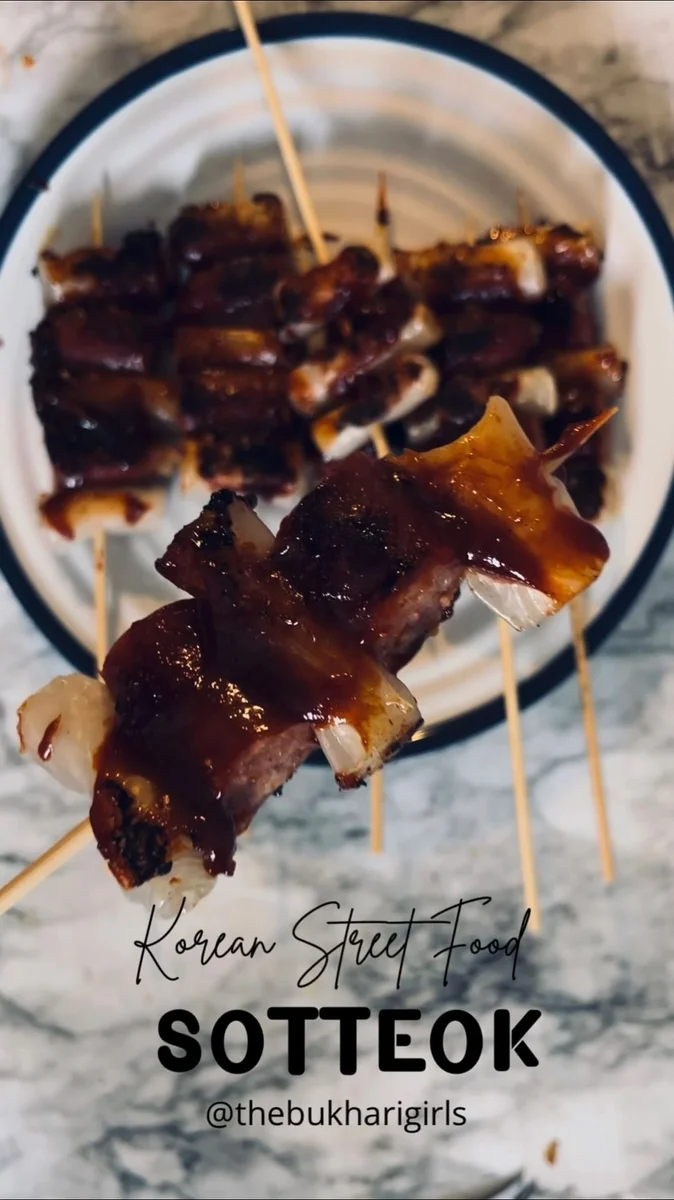
Sotteok pairs chewy rice-cake pieces with small sausages on skewers, finished with a sweet, savoury and spicy gochujang sauce. This version makes the rice cakes from softened rice paper, then pan-fries the skewers until golden.
Ingredients
- 12rice papers
- 12small sausages
- 2 tablespoonsgochujang
- 1 tablespoongarlic paste
- 1 tablespoonhoney
- 2 tablespoonsketchup
- ½ tablespoonsugar
- 1 tablespoonsoya sauce
- A pinchblack pepper powder
- 1 tablespoonoil
Instructions
- 1
Soften the rice paper
Dip two rice papers in warm water until softened.
- 2
Roll the rice paper
Lay the softened sheets on a work surface and roll them tightly.
- 3
Repeat the rolling
Continue with the remaining rice papers.
- 4
Cut into pieces
Cut each rolled rice-paper tteok into three or four pieces and set aside.
- 5
Mix the sauce
In a bowl, combine the gochujang, honey, soya sauce, sugar, black pepper and ketchup. Brush the sauce over the skewers.
- 6
Thread the skewers
Thread the rice cakes and sausages onto skewers, alternating between them.
- 7
Pan-fry until golden
Heat the oil in a pan, then fry the skewers until the rice cakes and sausages are golden.
- 8
Finish and serve
Brush the skewers with sauce, sprinkle with toasted sesame seeds and serve.
What is sotteok?
Sotteok is a Korean snack made by alternating sausage and tteok, or rice cake, on a skewer. It brings together a springy, chewy bite and savoury sausage, often with a punchy sweet-and-spicy glaze.
This version uses softened rice paper rolled into tteok-like pieces. The method makes a convenient substitute when prepared rice cakes are not to hand, while pan-frying gives the skewers a golden exterior.
Nutrition and macros by portion
The nutrition label shows one serving as written: 350 calories, 12g protein, 40g carbs, 17g fat.
| Portion | Adjustment | kcal | Protein | Carbs | Fat |
|---|---|---|---|---|---|
| Lighter | Use less sauce and oil | 245 kcal | 8g | 28g | 12g |
| This serving | As written | 350 kcal | 12g | 40g | 17g |
| Hungry | Add another sausage skewer | 525 kcal | 18g | 60g | 26g |
The rice paper, honey, ketchup and sugar provide most of the carbohydrates; the sausages contribute much of the protein and fat, while the cooking oil adds further fat. Pair a skewer portion with vegetables for freshness and a more balanced plate.
Making rice cakes from rice paper
Soften carefully: Dip only two sheets at a time in warm water, and take them out once pliable. Sheets left soaking too long can become difficult to handle.
Roll tightly: Roll the sheets on a flat work surface so the finished pieces hold their shape. Cutting each roll into three or four pieces gives you manageable pieces to thread.
Balancing the sauce
Gochujang: This fermented chilli paste brings heat, savouriness and body to the glaze. Its strength varies by brand, so taste the mixture before brushing it on.
Sweet and savoury: Honey and sugar round out the chilli, while ketchup adds a familiar tang and soya sauce deepens the seasoning. Mix until the ingredients are evenly combined.
Threading and frying
Alternate evenly: Thread a rice cake, then a sausage, repeating the pattern along each skewer. Leave a little room between pieces so they are easier to turn in the pan.
Watch the colour: Fry over a moderate heat and turn the skewers as needed until golden. If the pan is too hot, the outside can brown before the rice-paper rolls warm through.
When to add the sauce
Before frying: The method calls for brushing sauce over the skewers before they go into the pan. Apply a thin coat so it clings without pooling.
To finish: Brush on more sauce once the skewers are cooked, then add toasted sesame seeds as directed. The final coating gives each bite a glossy, well-seasoned finish.
Serving ideas
Serve the skewers hot, while the rice-paper tteok is still chewy and the sausage is warm. A simple salad or sliced cucumber can add freshness alongside the sweet, spicy glaze.
For a fuller meal, pair them with steamed rice and vegetables. Keep any extra sauce on the side so everyone can adjust the heat and coating to taste.
Recipe notes & tips
- Keep the softened rice papers covered while you roll the remaining sheets so they do not dry out.
- Use warm rather than hot water to soften the rice papers.
- Brush on a thin layer of sauce before frying to reduce excess sauce in the pan.
- Turn the skewers gently so the rice-paper pieces stay in place.
- Toast sesame seeds separately before sprinkling them over the finished skewers.
Variations
- Adjust the heat: Use a little less gochujang for a milder glaze.
- Add spring onions: Scatter finely sliced spring onions over the skewers when serving.
- Use different sausages: Choose small chicken or vegetarian sausages, following their cooking instructions.
- Add a tangy finish: Serve with a little extra ketchup on the side.
- Make smaller bites: Cut the rice-paper rolls into shorter pieces before threading.
Common mistakes to avoid
- Over-soaking the rice paper: Remove it as soon as it is pliable so it is easier to roll.
- Loose rolls: Roll the softened sheets tightly so the rice-cake pieces hold together.
- Crowded skewers: Leave a little space between pieces to make turning easier.
- Excess sauce in the pan: Brush on a thin coat before frying and add more after cooking.
- Too much heat: Fry at a moderate temperature so the skewers can warm through without scorching.
How to store
Store leftover skewers in a covered container in the fridge for up to 2 days. Reheat gently in a lightly oiled pan until hot; the rice-paper pieces may be less chewy after chilling.
Frequently asked questions
Can I make the rice-paper rolls ahead?
They are easiest to handle soon after rolling, before the sheets dry out. If preparing ahead, cover them well and keep them from touching so they do not stick together.
How spicy is the sauce?
The heat depends on the gochujang you use. Start with the stated amount, taste the mixture, and reduce it if you prefer a milder glaze.
Do I need to soak the skewers?
If you are using wooden skewers, soaking them briefly can help reduce scorching in the pan. This is optional for metal skewers.
Can I cook these without skewers?
Yes. Fry the rice-paper pieces and sausages separately in the pan, then brush them with sauce and serve together.
How do I know when they are ready?
Fry until the outside is golden and the sausages are hot through. Turn them as needed so they colour evenly.
Cook it from the original
This recipe comes from fooooods.com. Their page has the author’s own photos, notes and tips — the best place to cook it from.
Open the recipe on fooooods.com