
Garden Fresh One-Pot Pasta Primavera
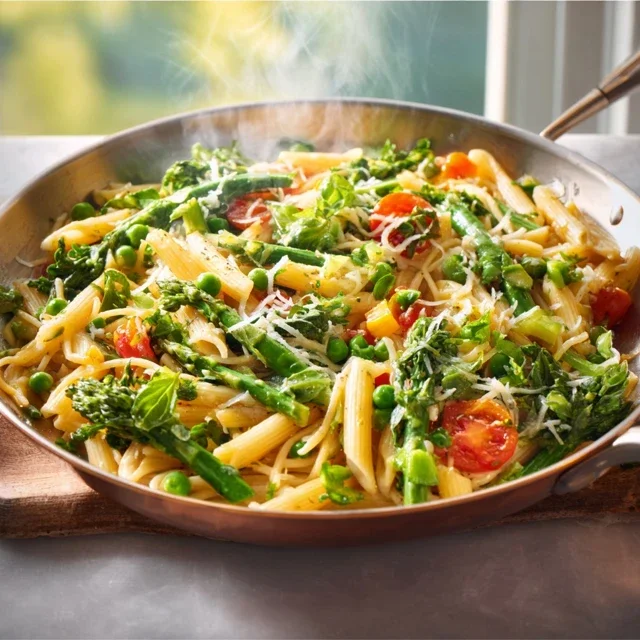
This one-pot pasta primavera cooks fettuccine with colourful spring vegetables in savoury broth, then finishes with Parmesan, cream, lemon and fresh herbs. It is a practical weeknight dinner when you want a vegetable-filled meal with minimal washing-up.
Ingredients
- 30 ml (2 tablespoons)extra-virgin olive oil
- 4 clovesgarlic, finely minced
- 2 mediumcarrots, julienned
- 1red bell pepper, thinly sliced
- 950 ml (4 cups)low-sodium vegetable broth
- 5 ml (1 teaspoon), plus more to tastesalt
- 2.5 ml (1/2 teaspoon), plus more to tasteblack pepper
- 340 g (12 ounces)fettuccine or linguine
- 1 bunchasparagus, trimmed and cut into 2.5 cm (1-inch) pieces
- 90 g (1 cup)small broccoli florets
- 150 g (1 cup)frozen peas
- 60 ml (1/4 cup)heavy cream or half-and-half
- 50 g (1/2 cup), plus more for servingfreshly grated Parmesan cheese
- 15 ml (1 tablespoon)fresh lemon juice
- 15 g (1/4 cup)mixed fresh parsley and basil, chopped
Instructions
- 1
Warm the oil
In a large Dutch oven or wide lidded skillet, heat the olive oil over medium heat. Add the garlic and cook, stirring constantly, for 30–60 seconds, until fragrant but not browned.
- 2
Soften vegetables
Add the carrots and red pepper. Sauté for 2–3 minutes, until they start to soften slightly.
- 3
Simmer the broth
Pour in the vegetable broth, salt and pepper. Bring it to a gentle simmer.
- 4
Cook the pasta
Add the dry fettuccine, arranging it in a single layer, and gently press it down into the broth. Cook for 5 minutes, stirring occasionally with tongs to stop it sticking.
- 5
Add green vegetables
Scatter the asparagus and broccoli over the pasta. Cover the pot, lower the heat to medium-low and cook for another 4–5 minutes, until the pasta is al dente and the vegetables are crisp-tender.
- 6
Check the sauce
Take the pot off the heat. Most of the liquid should have been absorbed, leaving a light, starchy sauce. If the pasta looks too dry, add a splash of extra broth.
- 7
Finish it creamy
Stir in the frozen peas, cream and grated Parmesan. The residual heat will cook the peas and melt the cheese into a creamy sauce.
- 8
Add lemon herbs
Add the lemon juice and chopped parsley and basil. Toss gently to combine.
- 9
Season and serve
Taste and adjust with extra salt, pepper or a squeeze of lemon as needed. Serve straight away, garnished with more Parmesan.
What is pasta primavera?
Pasta primavera is an American pasta dish associated with pasta tossed with fresh vegetables. This one-pot version brings the pasta and vegetables together in broth, then uses Parmesan and a little cream to make a light, clingy sauce.
The method suits a busy evening: the pasta cooks in the same pot as the vegetables, and the peas, lemon and herbs go in at the end to keep the finish fresh.
Nutrition and macros by portion
The nutrition label shows one serving as written: 580 calories, 0g protein, 0g carbs, 0g fat.
| Portion | Adjustment | kcal | Protein | Carbs | Fat |
|---|---|---|---|---|---|
| Lighter | Use less cream and Parmesan | 406 kcal | 0g | 0g | 0g |
| This serving | As written | 580 kcal | 0g | 0g | 0g |
| Hungry | Serve a larger portion | 870 kcal | 0g | 0g | 0g |
Most of the carbohydrate comes from the pasta, while olive oil, cream and Parmesan contribute much of the fat; Parmesan also adds some protein. Serve with a green salad or extra non-starchy vegetables if you want a more vegetable-forward plate.
Why cook it in one pot?
Starchy broth: As the pasta cooks, it releases starch into the liquid, helping form a sauce without a separate pan. Use a wide pot so the pasta can lie in a fairly even layer.
Choosing and adding the vegetables
Firm vegetables: Carrots and red pepper go in first because they need a little more time to soften.
Quick-cooking greens: Add the asparagus and broccoli after the pasta has cooked for 5 minutes. Covering the pot helps them steam while the pasta finishes.
Peas: Frozen peas are stirred in off the heat, where the warmth of the pasta is enough to heat them without making them mushy.
Getting the pasta texture right
Submerge the pasta: Press the strands gently into the simmering broth and stir occasionally with tongs so they cook evenly and do not clump.
Check doneness: Begin checking after the covered 4–5 minutes with the vegetables. The pasta should be al dente, and the broccoli and asparagus should remain crisp-tender.
Making the sauce
Residual heat: Take the pot off the hob before adding the cream and Parmesan. The heat left in the pasta melts the cheese and warms the cream into the starchy cooking liquid.
Adjust the consistency: The recipe expects most of the broth to be absorbed. If the pasta seems too dry, loosen it with a splash of extra broth, as directed.
Finishing with freshness
Lemon and herbs: Stir these in at the end so their bright flavour remains distinct against the creamy, savoury sauce. Taste before serving and add more lemon, salt or pepper if needed.
Serve immediately, with extra Parmesan at the table. A simple green salad or crusty bread can round out the meal.
Recipe notes & tips
- Use a wide, lidded pot so the pasta can sit in a single layer.
- Stir the pasta with tongs during its first 5 minutes to help prevent sticking.
- Cut the carrots and pepper fairly thinly so they soften in the short cooking time.
- Grate the Parmesan freshly so it melts smoothly into the warm pasta.
- Have the lemon and herbs ready to stir in as soon as the pot comes off the heat.
Variations
- Swap the pasta: Use linguine instead of fettuccine, as offered in the recipe.
- Change the herbs: Use parsley or basil alone if you do not have both.
- Use half-and-half: Choose it in place of heavy cream for the specified lighter dairy option.
- Add seasonal vegetables: Replace one of the listed vegetables with a similar quantity of another quick-cooking vegetable.
- Make it more lemony: Add an extra squeeze of lemon when adjusting the seasoning.
Common mistakes to avoid
- Browning the garlic: Cook it only until fragrant, stirring constantly, so it does not turn bitter.
- Leaving pasta above the broth: Press the strands down gently so they can cook in the liquid.
- Skipping the stirring: Stir occasionally during the first 5 minutes to reduce sticking.
- Overcooking the vegetables: Add the asparagus and broccoli after the pasta has started cooking, and check that they remain crisp-tender.
- Adding cheese over high heat: Take the pot off the heat before stirring in the cream and Parmesan.
- Letting the sauce dry out: If most of the liquid is gone and the pasta looks too dry, loosen it with a splash of broth.
How to store
Refrigerate leftovers in a covered container and use within 3 days. Reheat gently in a saucepan with a splash of broth or water, stirring until hot; the pasta will soften somewhat as it sits.
Frequently asked questions
Can I use linguine instead of fettuccine?
Yes. Linguine is listed as an alternative in the recipe, and it can be cooked using the same method.
How do I know when the pasta is al dente?
Taste a strand after the covered cooking period. It should be tender but still have a slight firmness at the centre.
Why is my one-pot pasta too dry?
The pasta may have absorbed more liquid than expected. Add a splash of extra broth and stir to loosen the sauce.
Can I use fresh peas instead of frozen?
Yes. Stir them in at the same point as the frozen peas; their cooking time may vary, so check that they are tender.
Can I prepare this ahead?
It is best served straight away, when the pasta and vegetables have their intended texture. You can prepare and cut the vegetables in advance, then cook the dish just before serving.
Cook it from the original
This recipe comes from besthomemaderecipes.com. Their page has the author’s own photos, notes and tips — the best place to cook it from.
Open the recipe on besthomemaderecipes.com