
Foolproof Baked Cod with Lemon and Dill
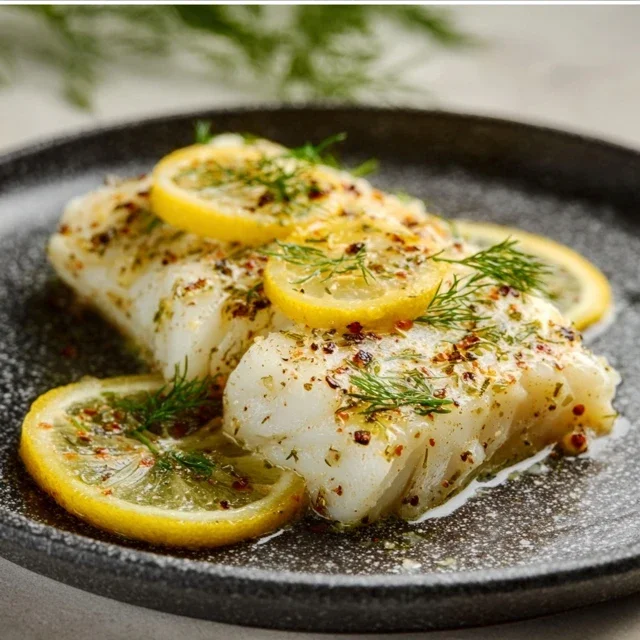
Flaky cod is baked over lemon slices with olive oil, garlic and fresh dill for a bright, simple weeknight supper. The lemon also helps keep the fish lifted from the dish as it cooks.
Ingredients
- 1 largelemon
- 30 ml (2 tablespoons)extra virgin olive oil
- 3 cloves, thinly slicedgarlic
- 30 ml (2 tablespoons), chopped, plus more for garnishfresh dill
- 2.5 ml (1/2 teaspoon), or to tastekosher salt
- 1.25 ml (1/4 teaspoon), or to tastefreshly cracked black pepper
- Amount not specifiedcod fillets
Instructions
- 1
Heat the oven
Preheat the oven to 200°C (400°F). Lightly grease a baking dish large enough to hold the fish in one layer.
- 2
Arrange lemon slices
Cut half the lemon into thin rounds and lay them in a single layer across the base of the prepared dish.
- 3
Prepare the cod
Pat the cod fillets completely dry with paper towels, then set them on top of the lemon slices.
- 4
Add oil and juice
Drizzle the olive oil over the fillets. Squeeze the juice from the remaining lemon half over the fish.
- 5
Season the fish
Season the cod generously with kosher salt and freshly cracked black pepper. Scatter the sliced garlic and chopped dill evenly over the fillets.
- 6
Bake until flaky
Bake for 12–15 minutes, depending on the thickness of the fillets. The cod is ready when opaque and easy to flake with a fork; for a precise check, its internal temperature should be 63°C (145°F).
- 7
Garnish and serve
Take the dish out of the oven and add more fresh dill if desired. Serve immediately, spooning the pan juices over each fillet.
What is baked cod with lemon and dill?
Cod baked with citrus and herbs is a straightforward American-style fish supper, built around the mild flavour and flaky texture of the fish. Lemon and dill bring a fresh, aromatic finish without needing a complicated sauce.
Lemon base: Thin rounds sit beneath the fillets, flavouring the pan juices and keeping the fish from resting directly on the dish. Olive oil, garlic and dill round out the seasoning.
Nutrition and macros by portion
The nutrition label shows one serving as written: 280 calories, 0g protein, 0g carbs, 0g fat.
| Portion | Adjustment | kcal | Protein | Carbs | Fat |
|---|---|---|---|---|---|
| Lighter | Use less olive oil | 196 kcal | 0g | 0g | 0g |
| This serving | As written | 280 kcal | 0g | 0g | 0g |
| Hungry | Add a larger side | 420 kcal | 0g | 0g | 0g |
Cod is the main source of protein, while the olive oil contributes most of the fat; the lemon, garlic and dill add little energy compared with those ingredients. Serve a fillet with vegetables and a measured portion of potatoes or rice to round out the plate. The recipe does not give a quantity for the cod, so the stated nutrition cannot be checked against a defined fish portion.
Why the lemon goes underneath
Lemon slices: Arrange them in one layer so the fillets sit evenly above them. Slice them thinly enough to make a flat base, rather than a tall stack.
Pan juices: The lemon juice and olive oil collect with the fish juices as the cod bakes. Spoon this mixture over the fillets when serving.
Dry the fillets first
Dry surface: Blot the cod thoroughly with paper towels before adding oil and seasoning. This helps the flavours coat the fish rather than being diluted by surface moisture.
Single layer: Leave the fillets in one layer in a suitably sized baking dish. If they overlap, they may cook unevenly.
How to tell when cod is done
Visual cue: The flesh should look opaque, and a fork should separate it into flakes easily. Begin checking at 12 minutes, since thinner fillets may finish sooner than thicker ones.
Temperature: For a precise check, measure the centre of a fillet; the recipe gives 63°C (145°F) as the target. Return the dish to the oven briefly if the fish has not reached that temperature.
Keep the seasoning balanced
Garlic and dill: Spread the sliced garlic and chopped dill across the fillets so their flavour is distributed through the dish. Reserve a little extra dill for a fresh garnish if you like.
Salt and pepper: Season generously, but take the salt to taste into account, particularly if you plan to serve the cod with other seasoned dishes.
What to serve alongside it
Vegetables: Serve the fish with steamed or roasted vegetables for a simple supper. Their mild flavours let the lemon and dill remain prominent.
Something hearty: Potatoes, rice or bread can soak up the pan juices and make the meal more substantial. Add them separately rather than crowding the baking dish.
Recipe notes & tips
- Choose a baking dish that holds the fillets in one layer without leaving a great deal of empty space.
- Cut the lemon rounds thinly so they create a fairly even base beneath the fish.
- Pat the cod dry just before arranging it in the dish.
- Start checking thinner fillets at 12 minutes to avoid overbaking them.
- Spoon the pan juices over the cod as soon as you serve it.
Variations
- Add parsley: Replace some of the dill with chopped parsley for a milder herbal note.
- Use lime: Swap the lemon for lime to give the fish a sharper citrus flavour.
- Add chilli: Scatter a little chilli over the cod with the garlic for gentle heat.
- Include capers: Add a few capers to the dish before baking for a salty, tangy accent.
- Try another white fish: Use a similar mild white fish, adjusting the baking time for the thickness of the fillets.
Common mistakes to avoid
- Skipping the drying step: Wet fillets dilute the seasoning; blot them thoroughly before cooking.
- Overlapping the fish: The fillets can cook unevenly; arrange them in a single layer.
- Cutting thick lemon rounds: They may make an uneven base; slice the lemon thinly.
- Baking by time alone: Fillet thickness affects cooking; check for opaque flesh that flakes easily.
- Leaving the cod in the oven too long: It can become dry; begin checking at 12 minutes.
How to store
Refrigerate leftover cod in a covered container and eat within 2 days. Reheat gently in a low oven until just warmed through, or use the leftovers cold in a salad; reheating for too long can dry the fish.
Frequently asked questions
Can I use frozen cod?
Yes, but thaw it completely in the refrigerator first and pat it thoroughly dry before baking.
How long should the cod bake?
The method gives 12–15 minutes at 200°C (400°F), depending on the thickness. Check for opaque flesh that flakes easily, or use the stated internal temperature of 63°C (145°F).
Can I prepare the dish ahead?
You can slice the lemon and garlic and chop the dill ahead of time. For the best texture, pat and season the fish shortly before it goes into the oven.
What can I use instead of fresh dill?
Fresh parsley can provide a different but compatible herbal flavour. The recipe specifies fresh dill, so dried herbs will not give quite the same fresh finish.
Why is there no amount for the cod?
The supplied ingredient list does not specify a quantity, although the method refers to cod fillets. Choose enough fillets for four servings and arrange them in one layer; cooking time will vary with their thickness.
Cook it from the original
This recipe comes from besthomemaderecipes.com. Their page has the author’s own photos, notes and tips — the best place to cook it from.
Open the recipe on besthomemaderecipes.com