
Herb Butter Roasted Turkey Recipe
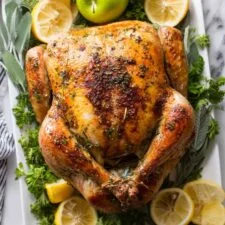
A whole roast turkey with garlic and herb butter, plus lemon, onion and apple tucked into the cavity for aroma. It is a traditional American holiday centrepiece, with butter under the skin to help keep the breast meat flavourful as the bird roasts.
Ingredients
- 1 turkey, 5.4–9.1 kg (12–20 lb)whole turkey
- 1onion, peeled and quartered
- 1lemon, quartered
- 1apple, quartered
- 1 container, 21 g (0.75 oz)fresh rosemary
- 1 container, 21 g (0.75 oz)fresh thyme
- 1 container, 21 g (0.75 oz)fresh sage
- 227 g (1 cup)unsalted butter, softened
- 1 teaspoonsalt
- ½ teaspoonfreshly ground black pepper
- 6–8 clovesgarlic, minced
- To tastefreshly chopped rosemary, thyme and sage
Instructions
- 1
Thaw the turkey
If the turkey is frozen, thaw it in the fridge, allowing 24 hours for every 2.3 kg (5 lb), plus one extra day for safety.
- 2
Bring to room temperature
Take the thawed turkey out of the fridge 1 hour before roasting so it can come to room temperature.
- 3
Preheat the oven
Adjust the oven rack so the turkey will sit in the centre, then heat the oven to 163°C (325°F).
- 4
Make herb butter
Mix the softened butter with the minced garlic, salt, pepper, 1 tablespoon each of fresh rosemary and thyme, and ½ tablespoon of fresh sage. Set the remaining fresh herbs aside for the cavity.
- 5
Prepare the turkey
Remove the packaging, neck and giblets from the cavities. Pat the turkey dry with paper towels.
- 6
Season and stuff
Season the cavity with salt and pepper. Fill it with the quartered lemon, onion and apple, along with the reserved herbs.
- 7
Butter under skin
Gently loosen the skin over the breasts and spread a few tablespoons of herb butter underneath.
- 8
Position the turkey
Tuck the wings underneath the bird and set it on a roasting rack inside a roasting pan.
- 9
Butter the outside
Microwave the remaining herb butter for 30 seconds to soften it. Brush it over the turkey, including the legs and wings.
- 10
Roast the turkey
Roast at 163°C (325°F) for about 15 minutes per pound, until the internal temperature reaches 74°C (165°F) in both the thigh and breast. Once the skin is golden brown, tent the bird with foil halfway through roasting to help avoid overcooking the breast meat.
- 11
Rest and carve
Let the turkey rest on the counter under foil. Transfer it to a chopping board set inside a sheet pan to catch the juices while carving.
What is herb butter roasted turkey?
Roast turkey is a familiar American holiday centrepiece, especially at Thanksgiving. This version uses butter flavoured with garlic and fresh herbs, with more herbs, onion, lemon and apple inside the cavity.
The method focuses on spreading some of the butter beneath the breast skin and roasting the bird on a rack. The aromatics add fragrance as the turkey cooks, while the rack lets it sit above the juices in the pan.
Nutrition and macros by portion
The nutrition label shows one serving as written: 576 calories, 45g protein, 5g carbs, 38g fat.
| Portion | Adjustment | kcal | Protein | Carbs | Fat |
|---|---|---|---|---|---|
| Lighter | Use less herb butter | 403 kcal | 31g | 4g | 27g |
| This serving | As written | 576 kcal | 45g | 5g | 38g |
| Hungry | Serve a larger portion | 864 kcal | 68g | 8g | 57g |
The turkey provides most of the protein, while the butter contributes much of the fat. The small amount of carbohydrate comes mainly from the onion, lemon and apple used in the cavity. Pair a serving with vegetables and a modest portion of potatoes or another starchy side for a more complete plate.
Choosing the herbs
Rosemary and thyme: These go into the butter with sage, garlic, salt and pepper. Chop the herbs finely so they mix evenly through the softened butter.
Reserved herbs: Keep some fresh herbs back for the cavity, as the method directs. The recipe also lists chopped fresh herbs without a specified quantity, so use those to taste.
Getting the butter under the skin
Breast skin: Loosen it gently with your fingers, taking care not to tear it. Smooth a few tablespoons of herb butter beneath the skin so it sits against the meat.
Outside: Soften the remaining butter for 30 seconds in the microwave, then brush it over the legs and wings as well as the rest of the bird.
Preparing the cavity
Dry turkey: Pat the bird dry after removing the packaging, neck and giblets. This gives you a dry surface before seasoning and buttering.
Aromatics: Season the cavity with salt and pepper, then add the quartered lemon, onion, apple and reserved herbs. They are there to perfume the roast rather than serve as a separate side.
Roasting and checking doneness
Oven heat: Roast at 163°C (325°F), with the bird positioned in the centre of the oven. The stated guide is about 15 minutes per pound, but the turkey’s internal temperature is the key check.
Temperature: Check both the thigh and breast for 74°C (165°F). Tent the turkey with foil halfway through roasting once the skin is golden brown, as directed.
Resting before carving
Resting: Leave the cooked turkey tented with foil on the counter before carving. This gives you time to prepare serving dishes and helps keep the carving process manageable.
Carving: Set the chopping board inside a sheet pan to catch juices. Spoon those juices over carved meat if you like.
What to serve with it
A roast turkey works well with classic sides such as roast potatoes, vegetables, stuffing or cranberry sauce. Choose sides to suit the occasion and the amount of oven space available.
For a balanced plate, serve a moderate portion of turkey with vegetables and a side that suits your meal, such as potatoes or bread-based stuffing.
Recipe notes & tips
- Allow the full fridge-thawing time before planning the roast.
- Remove the neck and giblets from both cavities before seasoning.
- Pat the turkey dry before applying the butter.
- Keep the butter soft enough to spread beneath the breast skin without tearing it.
- Use a thermometer to check both the thigh and breast for 74°C (165°F).
- Rest the turkey under foil and catch the carving juices in a sheet pan.
Variations
- Citrus change: Use a different favourite citrus fruit in place of the lemon.
- Herb balance: Adjust the proportions of rosemary, thyme and sage in the butter to suit your preference.
- Garlic intensity: Use six cloves for a milder garlic flavour or eight for a stronger one.
- Pepper adjustment: Add more freshly ground black pepper if you prefer a sharper seasoning.
- Apple choice: Choose your favourite variety of apple for the cavity.
Common mistakes to avoid
- Starting with a frozen bird: Thaw it in the fridge, allowing 24 hours per 2.3 kg (5 lb) plus one extra day.
- Skipping the drying step: Pat the turkey dry with paper towels before seasoning and buttering.
- Tearing the breast skin: Loosen it gently before smoothing in the butter.
- Ignoring the temperature: Check the thigh and breast and roast until each reaches 74°C (165°F).
- Leaving the skin uncovered throughout: Tent with foil halfway through once it has turned golden brown.
- Carving straight away: Rest the turkey tented with foil before transferring it to a board.
How to store
Refrigerate leftover turkey in a covered container within 2 hours of serving and use within 3–4 days. Reheat portions until steaming hot, or freeze leftovers for longer storage.
Frequently asked questions
How long does a turkey of this size take to roast?
The method gives a guide of about 15 minutes per pound at 163°C (325°F), but the total depends on the bird’s weight and how it cooks. Check that both the thigh and breast reach 74°C (165°F).
Can I prepare the herb butter ahead?
The method calls for softened butter mixed with herbs and garlic. If you make it in advance, keep it refrigerated and soften it before spreading.
Do I need to baste the turkey?
The method describes brushing herb butter over the turkey before roasting, but does not call for repeated basting. Follow the temperature checks and foil-tenting instruction as it cooks.
What should I do with the neck and giblets?
Remove them from the cavities before seasoning the turkey. This recipe does not specify a separate use for them.
Why rest the turkey before carving?
Resting is part of the method and gives you time to prepare the carving area. Keep the turkey tented with foil, then carve it on a board set inside a sheet pan to catch the juices.
Can I use a smaller turkey?
The listed ingredient range is 5.4–9.1 kg (12–20 lb). For a smaller bird, adjust the amount of butter and aromatics to suit its size, and rely on the internal temperature rather than time alone.
Cook it from the original
This recipe comes from bakingwithmaya.com. Their page has the author’s own photos, notes and tips — the best place to cook it from.
Open the recipe on bakingwithmaya.com