
Juicy Roast Turkey Breast with Herb Butter Recipe
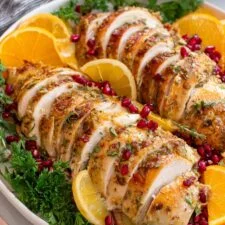
This American-style roast turkey breast is coated with garlic and herb butter beneath and over the skin, then roasted with vegetables and served with homemade gravy. It makes a flavourful centrepiece for a special meal without roasting a whole turkey.
Ingredients
- 2.72 kg (6 lb)bone-in, skin-on turkey breast, fresh or fully thawed
- 113 g (½ cup)unsalted butter, softened
- 15 ml (1 tbsp)minced garlic (3 cloves)
- 15 ml (1 tbsp)minced fresh thyme
- 15 ml (1 tbsp)minced fresh rosemary
- 15 ml (1 tbsp)minced fresh sage or parsley
- to tastesalt and freshly ground black pepper
- 1 largeyellow onion, peeled and cut into chunks
- 1 largecarrot, peeled and cut into chunks
- 2celery ribs, cut into chunks
- 40 g (⅓ cup)plain flour
- 710 ml (3 cups), plus more to thin as desiredlow-sodium chicken stock, preferably homemade
Instructions
- 1
Preheat the oven
Heat the oven to 163°C (325°F), positioning a rack one level below the centre.
- 2
Loosen the skin
Carefully work a large spoon or the handle of a wooden spoon between the turkey skin and breast meat. Keep the outer edges attached so the butter can stay underneath.
- 3
Mix herb butter
Stir the softened butter with the garlic, thyme, rosemary and sage or parsley. Add a little salt and freshly ground black pepper.
- 4
Butter the turkey
Pat the turkey dry with paper towels. Spread about half the herb butter under the skin, then rub the rest over the skin. Season the whole breast with salt and pepper.
- 5
Prepare the pan
Put the onion, carrot and celery in a medium roasting pan. Set a roasting rack over the vegetables if you have one; otherwise, the turkey can sit directly on them.
- 6
Roast the turkey
Place the turkey skin-side up on the rack or vegetables and roast until the thickest part of the breast reaches 74°C (165°F), about 2 to 2¼ hours.
- 7
Rest before carving
Take the turkey out of the oven and set it on a carving board. Loosely cover with foil and leave it to rest for about 10 minutes before carving.
- 8
Make the gravy
Discard the vegetables. Pour the pan drippings into a fat separator or measuring jug and measure out 80 ml (⅓ cup) of the fat. Heat it in a saucepan over medium heat, stir in the flour and cook, stirring constantly, for 1 minute. Gradually whisk in the chicken stock and remaining drippings until the gravy thickens. Season with salt and pepper as needed, and add more stock to thin it if desired.
What is roast turkey breast?
Roast turkey breast is a smaller-format version of a familiar American holiday centrepiece: a seasoned breast roasted until tender and carved at the table. This version builds flavour with garlic and fresh herbs mixed into butter.
The butter is tucked beneath the skin as well as spread over it, while onion, carrot and celery sit beneath the turkey and catch its drippings. Those drippings then form the savoury base for a simple homemade gravy.
Nutrition and macros by portion
The nutrition label shows one serving as written: 450 calories, 45g protein, 8g carbs, 28g fat.
| Portion | Adjustment | kcal | Protein | Carbs | Fat |
|---|---|---|---|---|---|
| Lighter | Less gravy, more vegetables | 315 kcal | 31g | 6g | 20g |
| This serving | As written | 450 kcal | 45g | 8g | 28g |
| Hungry | Larger turkey portion | 675 kcal | 68g | 12g | 42g |
The turkey supplies most of the protein, while the butter and measured pan fat contribute much of the fat. The flour and stock account for some of the carbohydrates, with the vegetables adding a smaller amount; pair a serving with vegetables to round out the plate.
Choosing and preparing the turkey
Thawing: If using a frozen breast, make sure it is fully thawed before cooking. Dry the skin thoroughly with paper towels so the butter spreads evenly.
Skin: Loosen the skin carefully, keeping its edges attached. This creates room for the herb butter while helping it stay in place during roasting.
Getting the herb butter in place
Under the skin: Spread roughly half the mixture over the breast meat beneath the skin. This places the butter and herbs close to the meat as it roasts.
On top: Rub the remaining butter over the skin, then season the breast with salt and pepper. Choose sage or parsley according to the flavour you prefer.
Roasting for tender meat
Position: Roast the breast skin-side up on a rack or directly on the chopped vegetables. The vegetables provide a base if you do not have a rack and contribute to the pan drippings.
Doneness: Begin checking the thickest part of the breast as it approaches the stated cooking time. The recipe’s target is 74°C (165°F); use a thermometer to check the meat rather than relying only on the clock.
Resting and carving
Resting: Leave the cooked turkey on a carving board, loosely tented with foil, for about 10 minutes. This brief pause also gives you time to start the gravy.
Carving: Slice the breast after resting and serve with gravy. Cutting before the rest is over can make it harder to keep the meat juicy.
Making the pan gravy
Fat and flour: Measure 80 ml (⅓ cup) of fat from the drippings and cook it with the flour for 1 minute, stirring constantly. This forms the base that thickens the gravy.
Liquid: Whisk in the stock and the remaining drippings gradually, continuing to whisk as the mixture thickens. Add more stock if you want a thinner consistency, then adjust the seasoning.
What to serve alongside
The turkey and gravy suit classic roast-dinner sides such as potatoes, green vegetables or a simple salad. Choose sides to match the occasion and the amount of gravy you plan to serve.
For a balanced plate, pair a slice of turkey with vegetables and a moderate spoonful of gravy. The pan gravy also works well over potatoes.
Recipe notes & tips
- Let a frozen turkey breast thaw fully before seasoning it.
- Keep the edges of the skin attached when loosening it so the butter is less likely to escape.
- Pat the turkey skin dry before spreading on the herb butter.
- Use a thermometer to check the thickest part of the breast for 74°C (165°F).
- Whisk the stock into the flour mixture gradually to help the gravy thicken smoothly.
- Rest the turkey for about 10 minutes before carving.
Variations
- Use parsley: Choose it instead of sage for a milder herbal note.
- Change the herbs: Use the listed thyme and rosemary with either sage or parsley.
- Thin the gravy: Whisk in extra chicken stock until it reaches your preferred consistency.
- Use a roasting rack: Set the turkey above the vegetables if your pan has room for a rack.
- Serve with vegetables: Add green vegetables or potatoes alongside the carved turkey.
Common mistakes to avoid
- Cooking from frozen: Thaw the turkey fully before roasting so it can cook as directed.
- Tearing the skin: Work the spoon gently beneath it and leave the edges attached.
- Skipping the temperature check: Check the thickest part of the breast for 74°C (165°F).
- Carving straight away: Rest the turkey, loosely covered with foil, for about 10 minutes first.
- Adding stock all at once: Whisk it in gradually to help keep the gravy smooth.
- Leaving the roux unattended: Stir the fat and flour constantly as they cook for 1 minute.
How to store
Refrigerate leftover turkey and gravy in covered containers and use within 3 to 4 days. Reheat until hot throughout; add a little stock to the gravy if it has thickened in the fridge.
Frequently asked questions
How long does this turkey breast take to roast?
The recipe gives about 2 to 2¼ hours at 163°C (325°F). Check the thickest part of the breast and take it to 74°C (165°F).
Can I use a frozen turkey breast?
Yes, provided it is fully thawed before you prepare and roast it.
Do I need a roasting rack?
No. The recipe allows the turkey to sit directly on the onion, carrot and celery if you do not have a rack.
Can I use parsley instead of sage?
Yes. The herb butter calls for either minced fresh sage or minced fresh parsley.
How do I make the gravy thinner?
Whisk in additional chicken stock a little at a time until the gravy reaches the consistency you like.
Why should the turkey rest before carving?
The method includes a 10-minute rest before carving to help the meat retain its juices.
Cook it from the original
This recipe comes from bakingwithmaya.com. Their page has the author’s own photos, notes and tips — the best place to cook it from.
Open the recipe on bakingwithmaya.com