
Ginger Veggie Stir-Fry
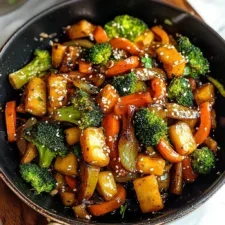
Ginger Veggie Stir-Fry brings crisp vegetables together in a savoury-sweet sauce sharpened with fresh ginger and garlic. Cook it over high heat for a colourful weeknight meal, served with rice or noodles.
Ingredients
- 60 ml (¼ cup)low-sodium soy sauce or tamari
- 30 ml (2 tablespoons)rice vinegar
- 15 ml (1 tablespoon)toasted sesame oil
- 15 ml (1 tablespoon)maple syrup, honey or agave
- 15 ml (1 tablespoon)cornflour or arrowroot powder
- 5–7.5 cm (2–3 inches; about 2 tablespoons), finely minced or gratedfresh ginger
- 3–4 cloves (about 1 tablespoon), finely mincedgarlic
- A pinch, optionalred pepper flakes
- 30 ml (2 tablespoons)water or vegetable stock
- 15 ml (1 tablespoon)high-heat cooking oil, such as avocado, peanut or grapeseed oil
- 1 medium, thinly slicedonion
- 1, deseeded and thinly slicedred pepper
- 1, deseeded and thinly slicedgreen pepper
- 1 large, peeled and thinly sliced on the diagonalcarrot
- 1 head, cut into small floretsbroccoli
- 113 g (4 oz), stems removed and slicedshiitake mushrooms
- 150 g (1 cup), trimmedmangetout or sugar snap peas
- 2, green parts only, thinly slicedspring onions
- To taste, optionalsesame seeds
- For servingcooked rice or noodles
Instructions
- 1
Mix the sauce
Whisk the soy sauce or tamari, rice vinegar, sesame oil, maple syrup, cornflour, ginger, garlic, optional red pepper flakes and water or stock in a small bowl. Stir until the cornflour is fully dissolved, then set aside.
- 2
Prepare vegetables
Wash and cut all the vegetables as listed. Arrange them by cooking time, keeping the carrot and broccoli separate from the quicker-cooking peppers and mangetout or sugar snap peas.
- 3
Heat the pan
Set a large wok or heavy-based frying pan over high heat. Let it become very hot; a drop of water should evaporate almost immediately.
- 4
Cook the onion
Add the high-heat oil and swirl it around the pan. Add the sliced onion and stir-fry for about 1–2 minutes, until beginning to soften and fragrant.
- 5
Start firm vegetables
Add the carrot and broccoli. Stir-fry continuously for 3–4 minutes, tossing often, until they begin to soften but still have some crunch.
- 6
Add peppers and mushrooms
Add the red and green peppers and shiitake mushrooms. Stir-fry for another 2–3 minutes, until the peppers soften slightly and the mushrooms release some moisture and begin to brown.
- 7
Finish with peas
Add the mangetout or sugar snap peas and stir-fry for 1–2 minutes, keeping them bright and crisp. Avoid crowding the pan; cook in batches if needed so the vegetables fry rather than steam.
- 8
Thicken the sauce
Push the vegetables to the sides of the wok to make a space in the centre. Whisk the sauce again, pour it into the centre and let it bubble for about 30 seconds, stirring the sauce as it thickens.
- 9
Coat and serve
Toss the vegetables through the thickened sauce until evenly coated. Cook for another 30–60 seconds, until glossy and crisp-tender, then take the pan off the heat. Serve immediately over cooked rice or noodles, topped with spring onions and sesame seeds if desired.
What is a ginger veggie stir-fry?
A stir-fry is a quick method of cooking small pieces of food in a hot pan while stirring or tossing them. The approach is associated with Chinese cooking and is now used for many combinations of vegetables and sauces.
This version pairs crisp vegetables with a soy, vinegar and sesame sauce, with ginger and garlic providing the main aromatic notes. Cooking the vegetables in stages helps each one keep its colour and texture.
Nutrition and macros by portion
The nutrition label shows one serving as written: 300 calories, 0g protein, 0g carbs, 0g fat.
| Portion | Adjustment | kcal | Protein | Carbs | Fat |
|---|---|---|---|---|---|
| Lighter | Use less oil | 210 kcal | 0g | 0g | 0g |
| This serving | As written | 300 kcal | 0g | 0g | 0g |
| Hungry | Add more rice | 450 kcal | 0g | 0g | 0g |
The vegetables and rice or noodles provide most of the meal’s carbohydrates, while the cooking oil and sesame oil contribute most of its fat. The recipe lists no meaningful protein amount per serving; serving it with a protein-rich option such as tofu can make the plate more balanced.
Get the sauce ready first
Cornflour: whisk it thoroughly into the liquid ingredients before cooking so it does not remain in lumps. Give the sauce another quick whisk just before adding it, as the cornflour can settle.
Ginger and garlic: mince or grate them finely so their flavour disperses through the sauce. Adjust the optional red pepper flakes to suit your preferred level of heat.
Cut and group the vegetables
Even pieces: slice the vegetables into similar-sized pieces so they cook at a similar pace. Thin carrot slices and small broccoli florets are particularly helpful here.
Cooking order: keep the carrot and broccoli ready to go first, followed by the peppers and mushrooms, then the peas. Having everything cut and grouped before heating the wok makes the quick cooking stages easier to manage.
Keep the pan hot
Heat: start with a properly hot wok or heavy-based frying pan, then add the oil. If the pan is overcrowded, its temperature can drop and the vegetables may steam rather than take on a stir-fried texture.
Batches: if the vegetables do not fit comfortably in the pan, cook them in batches. Keep the cooked vegetables nearby and return them to the pan for the sauce stage.
Watch for crisp-tender cues
Firm vegetables: after 3–4 minutes, the carrot and broccoli should be starting to soften while retaining some crunch. The peppers need only 2–3 minutes, and the peas just 1–2 minutes.
Sauce: let it bubble in the centre of the pan for about 30 seconds, then toss it with the vegetables. A further 30–60 seconds should leave everything glossy without making the vegetables limp.
Choose a base and serve promptly
Rice or noodles: serve the stir-fry straight from the pan over cooked rice or noodles. Brown or white rice, quinoa, soba or udon are all suggested options.
Finishing touch: sliced spring onions and sesame seeds add a fresh, lightly nutty finish. Add them just before serving so they stay distinct from the warm, sauced vegetables.
Recipe notes & tips
- Cut and arrange all the vegetables before heating the pan, as the cooking stages move quickly.
- Use a large wok or frying pan so the vegetables have room to toss.
- Slice the carrot thinly on the diagonal to help it cook alongside the broccoli.
- Whisk the sauce again just before pouring it into the wok.
- Add the spring onions and sesame seeds after cooking for a fresher finish.
Variations
- Swap the mushrooms: use sliced cremini or button mushrooms instead of shiitake.
- Make it gluten-free: choose tamari in place of soy sauce.
- Change the sweetener: use honey or agave instead of maple syrup.
- Turn up the heat: add more red pepper flakes to the sauce.
- Vary the base: serve with cooked quinoa, soba or udon instead of rice.
Common mistakes to avoid
- Crowding the pan: the vegetables can steam instead of stir-fry; cook in batches if necessary.
- Adding every vegetable at once: the quicker-cooking peas may lose their crunch; add ingredients in the stated order.
- Skipping the sauce re-whisk: settled cornflour may not thicken evenly; stir the sauce again just before using.
- Overcooking the peas: they can lose their bright colour and crispness; stir-fry them for only 1–2 minutes.
- Serving it late: the vegetables continue to soften as they sit; serve the stir-fry as soon as it is cooked.
How to store
Refrigerate leftovers in an airtight container and use within 3 days. Reheat in a hot frying pan, stirring just until warmed through; the vegetables will be softer after storing. Store rice or noodles separately if possible.
Frequently asked questions
Can I use a frying pan instead of a wok?
Yes. Use a large, heavy-based frying pan and heat it well before adding the oil. Cook in batches if the vegetables do not fit without crowding.
Can I prepare the vegetables ahead?
Yes. Wash and cut them ahead, then refrigerate them in a covered container. Keep the groups separate so you can add them in the right order.
How can I make this stir-fry gluten-free?
Use tamari instead of soy sauce and check that your other packaged ingredients are suitable for your needs.
Can I use frozen broccoli?
Fresh broccoli is specified in this recipe. Frozen broccoli can release extra moisture, so thaw and drain it well before cooking.
What can I serve with it?
Serve it over cooked white or brown rice, quinoa, soba noodles or udon noodles.
How do I keep the vegetables from turning soft?
Use a hot pan, avoid overcrowding it and follow the staged cooking times. Take the pan off the heat once the vegetables are crisp-tender and coated in the sauce.
Cook it from the original
This recipe comes from betterhomerecipes.com. Their page has the author’s own photos, notes and tips — the best place to cook it from.
Open the recipe on betterhomerecipes.com