
Chicken Tikka Masala Biryani
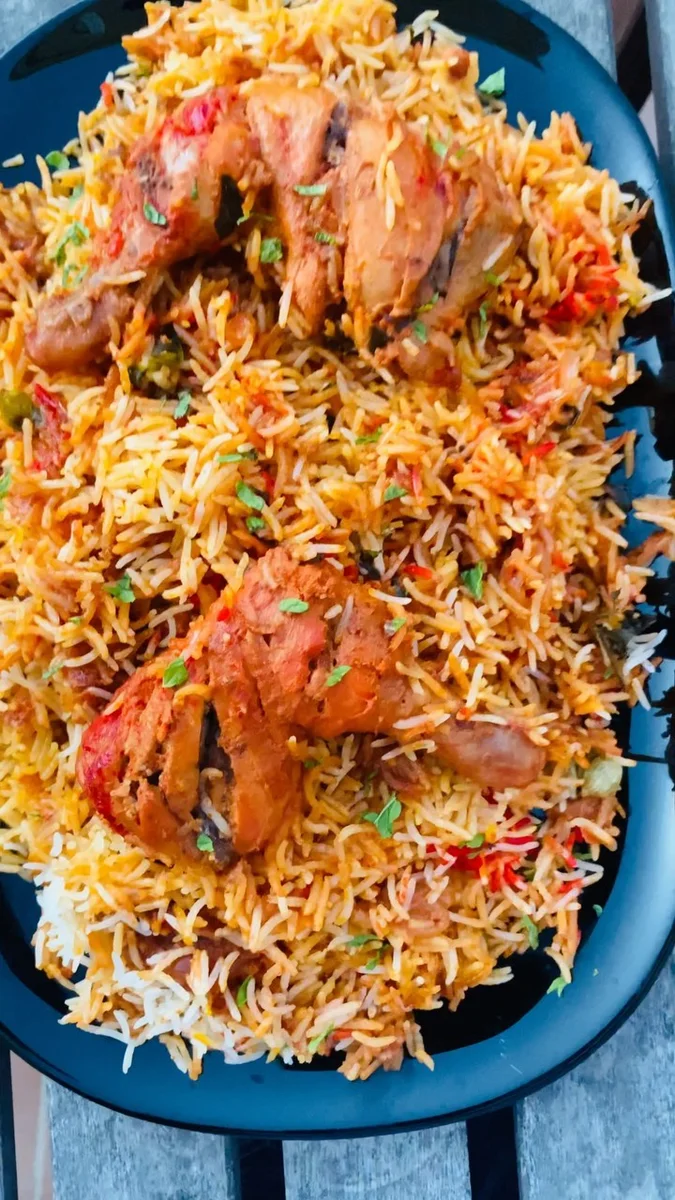
Chicken tikka masala biryani layers tender, spiced chicken with partly cooked rice, then finishes the dish together on a low heat. It is a useful way to turn chicken tikka into a generous one-pot meal, with mint, coriander and lemon to lift the rich layers.
Ingredients
- 4 pieces, cutchicken tikka pieces
- 120 ml (½ cup)oil
- To tastesliced onion
- To tastetomatoes
- To tasteyoghurt
- To tastedried spices
- To tasterice
- To tastesaffron strands
- To tastemint
- To tastecoriander
- To tastelemon slices
Instructions
- 1
Fry the onion
Heat 120 ml (½ cup) oil in a saucepan. Add the sliced onion and sauté for a few minutes.
- 2
Cook the tomatoes
When the onion is golden brown, add the tomatoes and sauté for a few more minutes.
- 3
Add the yoghurt
Stir in the yoghurt and cook for a few minutes.
- 4
Cook the spices
Add the dried spices and cook for 2–3 minutes.
- 5
Simmer the chicken
Add the marinated chicken tikka pieces. Cook over a low heat for 10–12 minutes, until the chicken is tender and oil rises to the surface. Set aside.
- 6
Part-cook the rice
In another pan, boil the rice with the saffron strands and mint until it is three-quarters cooked.
- 7
Layer and finish
Layer rice, the chicken tikka mixture and another layer of rice. Top with mint, coriander and lemon slices, then cook on dum for 8–10 minutes.
What is chicken tikka masala biryani?
Biryani is a layered rice dish found in many South Asian cooking traditions, with regional versions that pair rice with meat, spices and herbs. This version combines chicken tikka masala-style chicken with partly cooked rice, then finishes the layers together.
The method keeps the chicken mixture separate while the rice cooks, so each layer can be assembled before the final dum. Mint, coriander and lemon bring freshness to the spiced, rich base.
Nutrition and macros by portion
The nutrition label shows one serving as written: 900 calories, 35g protein, 90g carbs, 45g fat.
| Portion | Adjustment | kcal | Protein | Carbs | Fat |
|---|---|---|---|---|---|
| Lighter | Use less oil | 630 kcal | 25g | 63g | 31g |
| This serving | As written | 900 kcal | 35g | 90g | 45g |
| Hungry | Serve a larger portion | 1350 kcal | 53g | 135g | 68g |
Rice supplies most of the carbohydrates, while the oil and yoghurt contribute much of the fat; chicken is the main protein source. Pair a serving with salad or another non-starchy vegetable for a more balanced plate.
Build the masala base
Onion: sauté it until golden before adding the tomatoes; this gives the base time to develop flavour.
Yoghurt and spices: let the yoghurt cook briefly, then cook the dried spices for 2–3 minutes so they blend into the sauce.
Keep the chicken tender
Low heat: cook the marinated chicken for 10–12 minutes over a slow flame, checking that it becomes tender without catching on the bottom of the pan.
Sauce cue: the method describes oil rising to the surface as the signal to set the chicken mixture aside.
Part-cook the rice
Rice: stop boiling it when it is about three-quarters cooked, as it will continue cooking during the final dum.
Saffron and mint: add them to the boiling rice as directed, so their fragrance is carried through the rice before layering.
Layer for the final dum
Order: begin with rice, add the chicken tikka layer, then cover it with the remaining rice. Finish with mint, coriander and lemon slices.
Timing: cook the assembled layers on dum for 8–10 minutes. Keep the heat low so the base does not scorch while the rice finishes.
What to serve alongside
Serve the biryani as the main dish, with a simple salad or a cooling yoghurt side if you want something fresh alongside the spiced rice.
A little extra lemon at the table can brighten each serving; add it to taste rather than mixing it through the whole pot.
Recipe notes & tips
- Use a separate pan for the rice, as the method directs, so it can be part-cooked before layering.
- Keep the onion moving as it browns to help it cook evenly.
- Use a low flame for the chicken and the final dum to reduce the risk of scorching.
- Stop cooking the rice at three-quarters done; it will finish in the layered pot.
- Have the herbs and lemon ready before you assemble the layers.
Variations
- Extra herbs: Add more mint and coriander over the top to make the finish more fragrant.
- More lemon: Serve extra lemon slices alongside for a brighter, sharper flavour.
- Milder spice: Use a smaller amount of the dried spice mixture if you prefer less heat.
- Vegetable side: Serve with a crisp salad for freshness and contrast.
- Yoghurt side: Offer plain yoghurt alongside to temper the spices.
Common mistakes to avoid
- Pale onion: Continue sautéing until golden brown before adding the tomatoes.
- Rushed masala: Give the tomatoes and yoghurt their few minutes of cooking as directed.
- Overcooked rice: Drain or remove it once it is three-quarters cooked, before layering.
- High heat: Keep the chicken on a low flame and finish the layers gently on dum.
- Skipping the layers: Put rice below and above the chicken mixture so it is enclosed in the biryani.
How to store
Refrigerate leftovers in a covered container and use within 3 days. Reheat until piping hot throughout, adding a small splash of water if the rice has dried out.
Frequently asked questions
How do I know when the rice is three-quarters cooked?
It should be mostly cooked but still have a little firmness at the centre. It will continue cooking during the 8–10-minute dum.
What does cooking on dum mean here?
It means finishing the assembled layers gently over low heat. The method gives a cooking time of 8–10 minutes.
Can I use chicken tikka that is already cooked?
The method calls for marinated chicken tikka pieces and cooks them for 10–12 minutes until tender. If yours is already cooked, avoid overcooking it and check that it is hot before layering.
Why is oil added to the chicken mixture?
The oil is used to sauté the onion and cook the masala base. The method also uses oil rising to the surface as a cue that the chicken mixture is ready to set aside.
Can I prepare the layers ahead?
For the best texture, assemble and finish the layers shortly before serving so the rice does not sit and soften too much.
Cook it from the original
This recipe comes from fooooods.com. Their page has the author’s own photos, notes and tips — the best place to cook it from.
Open the recipe on fooooods.com