
Healthy Vegetable Pasta Primavera Recipe
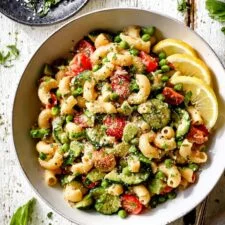
Pasta primavera combines short pasta with a colourful mix of vegetables in a creamy Parmesan sauce brightened with lemon and herbs. It makes a satisfying one-pan-style meal, with the vegetables cooked briefly so they keep some bite.
Ingredients
- 340 g (12 oz)cavatappi or other short pasta, such as penne, fusilli or orecchiette
- ½ mediumred onion, chopped
- About 180 g (2 cups)broccoli florets, cut into 2.5 cm (1-inch) pieces
- 1 mediumyellow squash, sliced and quartered
- 1 mediumcourgette, sliced and quartered
- 227 g (8 oz)asparagus, trimmed and cut into 4 cm (1½-inch) pieces
- 1 mediumred pepper, chopped
- About 225 g (1½ cups)cherry tomatoes, halved
- About 200 g (1½ cups)frozen petits pois, thawed
- About 10 g (¼ cup)fresh basil, chopped
- 60 ml (4 tablespoons), dividedextra-virgin olive oil
- To tastesalt and black pepper
- 4 clovesgarlic, minced
- 1.25 ml (¼ teaspoon)red pepper flakes
- 240 ml (1 cup)double cream (or evaporated milk)
- 355 ml (1½ cups)chicken stock
- 8 g (1 tablespoon)cornflour
- 7.5 ml (1½ teaspoons)dried oregano
- 7.5 ml (1½ teaspoons)dried parsley
- 2.5 ml (½ teaspoon)dried thyme
- 30 ml (2 tablespoons)lemon juice
- About 75 g (¾ cup), dividedfreshly grated Parmesan
Instructions
- 1
Cook the pasta
Bring a large pan of salted water to the boil and cook the pasta according to the packet instructions until al dente. Keep 120 ml (½ cup) of the cooking water, then drain the pasta and set it aside.
- 2
Sauté the first vegetables
Heat 45 ml (3 tablespoons) of olive oil in a large, deep frying pan or saucepan over a medium-high heat. Add the red onion and broccoli and cook for 3 minutes, until beginning to soften but still crisp.
- 3
Add more vegetables
Add the yellow squash, courgette, asparagus, red pepper and cherry tomatoes. Season with 1.25 ml (¼ teaspoon) each of salt and pepper, then cook for 2 minutes until tender-crisp. Transfer the vegetables to a large bowl.
- 4
Start the sauce
In the now-empty pan, heat the remaining 15 ml (1 tablespoon) of olive oil over a medium heat. Add the garlic and red pepper flakes and cook for 30 seconds, until fragrant. Turn the heat to low and pour in the cream.
- 5
Thicken the sauce
Whisk the chicken stock and cornflour together until smooth, then pour the mixture into the pan. Add the oregano, parsley, thyme and 1.25 ml (¼ teaspoon) of salt. Bring to a simmer and cook for 3–5 minutes, until thickened.
- 6
Add cheese and lemon
Lower the heat and stir in about 50 g (½ cup) of the Parmesan until melted. Add the lemon juice, petits pois and chopped basil, and warm through gently.
- 7
Combine and finish
Stir the sautéed vegetables into the sauce, then add the cooked pasta. Add the reserved pasta water gradually if needed to loosen the sauce. Taste and add more salt and pepper if required.
- 8
Serve with Parmesan
Scatter over the remaining about 25 g (¼ cup) Parmesan and serve straight away for the best flavour and texture.
What is pasta primavera?
Pasta primavera is a pasta dish built around vegetables, herbs and a light sauce. Despite its Italian name, the version familiar to many cooks is associated with Italian-American cooking rather than one fixed traditional recipe.
This take combines short pasta and a varied mix of vegetables with a creamy Parmesan sauce. Lemon and basil bring freshness, while cooking the vegetables briefly helps them retain some firmness.
Nutrition and macros by portion
The nutrition label shows one serving as written: 420 calories, 15g protein, 50g carbs, 18g fat.
| Portion | Adjustment | kcal | Protein | Carbs | Fat |
|---|---|---|---|---|---|
| Lighter | Use evaporated milk | 294 kcal | 11g | 35g | 13g |
| This serving | As written | 420 kcal | 15g | 50g | 18g |
| Hungry | Add more pasta | 630 kcal | 23g | 75g | 27g |
The pasta and vegetables provide most of the carbohydrates, while the cream, olive oil and Parmesan contribute much of the fat. Chicken stock and Parmesan add protein, alongside a smaller amount from the pasta and vegetables. Serve with a generous salad or extra greens to round out the plate.
Choosing the vegetables
Firm vegetables: Broccoli, squash, courgette, asparagus and pepper are added before the tomatoes and cooked for only a few minutes. Cut them into reasonably even pieces so they soften at a similar pace.
Quick additions: Cherry tomatoes, thawed petits pois and fresh basil need only gentle cooking or warming. Keeping them for later in the method helps preserve their colour and character.
Getting the sauce right
Smooth thickener: Whisk the cornflour into cold chicken stock until there are no lumps before adding it to the pan. Let the sauce simmer for 3–5 minutes so it thickens before the cheese goes in.
Gentle heat: Once you add the cream, keep the sauce at a low simmer rather than a hard boil. Stir in the Parmesan over low heat so it melts into the sauce smoothly.
Keeping the vegetables tender-crisp
Short cooking: The first vegetables get 3 minutes, followed by another 2 minutes with the remaining vegetables. Use those timings as a guide and check their texture; they should be softened but still have a little bite.
Room in the pan: A large, deep pan makes it easier to sauté the vegetables rather than crowd them. If they pile up heavily, cook them in batches and return them to the sauce later.
Using pasta water
Starchy water: The reserved pasta water can loosen the sauce and help it coat the pasta. Add it a little at a time after combining everything, stopping when the consistency is to your liking.
Al dente pasta: Cook the pasta just until it has a slight firmness at the centre. It will be mixed with the warm sauce and vegetables before serving, so avoid cooking it until soft.
Serving and timing
Serve promptly: The sauce is at its creamiest just after the pasta and vegetables are combined. Finish with the reserved Parmesan at the table or just before serving.
On the side: A green salad or simply dressed leaves make a fresh accompaniment. Crusty bread is another option for scooping up any sauce left on the plate.
Recipe notes & tips
- Grate the Parmesan finely so it melts into the sauce more readily.
- Thaw the petits pois before adding them so they warm through quickly.
- Reserve the pasta water before draining; it is easy to forget once the pan is empty.
- Add the reserved water gradually, as the sauce may not need all of it.
- Taste the sauce before serving and adjust the salt and pepper to suit your stock and cheese.
Variations
- Use evaporated milk: Swap it for the cream as suggested for a less rich sauce.
- Change the pasta: Penne, fusilli or orecchiette all work in place of cavatappi.
- Try different vegetables: Replace one of the listed vegetables with another quick-cooking seasonal option.
- Make it vegetarian: Use vegetable stock instead of chicken stock.
- Add extra herbs: Finish with more fresh basil for a stronger herbal note.
Common mistakes to avoid
- Overcooking the pasta: Stop at al dente so it holds its shape when mixed with the sauce.
- Crowding the vegetables: Use a roomy pan or sauté in batches to help them cook evenly.
- Adding cornflour dry: Whisk it into the cold stock first to prevent lumps.
- Boiling the cream hard: Keep the sauce at a gentle simmer to help it stay smooth.
- Pouring in all the pasta water: Add it gradually and stop when the sauce coats the pasta well.
How to store
Refrigerate leftovers in an airtight container for up to 3 days. Reheat gently in a pan or microwave, stirring in a splash of water or stock if the sauce has thickened; the vegetables will be softer after reheating.
Frequently asked questions
Can I use a different type of pasta?
Yes. Penne, fusilli and orecchiette are suggested alternatives, and other short pasta shapes can also be used. Cook according to the packet instructions.
Can I use evaporated milk instead of cream?
Yes, the recipe lists evaporated milk as a substitute for the cream. The sauce may be less rich, so simmer it gently and check its thickness.
Can I prepare the vegetables ahead?
You can chop the vegetables in advance and refrigerate them in a covered container. For the best texture, cook and combine the dish close to serving.
How do I stop the sauce becoming too thick?
Add reserved pasta water a little at a time after combining the pasta and vegetables with the sauce. Stop when it reaches a coating consistency.
Can I make this without chicken stock?
Yes. Use vegetable stock instead; it will change the flavour slightly while keeping the sauce method the same.
Cook it from the original
This recipe comes from bakingwithmaya.com. Their page has the author’s own photos, notes and tips — the best place to cook it from.
Open the recipe on bakingwithmaya.com