
Stewed squid
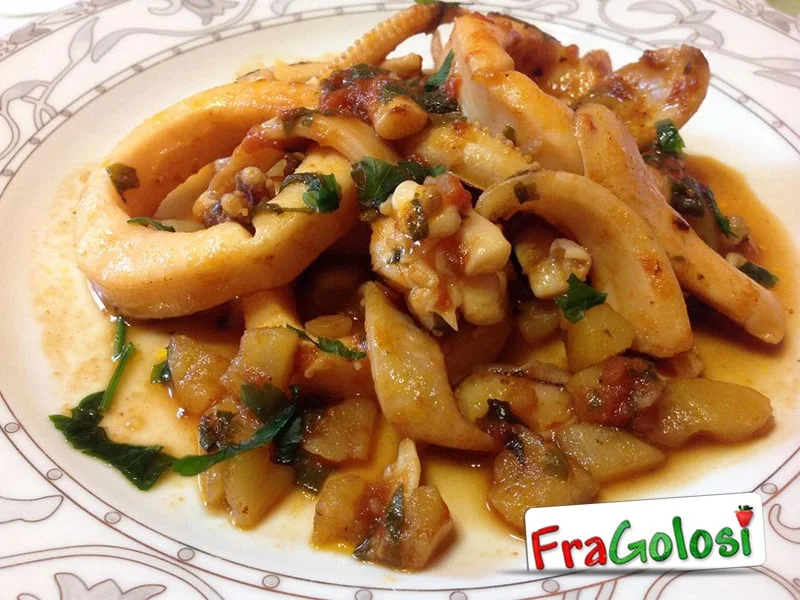
Italian-style stewed squid is gently cooked with potatoes and tomato in a savoury, spoonable sauce. It makes a satisfying one-pot main course, with the potatoes soaking up the cooking juices.
Ingredients
- 1 kgsquid, cut into rings
- to tastegarlic or onion
- 1–2 medium tomatoes, or 2 tbsp ready-made tomato saucetomatoes or tomato sauce
- 400 gpotatoes
- to tasteextra-virgin olive oil
- to tasteparsley
- to tastesalt
- to tasteblack pepper
Instructions
- 1
Make the soffritto
Warm the extra-virgin olive oil and gently fry parsley, garlic or onion, and the chopped tomatoes, or the ready-made tomato sauce.
- 2
Season the base
Add a moderate amount of salt and pepper.
- 3
Add squid and potatoes
Once the base has fried, add the squid and potatoes cut into small pieces. Stir for a couple of minutes.
- 4
Add the water
Pour in enough water to make the amount of sauce you want.
- 5
Cook the squid
Cook the squid in the sauce for about 20 minutes.
- 6
Finish and serve
Serve the stewed squid with a sprinkling of parsley.
What is stewed squid?
Stewed squid is a home-style Italian seafood dish cooked in a lightly fried base, with tomato and potatoes added for a simple, hearty sauce. This version keeps the ingredient list short and lets the squid and cooking juices provide the main flavour.
The combination of squid and potatoes is practical as well as filling: the potatoes cook in the sauce and take on its savoury flavour.
Nutrition and macros by portion
The nutrition label shows one serving as written: 380 calories, 40g protein, 18g carbs, 11g fat.
| Portion | Adjustment | kcal | Protein | Carbs | Fat |
|---|---|---|---|---|---|
| Lighter | Use less olive oil | 266 kcal | 28g | 13g | 8g |
| This serving | As written | 380 kcal | 40g | 18g | 11g |
| Hungry | Add more potatoes | 570 kcal | 60g | 27g | 17g |
The squid supplies most of the protein, while the potatoes provide most of the carbohydrates. Olive oil contributes much of the fat, so keep the amount measured if you want a lighter plate; serve with extra vegetables or salad for balance.
Build a flavourful base
Aromatics: gently fry the parsley with either garlic or onion, as the recipe offers them as alternatives. Add the chopped fresh tomatoes or the ready-made sauce to form the base.
Oil: the recipe does not specify an amount, so use enough to coat the pan lightly without leaving the finished dish greasy.
Cut the potatoes small
Potato pieces: cut them into small, similar-sized chunks so they cook through during the squid’s roughly 20-minute simmer. Larger pieces may need more time than the method allows.
Stirring: give the squid and potatoes a couple of minutes in the fried base before adding water, as directed.
Adjust the sauce
Water: add enough to reach your preferred amount of sauce; the recipe leaves this to the cook. Start with a little rather than flooding the pan, since you can add more as it cooks.
Consistency: keep the dish gently simmering so the potatoes soften and the sauce stays cohesive. If it becomes too thick before the potatoes are ready, add a small splash of water.
Check the squid and potatoes
Timing: the method gives about 20 minutes of cooking in the sauce. Check the potatoes for tenderness and the squid for a cooked-through, tender texture before serving.
Seasoning: taste near the end and adjust salt and pepper if needed, bearing in mind that the recipe calls for only moderate seasoning at the start.
Serve it simply
Finish: scatter over fresh parsley just before serving for a fresh note against the rich sauce.
Pairing: serve with bread to mop up the juices, or add a simple green salad alongside for a lighter contrast.
Recipe notes & tips
- Cut the potatoes into small, evenly sized pieces so they cook at a similar pace.
- Use either garlic or onion; the recipe presents them as alternatives.
- Add the water gradually to control how much sauce the finished dish has.
- Keep the salt moderate at first, then taste and adjust towards the end.
- Have the parsley ready to sprinkle over the dish just before serving.
Variations
- Use tomato sauce: replace the fresh tomatoes with 2 tbsp ready-made sauce as suggested.
- Choose onion: use onion instead of garlic for a gentler aromatic base.
- Choose garlic: use garlic instead of onion for a more pronounced savoury flavour.
- Add chilli: include a little chilli in the oil for a spicy version.
- Serve with bread: offer crusty bread alongside to make the most of the sauce.
Common mistakes to avoid
- Large potato chunks: they may remain firm after the stated cooking time; cut them into small pieces.
- Too much water: the sauce can become thin; add only enough for your preferred consistency.
- Heavy seasoning at the start: salt can be difficult to correct later; begin moderately and taste before serving.
- Skipping the initial frying: the aromatics and tomato need to be fried together first, as directed.
- Serving without checking: test a potato and the squid before taking the pan off the heat.
How to store
Refrigerate leftovers in a covered container and eat within 2 days. Reheat gently in a pan until hot throughout, adding a splash of water if the sauce has thickened; avoid prolonged reheating, which can toughen squid.
Frequently asked questions
Can I use frozen squid?
Yes. Thaw it completely and drain it before adding it to the pan so excess liquid does not dilute the sauce.
Can I use tomato sauce instead of fresh tomatoes?
Yes. The recipe gives 2 tbsp of ready-made tomato sauce as an alternative to one or two medium tomatoes.
How much water should I add?
Add enough to give you the amount of sauce you prefer. Start with a modest amount and add more if the pan becomes too dry.
How do I know when the potatoes are cooked?
Pierce a piece with a fork; it should be tender all the way through. Cut them small so they can cook during the roughly 20-minute simmer.
Can I make it ahead?
You can prepare it ahead and refrigerate it, but reheat it gently and only until hot throughout to help keep the squid tender.
Cook it from the original
This recipe comes from fragolosi.it. Their page has the author’s own photos, notes and tips — the best place to cook it from.
Open the recipe on fragolosi.it