
Fried Sushi
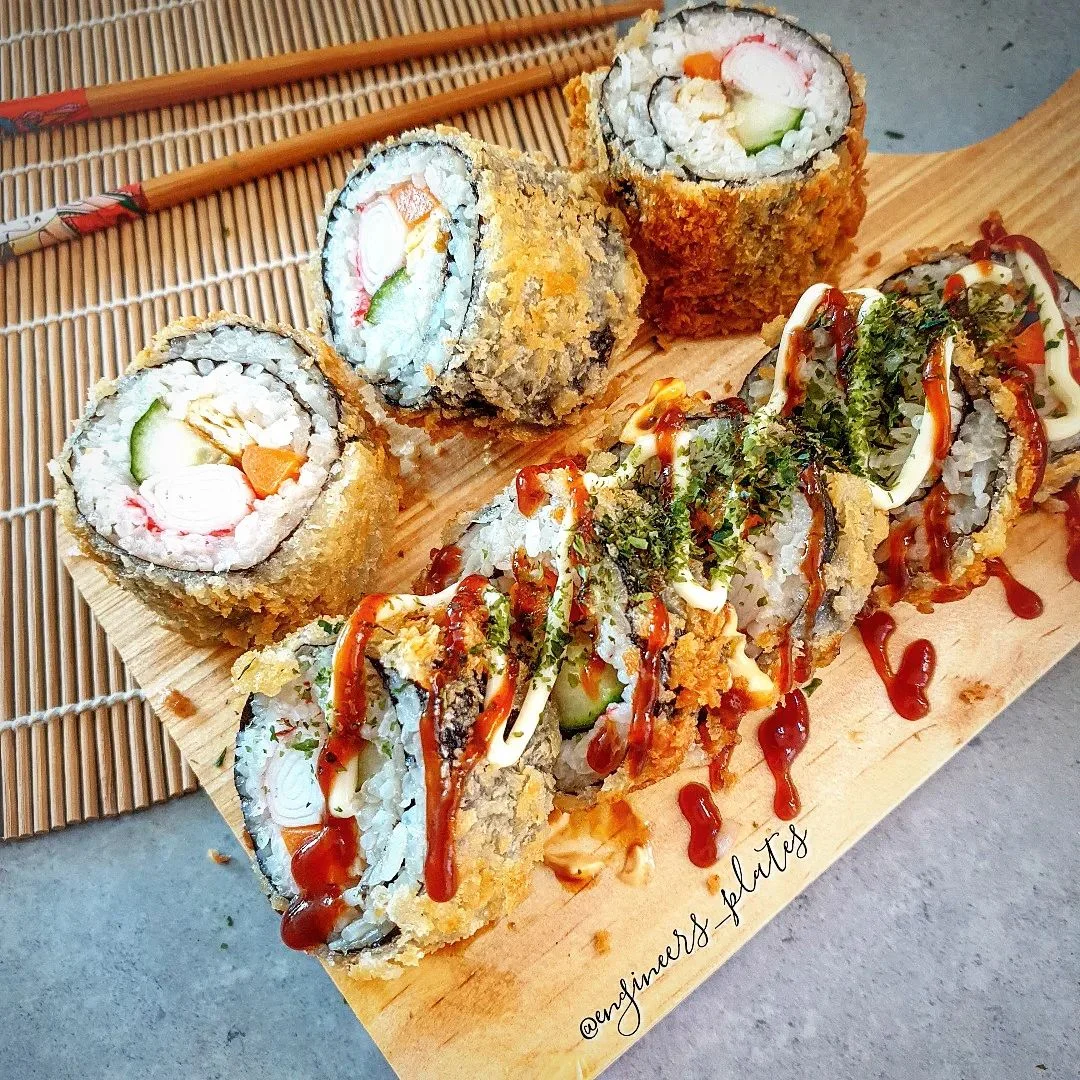
Fried sushi wraps seasoned rice and a mix of fillings in seaweed, then coats and fries the rolls until crisp. It’s a fun way to serve sushi-style flavours with a crunchy outside and a soft centre.
Ingredients
- 370 g (2 cups)cooked sushi rice
- a few piecesseaweed
- to tastecrab sticks
- 2 eggsomelette, cut into long strips
- to tastecucumber, cut into long strips
- to tastecarrots, boiled and cut into long strips
- to tasteavocado, cut into long strips (optional)
- as neededtempura batter
- as neededbreadcrumbs
- as neededcooking oil
- 45 ml (3 tbsp)white vinegar
- 45 ml (3 tbsp)water
- 25 g (2 tbsp)sugar
- 7.5 g (1 1/2 tsp)salt
Instructions
- 1
Season the rice
Add the seasoning to the cooked rice and mix thoroughly. Cover it with a cloth to stop it drying out.
- 2
Prepare the seaweed
Place a piece of seaweed on a work surface with its rough side facing upwards.
- 3
Spread the rice
Take a handful of seasoned rice and spread it evenly over the seaweed, leaving a 1 cm strip uncovered at one edge.
- 4
Add the fillings
Arrange the fillings over the rice, then carefully roll the seaweed. Press gently as you roll, without squeezing too hard, and continue to the end.
- 5
Coat the roll
Dip the roll in tempura batter, then coat it with breadcrumbs.
- 6
Fry until golden
Fry the roll until golden brown, then remove it from the oil.
- 7
Slice and serve
Rub a little oil on your knife to help prevent sticking, then carefully slice the roll and serve with sushi sauce.
- 8
Soak the rice
For softer rice, soak it for 30–60 minutes before cooking. If sushi rice is unavailable, the recipe suggests substituting jasmine rice and glutinous rice in a 3:1 ratio.
- 9
Adjust the vinegar
Vinegar acidity varies, so adjust the seasoning to suit your taste. If yours is very sour, try 2 tbsp vinegar and 4 tbsp water.
What is fried sushi?
Sushi is associated with Japanese cooking, where seasoned rice and fillings are wrapped in seaweed. This version gives the roll a crisp coating by dipping it in batter and breadcrumbs before frying.
The rice and seaweed make a sturdy wrapper for the mix of crab sticks, omelette and vegetables. Avocado is optional, so the filling can be adjusted to what you have.
Nutrition and macros by portion
The nutrition label shows one serving as written: 450 calories, 12g protein, 65g carbs, 14g fat.
| Portion | Adjustment | kcal | Protein | Carbs | Fat |
|---|---|---|---|---|---|
| Lighter | Use less oil | 315 kcal | 8g | 46g | 10g |
| This serving | As written | 450 kcal | 12g | 65g | 14g |
| Hungry | Serve a larger roll | 675 kcal | 18g | 98g | 21g |
The rice and breadcrumbs provide most of the carbohydrates, while frying oil and the egg contribute much of the fat; the egg and crab sticks provide some protein. Balance a serving with fresh vegetables, and use sushi sauce sparingly if you want to keep the meal less salty.
Seasoning the rice
Rice seasoning: the vinegar, water, sugar and salt are mixed through the cooked rice. Taste the vinegar mixture and adjust its acidity if needed, as the recipe notes that different vinegars can vary.
Keeping it covered: a cloth over the seasoned rice helps prevent it drying while you prepare the rolls.
Getting a neat roll
Rice layer: spread the rice evenly across the seaweed, leaving a 1 cm bare strip at one edge. That uncovered edge helps close the roll.
Gentle pressure: roll carefully and press just enough to hold the filling together. Too much pressure can squash the rice and fillings.
Choosing and arranging the filling
Long strips: cut the omelette, cucumber, carrots and optional avocado into long pieces so they can be placed along the rice and rolled up.
Crab sticks: boil them for 1 minute before using, as directed in the ingredient list. Keep the filling arranged evenly so each slice has a mix.
Coating and frying
Coating: dip the assembled roll in tempura batter, then breadcrumbs, covering the outside before it goes into the oil.
Doneness: fry until the coating is golden brown, then take the roll out. The recipe does not specify an oil temperature or frying time, so use the colour of the coating as your cue.
Slicing and serving
Clean slices: lightly oil the knife before cutting to reduce sticking. Slice carefully once the roll has been removed from the oil.
Serving idea: sushi sauce is suggested for serving. The crisp coating pairs well with a fresh side such as cucumber or other raw vegetables.
Recipe notes & tips
- Keep the seasoned rice covered while preparing the seaweed and fillings.
- Leave the 1 cm strip of seaweed free of rice so the roll can close neatly.
- Arrange the long filling strips evenly before you start rolling.
- Press gently as you roll to keep the filling in place without compressing the rice.
- Oil the knife lightly before slicing to help it pass through the roll.
- Adjust the vinegar and water to suit the acidity of your vinegar.
Variations
- Skip the avocado: leave it out if you prefer the other fillings on their own.
- Change the vegetables: use different long-cut vegetables in place of cucumber or carrot.
- Use the rice substitute: try jasmine rice and glutinous rice in a 3:1 ratio if sushi rice is unavailable.
- Adjust the seasoning: use 2 tbsp vinegar and 4 tbsp water if your vinegar tastes too sour.
- Serve with sauce: offer sushi sauce alongside the sliced rolls for dipping.
Common mistakes to avoid
- Dry rice: cover it with a cloth after seasoning so it does not dry out while you work.
- Rice over the edge: leave a 1 cm strip uncovered to help seal the roll.
- Overfilling: arrange the filling in a manageable layer so the seaweed can roll around it.
- Rolling too firmly: press gently rather than squeezing, which can squash the rice and filling.
- Sticky knife: rub a little oil on the blade before slicing.
- Over-frying: remove the roll once the breadcrumb coating is golden brown.
How to store
Store leftover fried sushi in an airtight container in the fridge and eat within 1–2 days. Reheat in an oven or air fryer until warmed through and crisp; the coating may soften during storage.
Frequently asked questions
Do I need to soak the sushi rice?
The recipe recommends soaking it for 30–60 minutes to make the rice a little softer. It does not give separate cooking instructions for the rice.
Can I leave out the avocado?
Yes. Avocado is listed as optional, so you can omit it and use the other fillings.
What can I use if I don't have sushi rice?
The recipe suggests jasmine rice and glutinous rice in a 3:1 ratio.
How do I make the vinegar seasoning less sour?
Adjust it to taste. The recipe suggests trying 2 tbsp vinegar with 4 tbsp water if your vinegar is particularly sour.
How do I know when the rolls are ready?
Fry them until the breadcrumb coating is golden brown, then remove them from the oil.
Cook it from the original
This recipe comes from fooooods.com. Their page has the author’s own photos, notes and tips — the best place to cook it from.
Open the recipe on fooooods.com