
Rice & Beans (Arroz Con Habichuelas)
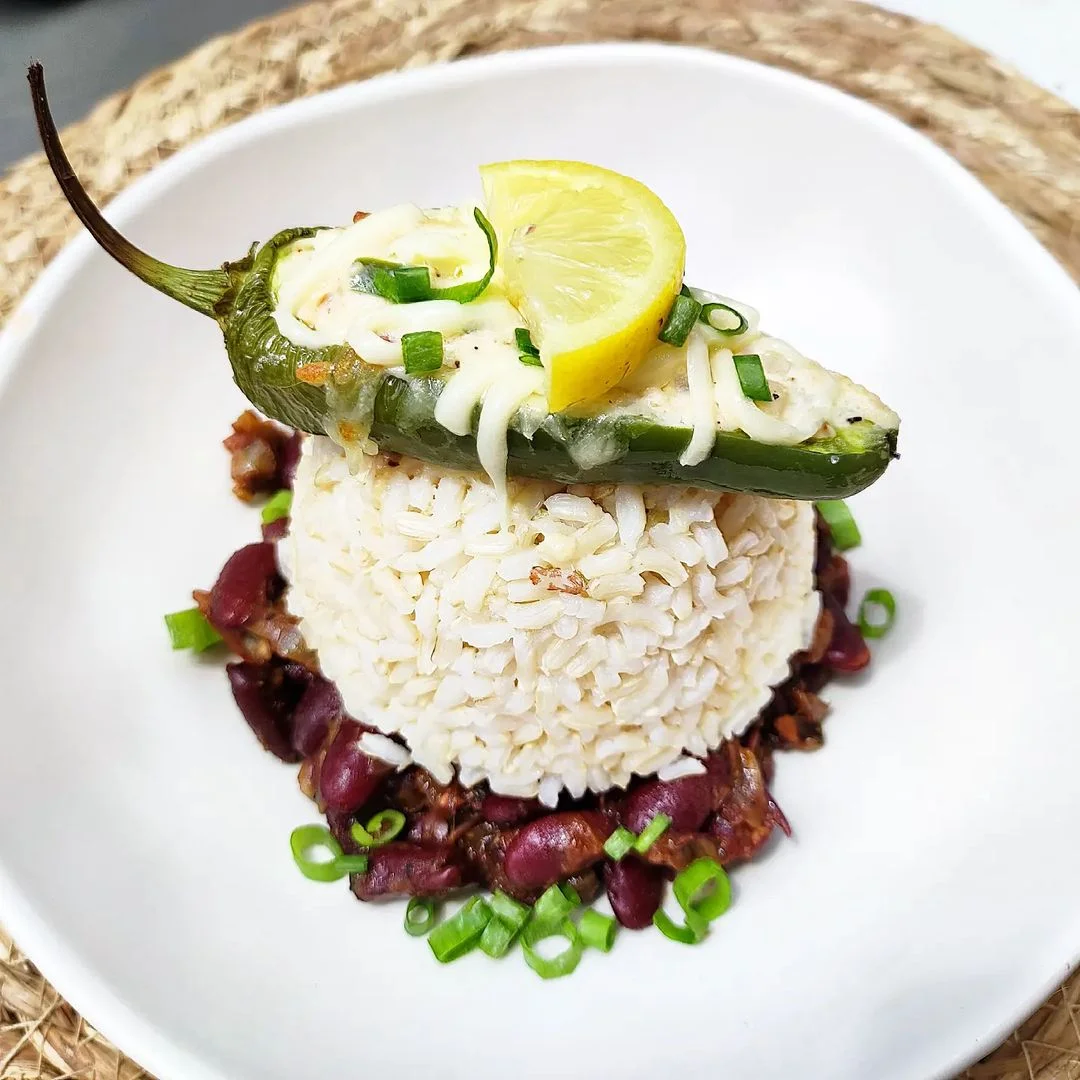
Arroz con habichuelas is a hearty pot of red or kidney beans simmered with vegetables, herbs and spices, served alongside rice. It is a practical, flavourful meal made from pantry staples, with a thick, savoury sauce.
Ingredients
- 340 g (2 cups)cooked red or kidney beans
- 30 ml (2 tbsp)olive oil
- 1bay leaf
- 3 clovesgarlic, minced
- 150 g (1 cup)onion, finely chopped
- 150 g (1 cup)green bell pepper, finely chopped
- 100 g (1 cup)celery, finely chopped
- 15 ml (1 tbsp)tomato paste
- 2 tspdried thyme
- 1 tspsmoked paprika
- ½ tspcayenne
- 475 ml (2 cups)vegetable broth or water
- ½ tspsalt
- ¼ tspground black pepper
Instructions
- 1
Soften the aromatics
Heat the olive oil in a large pot over medium-high heat. Add the bay leaf, garlic and onion, and sauté until the onion is translucent.
- 2
Cook the vegetables
Add the green bell pepper, celery and tomato paste. Cook for 5 minutes.
- 3
Bloom the spices
Stir in the thyme, smoked paprika and cayenne, and cook for 1 minute.
- 4
Add beans and broth
Add the beans and vegetable broth, then bring the pot to a boil.
- 5
Simmer until thick
Season with the salt and black pepper. Simmer for 20 minutes, until the beans are tender and the sauce has thickened. If needed, add more water and cook for longer.
- 6
Taste and serve
Taste and adjust the seasoning. The source suggests garnishing with chopped spring onion and lime or lemon wedges, then serving with rice.
What is arroz con habichuelas?
Arroz con habichuelas means rice with beans in Spanish, and it is a familiar home-style pairing across parts of the Caribbean and Latin America. Recipes vary by household and region, but beans cooked with aromatics and served with rice are at the heart of the dish.
This version builds flavour with onion, green pepper, celery, tomato paste and warm spices. Simmering the beans in broth gives them time to take on those flavours and creates a thicker sauce.
Nutrition and macros by portion
The nutrition label shows one serving as written: 205 calories, 10g protein, 29g carbs, 9g fat.
| Portion | Adjustment | kcal | Protein | Carbs | Fat |
|---|---|---|---|---|---|
| Lighter | Use less olive oil | 144 kcal | 7g | 20g | 6g |
| This serving | As written | 205 kcal | 10g | 29g | 9g |
| Hungry | Serve with extra rice | 308 kcal | 15g | 44g | 14g |
The beans provide most of the carbohydrates and plant protein, while the olive oil supplies most of the fat. Rice served alongside adds further carbohydrates, so balance the plate with a generous portion of non-starchy vegetables.
Build the flavour base
Aromatics: let the onion soften with the garlic in the oil until translucent; this gives the pot a savoury starting point without rushing the first step.
Vegetables: cook the pepper and celery with the tomato paste for the full 5 minutes, stirring so the paste is distributed through the mixture.
Use the spices thoughtfully
Thyme and paprika: stirring them for 1 minute in the hot pot helps bring out their aroma before the liquid goes in.
Cayenne: it adds heat, so keep to the listed amount if you want the intended level of spiciness. The salt and pepper go in with the beans and broth.
Let the sauce thicken
Simmer: once the pot reaches a boil, lower the heat enough to maintain a steady simmer for 20 minutes. Stir occasionally to help prevent the beans from sticking to the bottom.
Doneness: the beans should be tender and the liquid should look saucy rather than watery. If the beans need more time, add water as needed and continue cooking.
Choose your beans and liquid
Beans: cooked red beans or kidney beans both suit this method. If using canned beans, drain and rinse them first; their texture may soften sooner, so check them as they simmer.
Liquid: vegetable broth makes a more seasoned base, while water gives the vegetables and spices a cleaner flavour. Either works in the stated amount.
Serve with rice
Rice: spoon the beans and their sauce alongside or over rice so the grains can soak up the cooking liquid. The recipe does not specify a rice variety or cooking method.
Finish: the suggested spring onion and citrus wedges add a fresh contrast to the rich, spiced beans. Add them at the table if you have them.
Recipe notes & tips
- Chop the onion, pepper and celery to a similar size so they cook evenly.
- Stir the tomato paste into the vegetables thoroughly before adding the liquid.
- Keep the simmer gentle after bringing the pot to a boil.
- Check the beans near the end of cooking and add water if the sauce thickens before they are tender.
- Taste the pot before serving and adjust the seasoning to suit your broth.
- Serve the beans with rice and add the suggested citrus at the table.
Variations
- Use water: choose it instead of vegetable broth for a less seasoned base.
- Adjust the heat: reduce the cayenne for a milder pot or add more to taste.
- Try another bean: use cooked red beans or kidney beans, as listed.
- Add citrus: squeeze lime or lemon over the beans just before eating.
- Finish with spring onion: scatter chopped spring onion over the servings for a fresh garnish.
Common mistakes to avoid
- Rushing the onion: cook it until translucent so it softens properly before the other vegetables go in.
- Skipping the spice step: stir the seasonings for 1 minute before adding broth to release their aroma.
- Boiling throughout: lower the heat after the initial boil to keep the beans at a simmer.
- Letting the pot dry out: add water if needed, particularly if the beans need longer to become tender.
- Serving without tasting: check the seasoning at the end, since broth can vary in saltiness.
How to store
Refrigerate leftover beans in a covered container for up to 3 days. Reheat gently in a saucepan, adding a splash of water if the sauce has thickened; store rice separately when possible.
Frequently asked questions
Can I use canned beans?
Yes. Drain and rinse cooked canned red or kidney beans before adding them. Check for tenderness during the simmer, as they may soften sooner.
Can I use water instead of vegetable broth?
Yes, the recipe lists either option. Water makes a plainer base, so taste and adjust the seasoning before serving.
How do I know when the beans are done?
They should be tender, and the sauce should have thickened. If they are still firm, add water as needed and continue simmering.
How can I make the beans less spicy?
Use less than the listed ½ teaspoon of cayenne, or leave it out. Taste before serving and adjust if you want more heat.
What should I serve with arroz con habichuelas?
Serve it with rice, as suggested in the recipe. Chopped spring onion and lime or lemon wedges are suggested garnishes.
Cook it from the original
This recipe comes from fooooods.com. Their page has the author’s own photos, notes and tips — the best place to cook it from.
Open the recipe on fooooods.com