
Rosemary focaccia
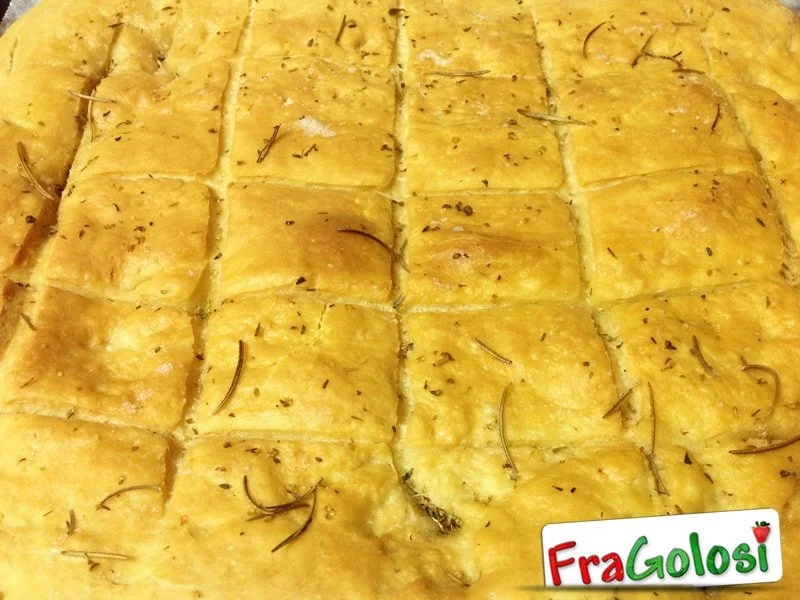
This Italian rosemary focaccia is a soft, yeasted flatbread with a golden, oil-brushed top and fragrant herbs. Make it when you want a generous bake to serve alongside a meal or tear into while it is still warm.
Ingredients
- 300 g00 flour
- 300 gdurum wheat semolina
- 1 cubefresh baker’s yeast
- 300 mlwater
- 60 goil
- a pinchsugar
- 10 gsalt
- 2 sprigsrosemary
- to tasteextra-virgin olive oil
- to tastesalt
- to tasteblack pepper
Instructions
- 1
Mix the flours
Roughly chop the rosemary. Mix the 00 flour and semolina in a bowl, then tip them onto the work surface and make a well in the centre.
- 2
Keep salt separate
Make a small hollow in the outer edge of the flour well and put the 10 g of salt there, away from the yeast.
- 3
Add yeast and herbs
Put the yeast, dissolved in a little warm water, in the centre of the well along with the chopped rosemary.
- 4
Knead the dough
Add the remaining water a little at a time, working it in by hand until you have a soft, elastic dough. Knead for about 10–15 minutes, repeatedly lifting and slapping the dough against the work surface.
- 5
Let it rise
Set the dough in a floured cloth and leave it in a warm place away from draughts until it has doubled in volume.
- 6
Speed up rising
To shorten the rising time, put the dough in an oven heated to 100°C and then switched off, or cover it with a woollen cloth.
- 7
Shape the focaccia
When the dough is ready, stretch it to no more than 1 cm thick on a lightly oiled baking tray or on oiled baking paper.
- 8
Rest and bake
Press dimples into the dough with your fingertips and drizzle with a little oil. Leave the focaccia to rest for another 30 minutes, then bake at 200–220°C for about 30 minutes.
- 9
Check the colour
Take the focaccia out when it is thoroughly golden. If needed, extend the baking time.
- 10
Finish with oil
Once baked, brush the focaccia with oil and, if you like, finish with freshly ground black pepper.
What is rosemary focaccia?
Focaccia is an Italian yeasted flatbread, often baked with olive oil and herbs. This version combines 00 flour and durum wheat semolina, then adds chopped rosemary to the dough for fragrance throughout.
The mix of flours gives the loaf its own character, while dimpling and oiling the surface help create a tender, golden bake.
Nutrition and macros by portion
The nutrition label shows one serving as written: 340 calories, 9g protein, 54g carbs, 8g fat.
| Portion | Adjustment | kcal | Protein | Carbs | Fat |
|---|---|---|---|---|---|
| Lighter | Smaller focaccia portion | 238 kcal | 6g | 38g | 6g |
| This serving | As written | 340 kcal | 9g | 54g | 8g |
| Hungry | Larger slice | 510 kcal | 14g | 81g | 12g |
Most of the carbohydrates come from the 00 flour and semolina, while the oil contributes most of the fat. The flours provide some protein, but a slice is not especially protein-rich; serve it with beans, cheese or another protein-rich dish and vegetables to balance the plate.
Choosing the flour and yeast
00 flour: This finely milled flour makes up half of the blend and helps keep the dough soft.
Semolina: Durum wheat semolina adds a slightly heartier quality. Mix it thoroughly with the 00 flour before adding the liquids.
Yeast: The recipe calls for a cube of fresh baker’s yeast, dissolved in a little warm water. Keep it apart from the salt at first, as the method directs.
Kneading and rising
Kneading: Add the water gradually so it is easier to bring the flours into a cohesive dough. Work it for 10–15 minutes, until it feels elastic and soft.
First rise: Leave the dough somewhere warm and free from draughts until it has doubled in volume. The dough’s expansion, rather than a fixed time, is the cue to move on.
Shaping and dimpling
Thickness: Stretch the risen dough to no more than 1 cm on an oiled tray or oiled baking paper. Keeping it thin helps it bake through in the stated time.
Dimples: Press the surface with your fingertips before the second rest, then drizzle with oil. Leave it for 30 minutes so it can relax before baking.
Baking and doneness
Oven: Bake at 200–220°C for about 30 minutes. The recipe gives a range, so use the colour of the focaccia as your guide.
Finish: Look for an evenly golden surface and extend the baking time if it needs it. Brush with oil after baking, and add freshly ground black pepper if you like.
Serving ideas
Serve the focaccia warm or at room temperature, cut into squares or torn into pieces. It works well alongside soup, salads, roasted vegetables or a spread of Italian-style antipasti.
For a more filling plate, pair it with a protein-rich dish and vegetables; the bread itself is mainly a source of carbohydrates.
Recipe notes & tips
- Use warm rather than hot water when dissolving the yeast.
- Add the water in stages so you can work it evenly into the flour.
- Keep the salt in its separate hollow until you begin mixing.
- Use the doubling in volume as the cue that the first rise is complete.
- Oil the tray or baking paper lightly to help prevent sticking.
- Check for an even golden colour and give the focaccia more time if necessary.
Variations
- More rosemary: Add extra chopped rosemary to the dough for a stronger herbal aroma.
- Pepper finish: Grind black pepper over the focaccia after brushing it with oil.
- Olive topping: Press pitted olives into the dimples before the second rest.
- Onion topping: Scatter thinly sliced onion over the surface before baking.
- Garlic oil: Brush the baked focaccia with olive oil infused with garlic.
Common mistakes to avoid
- Salt touching yeast: Place the salt in its own hollow at the edge of the flour well.
- Adding water all at once: Work it in gradually so the dough is easier to combine by hand.
- Under-kneading: Knead for the full 10–15 minutes, until the dough feels soft and elastic.
- Rushing the first rise: Wait until the dough has doubled rather than relying on a set duration.
- Skipping the second rest: Leave the shaped focaccia for 30 minutes before baking.
- Taking it out too pale: Check the colour and extend the bake if the surface is not golden.
How to store
Once completely cool, store the focaccia in an airtight container at room temperature and eat within 2 days. Reheat briefly in a warm oven to refresh the crust; freeze portions for longer storage and thaw before reheating.
Frequently asked questions
Can I use dried yeast instead of fresh yeast?
The recipe specifies one cube of fresh baker’s yeast and does not give a dried-yeast conversion. Follow the conversion on your yeast packet if substituting.
How do I know when the dough has risen enough?
The first rise is complete when the dough has doubled in volume. The recipe does not specify a fixed rising time.
Can I use only one type of flour?
The recipe uses equal quantities of 00 flour and durum wheat semolina. Replacing one with the other will change the dough’s texture.
Why does the recipe put the salt away from the yeast?
It keeps the salt from directly contacting the yeast when the ingredients are first assembled. Add the salt to the dough as you begin mixing.
Can I make the dough rise faster?
The method suggests putting it in an oven heated to 100°C and then switched off, or covering it with a woollen cloth. Keep an eye on the dough and use the doubling in volume as your cue.
How can I tell when the focaccia is baked?
It should be thoroughly golden after about 30 minutes at 200–220°C. If it is still pale, leave it in longer.
Cook it from the original
This recipe comes from fragolosi.it. Their page has the author’s own photos, notes and tips — the best place to cook it from.
Open the recipe on fragolosi.it