
Ultimate Melty Reuben Sandwich
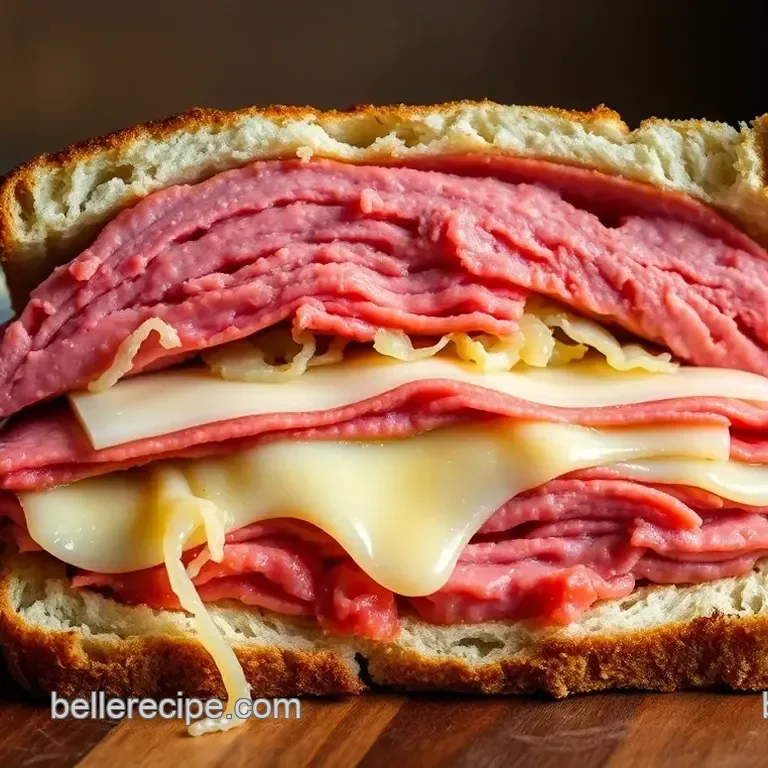
A hot deli-style Reuben layered with corned beef, tangy sauerkraut, Swiss cheese and dressing between slices of rye, then griddled until crisp and melty. It makes a hearty lunch or supper with the familiar contrast of savoury meat, sharp cabbage and rich, toasted bread.
Ingredients
- 4 slices, about 1/2 inch thick (100g)rye bread or pumpernickel
- 8 ounces (225g)corned beef, thinly sliced
- 1 cup (150g)sauerkraut, drained
- 4 slicesSwiss cheese or Gruyère
- 2 tablespoons (30g)unsalted butter, softened
- 2 tablespoons (30g)Thousand Island dressing or Russian dressing
Instructions
- 1
Prepare the ingredients
Gather and measure everything. Drain the sauerkraut, then pat it dry with paper towels.
- 2
Assemble the sandwiches
Spread 1 tablespoon of Thousand Island dressing on one side of each slice of rye bread. Layer corned beef, sauerkraut and 2 slices of Swiss cheese on each sandwich. Place the remaining bread slices on top, dressing side down.
- 3
Preheat the skillet
Heat a skillet or griddle over medium heat until hot but not smoking.
- 4
Butter the bread
Spread softened butter over the outer sides of both sandwiches.
- 5
Cook the sandwiches
Put the sandwiches in the skillet and cook for 4–5 minutes, until the underside is golden brown. Carefully flip them with a spatula and cook for another 4–5 minutes, until the cheese has melted and the bread is golden.
- 6
Check for doneness
Check that the cheese is gooey and melted and that the bread has turned deep golden brown.
- 7
Serve the sandwiches
Take the sandwiches out of the skillet, cut them diagonally and serve hot.
What is a Reuben sandwich?
The Reuben is an American deli-style sandwich built around corned beef, sauerkraut, Swiss cheese and a tangy dressing, typically served on rye. This version uses a skillet to toast the bread while warming the filling and melting the cheese.
The appeal is in the contrast: savoury meat and rich cheese meet sharp, juicy sauerkraut, while the toasted rye gives each bite a crisp edge.
Nutrition and macros by portion
The nutrition label shows one serving as written: 620 calories, 30g protein, 60g carbs, 30g fat.
| Portion | Adjustment | kcal | Protein | Carbs | Fat |
|---|---|---|---|---|---|
| Lighter | Less butter and dressing | 434 kcal | 21g | 42g | 21g |
| This serving | As written | 620 kcal | 30g | 60g | 30g |
| Hungry | Add another sandwich | 930 kcal | 45g | 90g | 45g |
The bread supplies most of the carbohydrates, while butter, cheese and dressing contribute much of the fat. Corned beef and cheese provide most of the protein. For a more balanced plate, serve a sandwich with a generous portion of salad or other vegetables.
Why drain the sauerkraut?
Moisture: drain the sauerkraut and pat it dry before assembling. That helps keep the bread from becoming soggy as the sandwich cooks.
Tang: sauerkraut brings a bright, acidic note that cuts through the richness of the corned beef, cheese and butter.
Building the layers
Bread: rye gives the sandwich a robust, slightly earthy base; pumpernickel is offered as an alternative. Choose slices thick enough to hold the filling as you flip them.
Cheese: Swiss is the classic choice here, with Gruyère as an alternative. Keep the slices arranged over the filling so they soften as the bread browns.
Getting the griddle right
Heat: use medium heat and wait until the skillet is hot but not smoking. The bread needs time to brown while the centre warms, so excessive heat can colour the outside too quickly.
Butter: coat the outer sides of the assembled sandwiches with the softened butter. This helps the bread develop an even golden surface in the pan.
How to tell when they are done
Colour: look for deep golden-brown bread, especially after flipping. The recipe allows 4–5 minutes on each side, but use the visual cue as well as the timing.
Centre: the cheese should be gooey and melted. If the bread is browning before the cheese softens, reduce the heat and give the centre more time.
Serving the sandwiches
Cutting: slice each sandwich diagonally after it comes out of the skillet. Serve it hot so the cheese is still soft and the bread retains its crispness.
On the side: a simple green salad or a bowl of soup makes a fresh or warming accompaniment without competing with the sandwich's savoury, tangy filling.
Recipe notes & tips
- Dry the sauerkraut well so excess moisture does not soften the bread.
- Keep the skillet at medium heat so the cheese has time to melt as the bread browns.
- Use a broad spatula to flip the sandwiches without losing the layers.
- Let the butter soften before spreading it over the bread.
- Check the listed dressing quantity: the ingredients give 2 tablespoons total, while the assembly method calls for 1 tablespoon on each of four bread slices.
Variations
- Use pumpernickel: swap it for the rye bread for a deeper, darker bread flavour.
- Try Gruyère: use it in place of Swiss for a different nutty cheese note.
- Choose Russian dressing: substitute it for Thousand Island dressing as listed.
- Add extra sauerkraut: use a little more for a sharper, tangier filling, taking care to drain it well.
- Make smaller sandwiches: divide the filling between more, smaller bread slices and adjust cooking time to suit their size.
Common mistakes to avoid
- Wet sauerkraut: it can make the bread soggy; drain it and pat it dry before assembling.
- Too much heat: the bread may brown before the cheese melts; cook over medium heat.
- Rushing the flip: the filling can shift; use a spatula and turn each sandwich carefully.
- Overlooking the dressing amount: the method calls for more than the ingredient list supplies; reconcile the quantity before assembling.
- Serving them later: the bread loses crispness as it sits; serve the sandwiches hot from the skillet.
How to store
These sandwiches are best eaten freshly cooked. If you have leftovers, refrigerate them in a covered container and reheat in a skillet over medium-low heat until warmed through; the bread may be less crisp than when freshly made.
Frequently asked questions
Can I use pumpernickel instead of rye?
Yes. The recipe lists pumpernickel as an alternative, and the same assembly and skillet method applies.
What can I use instead of Swiss cheese?
Gruyère is the listed alternative. Use 4 slices in total, as with the Swiss.
How do I stop the sandwich from going soggy?
Drain the sauerkraut and pat it dry with paper towels before assembling. Avoid letting the assembled sandwich sit for long before cooking.
How long should I cook each sandwich?
Cook for 4–5 minutes on the first side and another 4–5 minutes after flipping. The bread should be deep golden brown and the cheese melted.
How much dressing should I use?
There is a mismatch in the recipe: the ingredient list gives 2 tablespoons total, while the method says 1 tablespoon on each of four slices. Check the quantity before assembling and use the amount you prefer.
Cook it from the original
This recipe comes from bellerecipe.com. Their page has the author’s own photos, notes and tips — the best place to cook it from.
Open the recipe on bellerecipe.com