
Roasted Cabbage Rounds
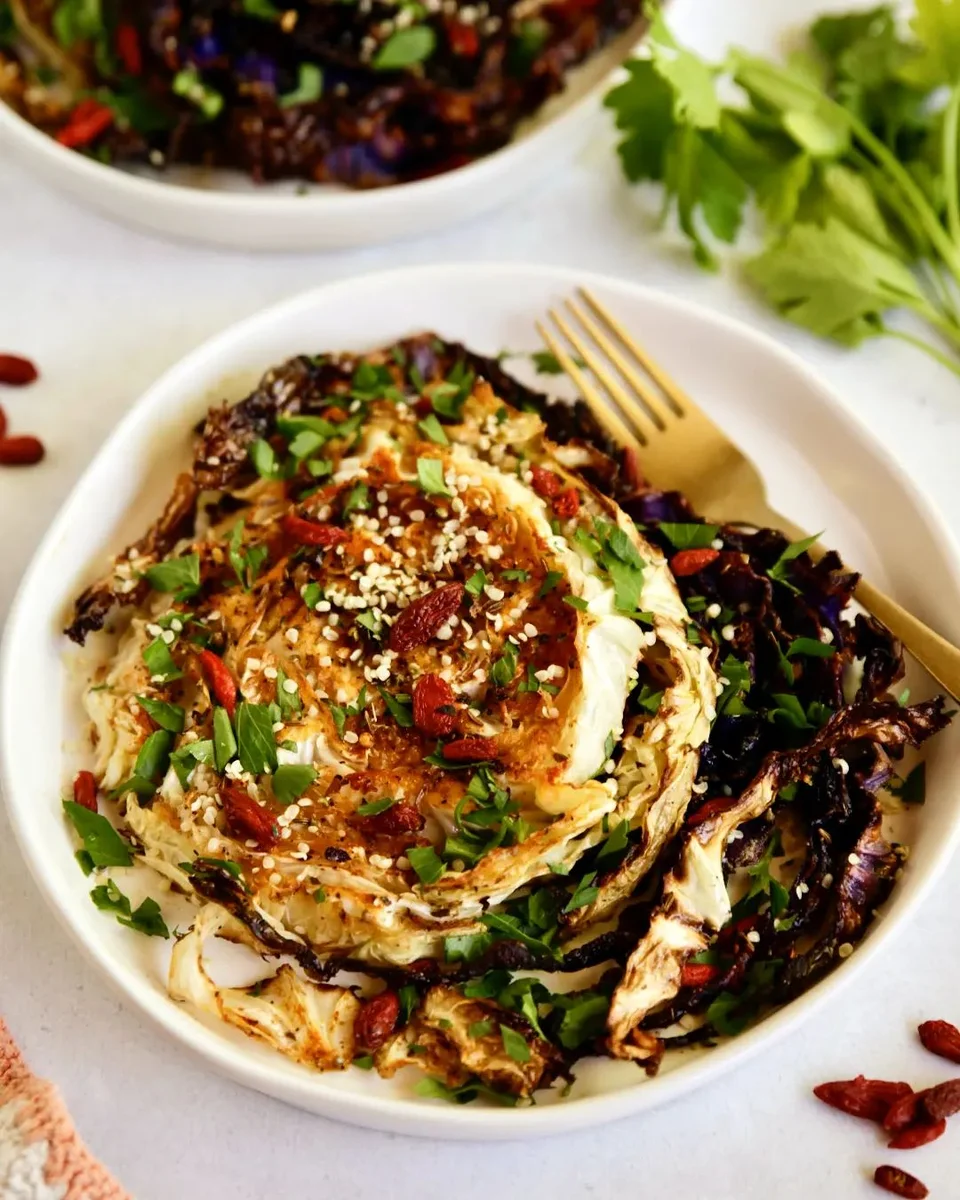
Roasted cabbage rounds are thick slices of cabbage baked until tender in the middle and browned at the edges. A savoury coating of oil, coconut aminos and spices, finished with herbs, seeds and goji berries, makes them an easy side dish with plenty of texture.
Ingredients
- 1 headgreen or purple cabbage (or half of each)
- 60 ml (1/4 cup)avocado oil
- 30 ml (2 tablespoons)coconut aminos
- 5 ml (1 teaspoon)sea salt
- 2.5 ml (1/2 teaspoon)black pepper
- 5 ml (1 teaspoon)garlic powder
- 5 ml (1 teaspoon)smoked paprika
- 5 ml (1 teaspoon)dried caraway seeds
- 5 ml (1 teaspoon)dried oregano
- 5 ml (1 teaspoon)dried red pepper flakes
- 30 ml (2 tablespoons)hemp seeds
- 30 ml (2 tablespoons)dried goji berries
- 60 ml (1/4 cup)fresh parsley, chopped
Instructions
- 1
Heat the oven
Preheat the oven to 200°C (400°F).
- 2
Slice the cabbage
Cut the cabbage into rounds about 2.5 cm (1 inch) thick and arrange them on a baking tray lined with parchment paper.
- 3
Coat with oil
Drizzle the avocado oil and coconut aminos over the cabbage rounds, then spread the coating evenly over each one with your fingers.
- 4
Season the rounds
Season with the sea salt, black pepper, garlic powder, caraway seeds and red pepper flakes, then put the tray in the oven.
- 5
Roast the cabbage
Roast for 30–35 minutes, until the cabbage is soft and its edges are browned.
- 6
Add the garnish
Remove the tray from the oven and garnish the rounds with hemp seeds, goji berries and fresh parsley.
What are roasted cabbage rounds?
They are thick cross-sections of cabbage roasted on a tray, rather than loose leaves or wedges. Roasting is a simple way to prepare cabbage in many home kitchens; this version pairs it with a spiced, savoury coating and a contrasting garnish.
The method relies on a short ingredient list and direct oven heat. The rounds become tender while their outer edges take on colour, and the seeds, berries and parsley add contrasting textures and flavours.
Nutrition and macros by portion
The nutrition label shows one serving as written: 190 calories, 5g protein, 17g carbs, 14g fat.
| Portion | Adjustment | kcal | Protein | Carbs | Fat |
|---|---|---|---|---|---|
| Lighter | Use less avocado oil | 133 kcal | 4g | 12g | 10g |
| This serving | As written | 190 kcal | 5g | 17g | 14g |
| Hungry | Serve a larger portion | 285 kcal | 8g | 26g | 21g |
Most of the carbohydrates come from the cabbage and dried goji berries, while the avocado oil supplies most of the fat; the hemp seeds contribute some protein and fat. To balance the plate, serve a round with a protein-rich main and a modest portion of grains or beans.
Choosing the cabbage
Green cabbage: its leaves make sturdy slices that hold together well when cut into rounds.
Purple cabbage: use it on its own or alongside green cabbage for a colourful tray. Cut the rounds evenly so they roast at a similar rate.
Coating each round
Oil and coconut aminos: spread these over both the tops and the cut surfaces as evenly as you can. This helps the seasoning cling and gives the cabbage a savoury finish.
Seasonings: the listed method uses salt, pepper, garlic powder, caraway and red pepper flakes. Smoked paprika and dried oregano are included in the ingredient list, though the method does not specify when to add them.
Getting the texture right
Thickness: slices about 2.5 cm thick are substantial enough to soften without falling apart too quickly. Keep the rounds intact as you move them to the tray.
Doneness: look for cabbage that is soft and edges that are browned, as specified in the method. The stated roasting time is 30–35 minutes, but the visual and texture cues are the best guide.
Timing and tray space
Arrange the rounds on a parchment-lined tray with space around them. Crowded slices may soften more than brown, so use another tray if needed.
The recipe gives a roasting time of 30–35 minutes at 200°C. It does not specify a separate preparation time.
Serving the rounds
Serve them as a side with a main dish, or alongside grains or beans for a more substantial plate. The cabbage is savoury and gently spiced, while the dried berries bring a sweet-tart note.
Add the hemp seeds, goji berries and parsley after roasting, as directed. This keeps the garnish distinct from the tender, browned cabbage.
Simple substitutions
Coconut aminos: the recipe suggests balsamic vinegar as a substitute. It will give the coating a tangier flavour.
Caraway seeds: dried dill is suggested instead. For the garnish, minced dried apricot can stand in for goji berries, and coriander leaves can replace parsley.
Recipe notes & tips
- Choose a cabbage that feels firm so the rounds are easier to slice cleanly.
- Use a sharp knife and aim for rounds of similar thickness for more even roasting.
- Spread the oil and coconut aminos across the cut surfaces as well as the tops.
- Leave a little space between rounds so their edges have a chance to brown.
- Check for softness and browned edges around the 30-minute mark.
- Scatter the parsley, hemp seeds and goji berries over the rounds just before serving.
Variations
- Use balsamic vinegar: swap it for coconut aminos if that is what you have.
- Try dried dill: use it instead of caraway for a different herbal flavour.
- Swap the berries: use minced dried apricot in place of the goji berries.
- Change the herbs: use chopped coriander leaves instead of parsley.
- Mix cabbage colours: roast green and purple rounds together for a varied-looking tray.
Common mistakes to avoid
- Uneven slices: cut the rounds to a similar thickness so they finish roasting at roughly the same time.
- Crowded tray: leave space between rounds so they can brown rather than steam against one another.
- Patchy coating: spread the oil and coconut aminos over each round instead of leaving them pooled in one spot.
- Removing them too early: roast until the cabbage is soft and the edges are browned.
- Adding the garnish too soon: wait until the rounds come out of the oven to add the hemp seeds, goji berries and parsley.
How to store
Refrigerate leftovers in a covered container for up to 3 days. Reheat in an oven until hot, or warm them in a frying pan; the garnish may soften during storage.
Frequently asked questions
Can I use green and purple cabbage together?
Yes. The recipe allows for half of each type, or you can use a whole head of either colour.
How thick should I cut the rounds?
Cut them about 2.5 cm (1 inch) thick, as directed. Keeping them similar in thickness helps them roast more evenly.
How do I know when the cabbage is done?
It should be soft, with browned edges. The recipe gives a roasting time of 30–35 minutes at 200°C.
What can I use instead of coconut aminos?
Balsamic vinegar is the suggested substitute. It will make the coating tangier.
Can I replace the caraway seeds?
Yes. The recipe suggests dried dill as an alternative.
Can I prepare the cabbage ahead?
You can slice the cabbage and measure out the seasonings ahead, then coat and roast it closer to serving. Add the garnish after roasting.
Cook it from the original
This recipe comes from fooooods.com. Their page has the author’s own photos, notes and tips — the best place to cook it from.
Open the recipe on fooooods.com