
Creamy Tomato Chickpea Pasta
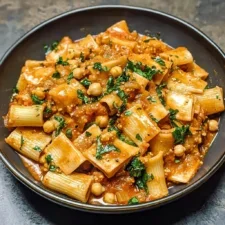
This creamy tomato chickpea pasta combines a gently simmered tomato sauce, chickpeas and smooth cashew cream, tossed with pasta until glossy. It is a satisfying one-pan-style meal with a dairy-free sauce and plenty of savoury flavour.
Ingredients
- 1 tablespoon (15 ml)Extra-virgin olive oil
- 1 large (about 1.5 cups / 225 g), finely choppedYellow onion
- 4–5 cloves, minced or pressedGarlic
- 1 teaspoon (about 1 g)Dried oregano
- 1/2 teaspoon (about 0.5 g)Dried basil
- 1/4–1/2 teaspoon (about 0.5–1 g), optionalRed pepper flakes
- 1 can (794 g)Crushed tomatoes
- 1 can (425 g), rinsed and drainedChickpeas
- 1/2 cup (about 70 g), raw and soakedCashews
- 1 cup (240 ml)Vegetable broth
- 2–3 tablespoons (about 10–15 g)Nutritional yeast
- 1 tablespoon (about 16 g)Tomato paste
- 1 teaspoon (about 5 ml), optionalMaple syrup or agave nectar
- To taste (start with 1/2 teaspoon)Salt
- To tasteFreshly ground black pepper
- 1 pound (454 g)Pasta
- To taste, chopped; optionalFresh basil or parsley
- About 1/2–1 cup (120–240 ml)Reserved pasta water
Instructions
- 1
Soak cashews
Put the raw cashews in a bowl and cover them with boiling water. Leave to soak for at least 30 minutes; for a lower-powered blender or a smoother result, soak for 1–2 hours or overnight in cold water in the fridge. Drain and rinse well.
- 2
Cook pasta
Bring a large pot of salted water to a rolling boil and cook the pasta according to the packet directions until al dente. Before draining, reserve about 1–1.5 cups (240–360 ml) of the starchy cooking water. Drain the pasta and set it aside.
- 3
Soften onion
While the pasta cooks, warm the olive oil in a large skillet or Dutch oven over medium heat. Add the chopped onion and cook for 5–7 minutes, stirring now and then, until soft and translucent.
- 4
Add aromatics
Stir in the garlic, oregano, dried basil and red pepper flakes, if using. Cook for about 1 minute, stirring constantly, until fragrant; take care not to burn the garlic.
- 5
Add tomatoes
Stir in the tomato paste and cook for 1 minute. Add the crushed tomatoes and rinsed, drained chickpeas, stir to combine, then bring the mixture to a gentle simmer.
- 6
Simmer sauce
Lower the heat and partially cover the skillet to limit splattering. Simmer gently for 10–15 minutes, stirring occasionally.
- 7
Blend cashew cream
While the sauce simmers, blend the drained cashews with 1 cup (240 ml) vegetable broth and the nutritional yeast until completely smooth and creamy, about 1–3 minutes. Scrape down the sides as needed, adding a splash more broth if the mixture is too thick to blend.
- 8
Stir in cream
Pour the cashew cream into the simmering tomato and chickpea sauce and stir until thoroughly combined.
- 9
Season sauce
Taste and season with salt and freshly ground black pepper. Stir in the optional maple syrup or agave if the tomato acidity needs balancing. If the sauce is too thick, add reserved pasta water a few tablespoons at a time until it reaches your preferred consistency.
- 10
Toss pasta
Add the cooked pasta to the skillet and gently toss until evenly coated. Let it simmer with the sauce for 1–2 minutes so the pasta can take on some of its flavour.
- 11
Serve pasta
Divide the pasta among bowls and garnish with chopped basil or parsley. Add extra red pepper flakes or black pepper if you like, and serve immediately.
What is creamy tomato chickpea pasta?
This is a pasta dish built around a tomato and chickpea sauce made creamy with blended cashews rather than dairy. Chickpeas add a hearty texture, while nutritional yeast gives the sauce a savoury, cheese-like note.
Its flavours draw on familiar Mediterranean-style combinations of tomato, garlic, oregano and basil. Here, cashew cream softens the acidity of the tomatoes and helps the sauce cling to the pasta.
Nutrition and macros by portion
The nutrition label shows one serving as written: 700 calories, 25g protein, 0g carbs, 0g fat.
| Portion | Adjustment | kcal | Protein | Carbs | Fat |
|---|---|---|---|---|---|
| Lighter | More vegetables, less pasta | 490 kcal | 18g | 0g | 0g |
| This serving | As written | 700 kcal | 25g | 0g | 0g |
| Hungry | Larger pasta portion | 1050 kcal | 38g | 0g | 0g |
Most of the carbohydrates come from the pasta, tomatoes and chickpeas; the olive oil and cashews contribute much of the fat. Chickpeas, cashews and pasta provide protein, with the chickpeas also adding fibre. Pair a bowl with salad or vegetables for a more varied plate.
Build flavour in the pan
Onion first: give it the full 5–7 minutes to soften before adding the garlic. This creates a mellow base without letting the garlic scorch.
Tomato paste next: stir it into the aromatics for a minute before adding the crushed tomatoes. That short cook deepens its concentrated flavour.
Make smooth cashew cream
Soak thoroughly: at least 30 minutes in boiling water softens the cashews for blending. A longer soak can help if your blender is less powerful.
Blend until silky: the mixture should be smooth and pourable, much like cream. Add a little extra broth only if it is too thick to blend easily.
Check the sauce texture
Gentle simmer: keep the tomato and chickpea mixture at a low simmer for 10–15 minutes, stirring occasionally. The sauce should thicken slightly and the flavours should come together.
Pasta water: add it gradually after seasoning, a few tablespoons at a time. Its starch helps loosen the sauce while allowing it to coat the pasta rather than run off.
Cook the pasta just right
Al dente: follow the packet timing and taste a piece near the end; it should be tender but still have a little firmness. The pasta gets another minute or two in the sauce.
Reserve before draining: scoop out 1–1.5 cups (240–360 ml) of cooking water while the pasta is still in the pot. You may not need all of it, but it is useful for adjusting the finished sauce.
Choose a pasta shape
Short shapes: rotini, penne, fusilli, shells and rigatoni all catch the chickpeas and creamy sauce well. Use the shape you have, adjusting the cooking time to its packet instructions.
Alternative pasta: wholemeal, lentil or chickpea pasta can be used as suggested in the recipe. Cook it according to its own packet directions and reserve some of its cooking water.
Serve it at the table
Fresh finish: chopped basil or parsley adds a bright contrast to the rich, gently spiced sauce. A little extra black pepper or red pepper flakes works well for anyone who wants more heat.
For a balanced plate, serve a moderate bowl with a green salad or steamed vegetables alongside. The pasta and chickpeas already make this a filling main course.
Recipe notes & tips
- Use raw, unsalted cashews so the blended cream has a clean flavour and you can control the seasoning.
- Partially cover the sauce while it simmers to reduce splattering without trapping all the steam.
- Season the sauce after adding the cashew cream, then taste again after loosening it with pasta water.
- Add pasta water a little at a time; the sauce can go from thick to loose quickly.
- Choose a pasta shape with ridges or hollows to catch the chickpeas and sauce.
- Serve soon after tossing, while the sauce is hot and coating the pasta.
Variations
- More heat: use the full 1/2 teaspoon of red pepper flakes or add a little extra at the table.
- Herb finish: garnish with fresh basil for a fragrant finish or parsley for a milder, fresh note.
- Wholemeal pasta: use wholemeal pasta in place of regular pasta and cook it to the packet directions.
- Extra vegetables: stir cooked vegetables into the sauce before adding the pasta.
- Tangier sauce: omit the optional maple syrup or agave if you prefer the tomatoes' natural acidity.
- Different shape: swap in shells, penne, fusilli or rigatoni to suit what is in your cupboard.
Common mistakes to avoid
- Burning the garlic: cook it with the herbs for only about 1 minute, stirring constantly.
- Skipping the cashew soak: soak for at least 30 minutes so the cashews blend into a smoother cream.
- Overcooking the pasta: stop at al dente, since it will simmer briefly with the sauce.
- Adding too much pasta water: pour it in a few tablespoons at a time and stop when the sauce coats the pasta.
- Simmering too hard: keep the sauce at a gentle simmer and partially cover the pan to limit splatter.
- Seasoning too early: taste and adjust the salt and pepper after the cashew cream has been mixed in.
How to store
Refrigerate leftovers in a covered container for up to 3 days. Reheat gently in a saucepan or microwave, stirring in a splash of water or vegetable broth if the sauce has thickened.
Frequently asked questions
Can I soak the cashews ahead of time?
Yes. Soak them overnight in cold water in the fridge, then drain and rinse before blending.
Can I make the sauce without a high-speed blender?
Yes, but soak the cashews for 1–2 hours or longer to help them soften. Blend until smooth, scraping down the sides as needed.
What pasta shapes work best?
Rotini, penne, fusilli, shells and rigatoni are all suggested options. Their shapes hold the sauce well.
Can I leave out the maple syrup or agave?
Yes, it is optional. Add it only if you taste the sauce and want to balance the tomatoes' acidity.
How do I keep the sauce from getting too thick?
Stir in reserved pasta water a few tablespoons at a time until the sauce reaches the consistency you want. You may not need to use all of it.
Can I make this with a different pasta?
Yes. The recipe suggests wholemeal, lentil or chickpea pasta as alternatives; follow the packet cooking time for whichever type you use.
Cook it from the original
This recipe comes from betterhomerecipes.com. Their page has the author’s own photos, notes and tips — the best place to cook it from.
Open the recipe on betterhomerecipes.com