
Pasta alla Norma
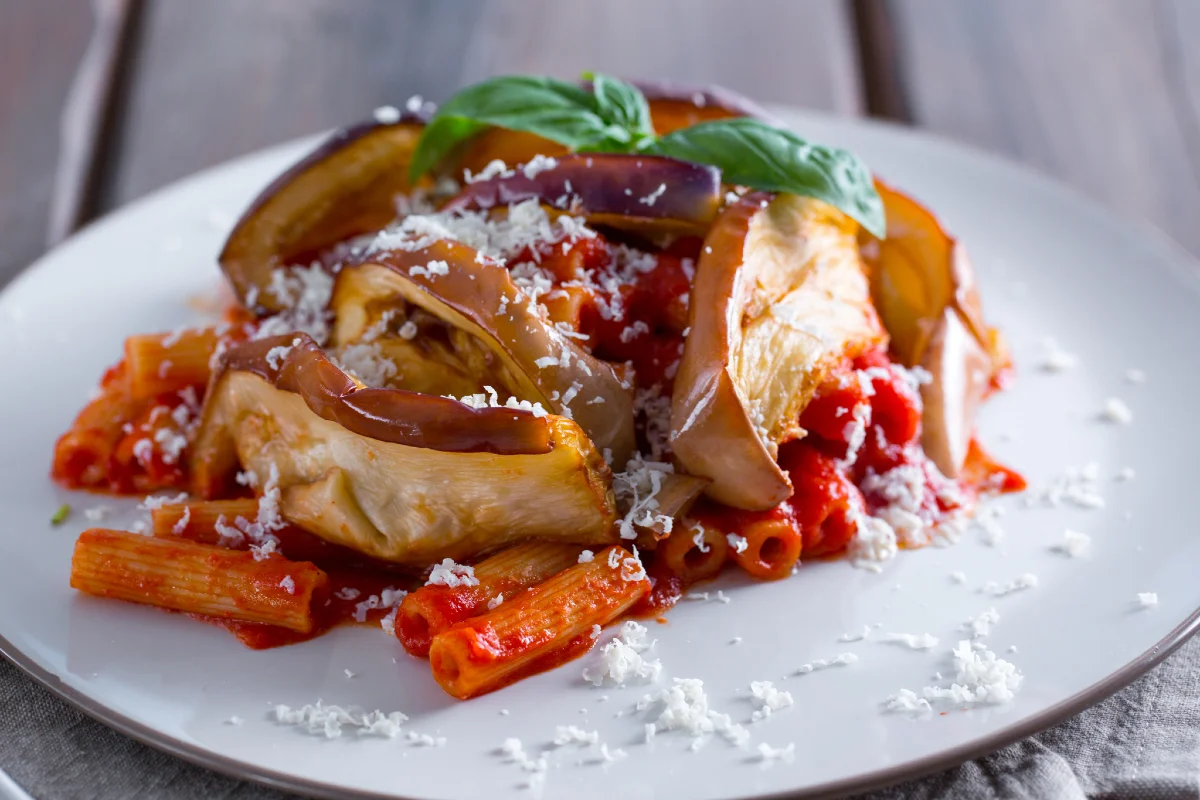
Pasta alla Norma is a Sicilian pasta dish combining tomato sauce, fried aubergine and salted sheep’s ricotta. It makes a generous, flavourful meal for sharing, with fresh basil bringing the ingredients together.
Ingredients
- 500 gsedani rigati pasta
- 1aubergine (violet, from Vittoria)
- 150 gSicilian salted sheep’s ricotta
- as neededfine salt
- 1.5 kgripe ribbed tomatoes (Catanese variety)
- 4 clovesgarlic
- as neededfine salt
- 1 bunchbasil
- as neededextra-virgin olive oil
Instructions
- 1
Slice the aubergine
Wash and dry the aubergine, trim off the ends and cut it into slices about 8 mm thick. Set the slices in a colander.
- 2
Salt and drain
Sprinkle the aubergine with salt and leave it to drain for at least 15 minutes. Meanwhile, wash the tomatoes, remove their stalks and cut them in half.
- 3
Start the tomatoes
Put the tomatoes in a saucepan with a pinch of salt, 3 garlic cloves and a bunch of basil.
- 4
Cook and pass
Cook the tomatoes over a low heat for 30 minutes without adding anything; they will release their own liquid. Remove the garlic and basil, then pass the tomatoes through a very fine food mill.
- 5
Reduce the sauce
Transfer the purée to a frying pan and add the remaining garlic clove and a sprig of basil. Cook for another 40 minutes, stirring occasionally.
- 6
Fry the aubergine
Rinse the aubergine well and pat it dry with kitchen paper. Pour extra-virgin olive oil into a deep pan and heat it to about 170–180°C. Fry a few slices at a time, turning them occasionally, until well browned after a few minutes. Lift them out with tongs and place them on a tray lined with kitchen paper. Continue frying, and meanwhile put a large pan of water on to boil for the pasta.
- 7
Finish the sauce
When the sauce is fairly thick, remove the basil. Stir in a tablespoon of the aubergine frying oil and a drizzle of fresh olive oil.
- 8
Cook the pasta
Cook the pasta until al dente, drain it and add it to the sauce. Toss briefly to coat.
- 9
Serve the pasta
Divide the pasta between plates and top with the fried aubergine, a generous grating of salted sheep’s ricotta and a small basil leaf.
What is Pasta alla Norma?
Pasta alla Norma is a Sicilian first course, associated with Catania, built around tomato, fried aubergine and salted ricotta. Its name is commonly linked to the opera Norma by Catania-born composer Vincenzo Bellini.
This version makes a smooth tomato sauce from fresh ribbed tomatoes, then adds the aubergine at the end so it keeps its distinct, fried texture.
Nutrition and macros by portion
The nutrition label shows one serving as written: 755 calories, 0g protein, 12g carbs, 22g fat.
| Portion | Adjustment | kcal | Protein | Carbs | Fat |
|---|---|---|---|---|---|
| Lighter | Use less frying oil | 529 kcal | 0g | 8g | 16g |
| This serving | As written | 755 kcal | 0g | 12g | 22g |
| Hungry | Add more pasta | 1133 kcal | 0g | 18g | 33g |
The pasta is the main source of carbohydrate, while the olive oil used for frying and finishing contributes most of the fat. The ricotta adds protein as well as fat; serve a portion with a green salad or other vegetables to balance the plate.
The tomato base
Fresh tomatoes: simmering them whole and halved lets them soften in their own liquid before they are passed through a fine food mill. This separates out the skins and seeds for a smoother sauce.
Garlic and basil: the recipe uses garlic at two stages, first with the tomatoes and then in the pan with the purée. Remove the garlic and basil when each cooking stage calls for it.
Preparing the aubergine
Salting: leave the slices in a colander for at least 15 minutes, then rinse them well and dry them thoroughly. Dry slices are easier to fry without excess water spattering into the oil.
Frying: work in small batches and turn the slices occasionally, so they brown rather than crowd one another in the pan. Drain them on kitchen paper after lifting them out.
Getting the texture right
Sauce: cook the purée for the full 40 minutes, stirring now and then, until it has thickened. A fairly thick sauce clings to the pasta instead of pooling at the bottom of the plate.
Aubergine: fry it until well browned, but add it only when serving. This keeps the pieces from softening in the sauce before the dish reaches the table.
Timing the stages
Tomato sauce: the tomatoes take 30 minutes to cook before they are milled, followed by another 40 minutes for the purée to reduce. The aubergine can be fried while the sauce finishes.
Pasta: bring the water to the boil while frying the aubergine, then cook the pasta until al dente shortly before the sauce is ready. Toss it with the sauce just before serving.
Choosing the finishing ingredients
Ricotta: salted sheep’s ricotta is grated over the finished dish, adding a savoury, sharp finish. Use it as a topping rather than stirring it into the pan.
Olive oil: a spoonful of the frying oil and a fresh drizzle go into the sauce at the end. Add them once the sauce has thickened, as directed.
What to serve alongside
A simple green salad or lightly dressed leaves make a fresh contrast to the rich sauce and fried aubergine. Crusty bread is another option for mopping up any sauce left on the plate.
Recipe notes & tips
- Cut the aubergine into even 8 mm slices so they cook at a similar pace.
- Dry the aubergine thoroughly after rinsing it.
- Keep the oil around 170–180°C while frying.
- Fry the slices in small batches to give them room to brown.
- Stir the tomato purée occasionally during its 40-minute reduction.
- Grate the ricotta over the pasta just before serving.
Variations
- Short pasta: use another ridged shape that holds the thick tomato sauce.
- Fresh tomatoes: choose ripe, fleshy tomatoes for the sauce.
- Basil finish: add an extra small basil leaf to each serving.
- Aubergine topping: fry the slices until deeply golden for a more pronounced browned flavour.
Common mistakes to avoid
- Crowding the pan: the aubergine will not brown evenly; fry a few slices at a time.
- Wet aubergine: water can cause the hot oil to spit; pat the slices dry before frying.
- Skipping the draining time: salt the slices and leave them in a colander for at least 15 minutes.
- Thin sauce: continue cooking the purée for the full 40 minutes, stirring occasionally.
- Overcooking the pasta: cook it al dente, then toss it briefly in the sauce.
How to store
Refrigerate leftover pasta and aubergine in an airtight container for up to 2 days. Reheat gently in a pan with a splash of water; the aubergine will be softer after storage. Keep any extra ricotta separate and grate it on after reheating.
Frequently asked questions
Can I make the tomato sauce ahead?
Yes. Cook and reduce the sauce, then refrigerate it in a covered container and reheat it gently before adding the cooked pasta.
Do I need to salt the aubergine?
The recipe calls for salting it in a colander for at least 15 minutes. Rinse the slices well afterwards and dry them before frying.
How can I tell when the aubergine is ready?
It should be well browned after a few minutes in the hot oil. Turn the slices occasionally, then drain them on kitchen paper.
Can I use a different pasta shape?
Yes. Choose another short pasta shape that can catch the thick sauce. Cook it until al dente before tossing it with the sauce.
What can I use instead of salted sheep’s ricotta?
If you cannot find it, use another firm, salty cheese that can be grated over the pasta. The result will differ from the traditional finish.
Can I fry the aubergine in advance?
You can fry it ahead and keep it separate from the sauce, but it is at its best freshly fried. Add it on top when serving so it does not soften in the sauce.
Cook it from the original
This recipe comes from giallozafferano.es. Their page has the author’s own photos, notes and tips — the best place to cook it from.
Open the recipe on giallozafferano.es