
Margherita pizza
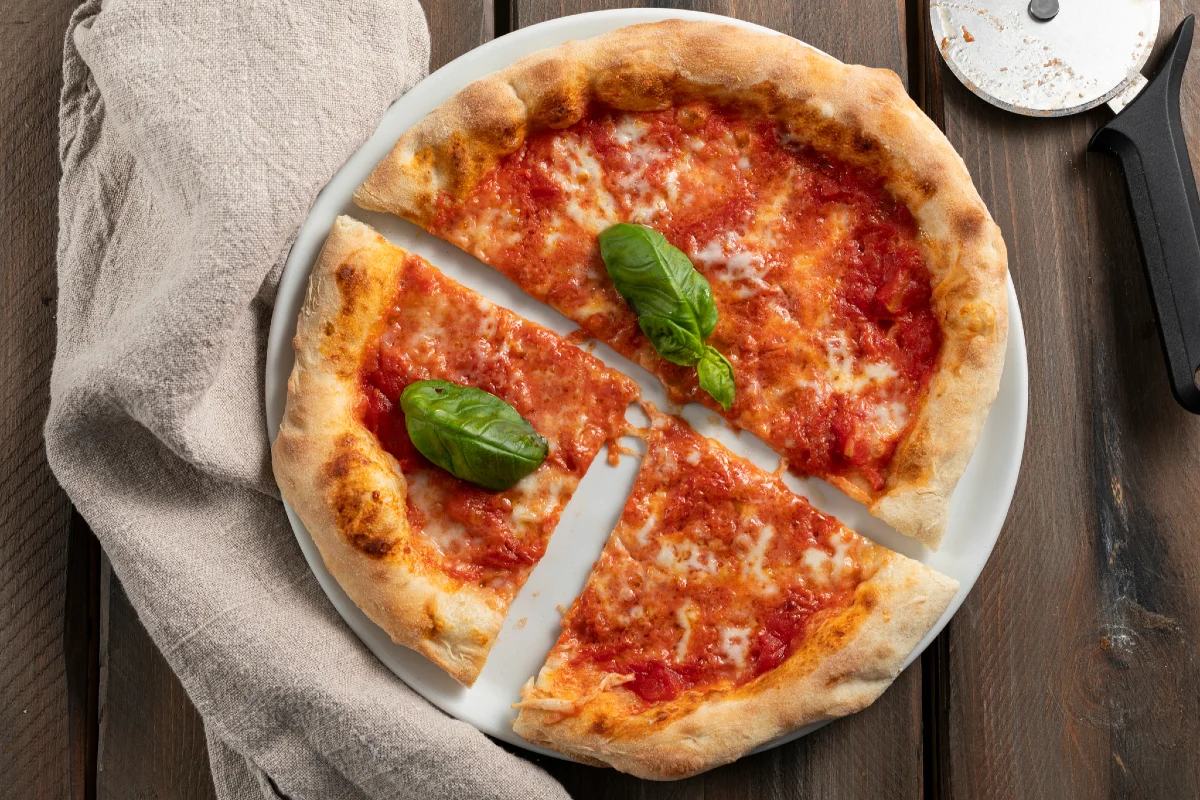
Margherita pizza pairs a crisp, airy dough with crushed tomatoes, mozzarella, Grana Padano and fresh basil. This version uses a long-rested preferment for flavour and makes six individual pizzas.
Ingredients
- 500 gmedium-strength type 0 flour
- 250 gwater, at room temperature
- 2 gdried brewer’s yeast
- 500 gmedium-strength type 0 flour
- 450 gwater, at room temperature
- 30 gextra-virgin olive oil
- 25 gfine salt
- 3 gdried brewer’s yeast
- 1 kgpeeled tomatoes
- 600 gmozzarella
- 70 gGrana Padano PDO
- to tastebasil
- to tasteextra-virgin olive oil
- to tastefine salt
Instructions
- 1
Make the preferment
In a large bowl, combine the first 500 g flour with 2 g dried yeast, then add 250 g water.
- 2
Rest the mixture
Stir gently until the mixture is rough but no dry flour remains at the bottom. Cover with cling film, prick a few holes in it with a fork, and refrigerate for at least 24 hours and up to 48 hours.
- 3
Rehydrate the dough
When the resting time is over, cut the preferment into pieces and return them to the bowl. Pour over the remaining 450 g water to soften any crust that has formed.
- 4
Add flour and yeast
Add the remaining 500 g flour and 3 g dried yeast, then start working the mixture in the bowl.
- 5
Incorporate salt and oil
Once the water has been absorbed, add 25 g salt and continue mixing with downward movements. Add 30 g olive oil and knead again until evenly incorporated; use a stand mixer with a dough hook if preferred.
- 6
Knead the dough
When the dough becomes firm, move it to a lightly floured work surface and knead until smooth and even. Return it to the bowl, cover with a damp cloth and leave at room temperature for 15 minutes.
- 7
Divide and prove
Cut the dough into 6 portions. Roll each on the work surface to seal and round it, then place the balls apart in a proving box. Cover with the lid, or use a lightly floured tray covered with cling film or a damp cloth, and leave to rise for about 3 hours.
- 8
Prepare the tomatoes
Put the peeled tomatoes in a bowl and crush them by hand. Add olive oil and basil, tearing the leaves as you add them.
- 9
Prepare the toppings
Season the tomato mixture with salt and stir. Halve the mozzarella and slice it, then grate the Grana Padano.
- 10
Shape the dough
After the dough has risen, dust it lightly with flour. Press from the centre towards the upper edge, pushing the air towards the rim.
- 11
Stretch and top
Turn the dough over and repeat the pressing motion from the centre towards the upper edge. Hold the dough with one hand and gently pull with the other to stretch it, then turn it onto the other hand and pat it gently against the surface. Once it is about 28 cm across, spread the tomato evenly over the centre, leaving the rim clear.
- 12
Add the cheeses
Sprinkle over the grated Grana Padano and distribute the mozzarella across the tomato. Finish with a drizzle of olive oil.
- 13
Bake and serve
Transfer the pizza to a peel, or shape it directly on the peel. Bake at 250°C, or the oven’s maximum temperature, for 5–7 minutes on a preheated baking stone positioned high in the oven. Remove the cooked pizza to a plate, decorate with a couple of basil leaves and serve straight away.
What is Margherita pizza?
Margherita is a simple Italian pizza built around tomato, mozzarella and basil. Its familiar toppings let the dough and the balance of the ingredients take centre stage.
This version uses a preferment that rests in the fridge before the main dough is mixed. That extra fermentation stage, followed by individual proving, helps give the base a lighter, more developed texture.
Nutrition and macros by portion
The nutrition label shows one serving as written: 1020 calories, 43g protein, 113g carbs, 41g fat.
| Portion | Adjustment | kcal | Protein | Carbs | Fat |
|---|---|---|---|---|---|
| Lighter | Use less mozzarella | 714 kcal | 30g | 79g | 29g |
| This serving | As written | 1020 kcal | 43g | 113g | 41g |
| Hungry | Add a larger slice | 1530 kcal | 65g | 170g | 62g |
The flour supplies most of the carbohydrates, while mozzarella and Grana Padano contribute much of the protein and fat; olive oil adds further fat. The salt in the dough and toppings makes sodium a notable part of the estimate. Serve a pizza with a generous salad or vegetables to add freshness and balance the plate.
Why use a preferment?
First mixture: the initial flour, water and small amount of yeast are combined into a rough mixture, rather than kneaded smooth. Refrigerating it for 24–48 hours gives it time to mature before the rest of the dough is made.
Final dough: the remaining water helps loosen the preferment, while the second portion of flour and yeast builds the dough. Add the salt after the water has been absorbed, then work in the oil.
Getting the dough ready
Kneading: work the dough until it feels smooth and cohesive, then give it the stated 15-minute rest before dividing it. The portions are rolled to seal and round them, then left to rise for about 3 hours.
Shaping: press from the middle outwards and keep the edge clear as you stretch the dough. This method pushes air towards the rim and avoids flattening it completely.
Keep the toppings balanced
Tomatoes: crush the peeled tomatoes by hand, then season them with olive oil, basil and salt. Spread the mixture across the centre of the base without covering the rim.
Cheese: slice the mozzarella and grate the Grana Padano. Distributing both over the tomato gives each slice a mix of creamy mozzarella and savoury grated cheese.
Baking and doneness
Heat the oven to 250°C or its highest setting, with the baking stone preheated high in the oven. The recipe gives a baking time of 5–7 minutes.
The pizza is ready when the base has baked through and the mozzarella has melted. Keep an eye on it during this short bake, as oven performance can vary.
Serving ideas
Serve the pizza as soon as it comes out of the oven, finished with a couple of fresh basil leaves. A green salad or simply dressed vegetables make a fresh side alongside the rich cheese and crisp base.
Because the recipe makes six pizzas, you can bake them one at a time and serve each while hot. Keep the remaining dough balls covered as you work.
Recipe notes & tips
- Use a large bowl for mixing the preferment and final dough.
- Keep the dough balls separated and covered during their rise.
- Crush the tomatoes by hand so the topping retains some texture.
- Leave the rim free of tomato when topping each base.
- Preheat the baking stone before the pizza goes into the oven.
- Tear the basil leaves by hand for the tomato mixture and use a couple more to finish.
Variations
- More basil: add extra fresh leaves after baking for a brighter finish.
- Garlic tomato: mix finely chopped garlic into the crushed tomatoes for a more savoury sauce.
- Cheese balance: use a little less mozzarella and more grated Grana Padano for a sharper topping.
- Chilli: scatter chilli flakes over the pizza before baking for a gentle heat.
- Fresh finish: add a handful of rocket after baking for a peppery contrast.
Common mistakes to avoid
- Skipping the long rest: the preferment needs at least 24 hours in the fridge; allow up to 48 hours.
- Adding salt too early: wait until the water has been absorbed before mixing in the salt.
- Overworking the rim: press from the centre towards the edge while keeping the outer rim clear.
- Overloading the base: spread the tomato and cheese evenly rather than piling them in the centre.
- Using a cold baking stone: preheat it before transferring the pizza to it.
- Leaving dough balls uncovered: keep them covered during their rise so their surfaces do not dry out.
How to store
For the best texture, eat the pizza straight after baking. Refrigerate leftover slices in an airtight container for up to 3 days, then reheat in a hot oven until warmed through and the base is crisp.
Frequently asked questions
Can I make the dough ahead?
Yes. The preferment is refrigerated for at least 24 hours and up to 48 hours before the remaining dough ingredients are added.
Can I use a stand mixer?
Yes. The method suggests using a stand mixer fitted with a dough hook for mixing and kneading.
What if I do not have a proving box?
Use a lightly floured tray covered with cling film or a damp cloth, as described in the method.
How large should each pizza be?
Stretch each dough portion into a disc about 28 cm in diameter.
Can I bake the pizza without a baking stone?
The method specifies a preheated baking stone. If you do not have one, it does not provide an alternative, so results may differ.
How long does each pizza bake?
Bake at 250°C or the oven’s maximum temperature for 5–7 minutes, placing the pizza on the preheated stone high in the oven.
Cook it from the original
This recipe comes from giallozafferano.es. Their page has the author’s own photos, notes and tips — the best place to cook it from.
Open the recipe on giallozafferano.es