
Garlic Roasted Veggie Wraps
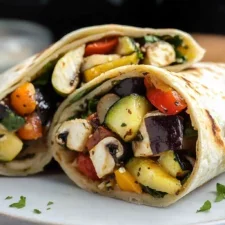
Garlic roasted veggie wraps pair sweet, caramelised vegetables with creamy hummus in a soft tortilla. They make a colourful, satisfying meal, and the vegetables can be prepared ahead for quicker assembly.
Ingredients
- 1 largered onion, cut into 1.3 cm wedges
- 1 largered pepper, deseeded and cut into 2.5 cm pieces
- 1 largeyellow or orange pepper, deseeded and cut into 2.5 cm pieces
- 1 mediumcourgette, trimmed and cut into 1.3 cm half-moons
- 1 mediumyellow squash, trimmed and cut into 1.3 cm half-moons
- 90 gbroccoli florets, cut into bite-sized pieces
- 150 gcherry tomatoes, whole or halved if large
- 4–6 clovesgarlic, minced or thinly sliced
- 60 mlextra-virgin olive oil
- 5 mldried oregano
- 2.5 mldried basil
- 2.5 mlsmoked paprika (optional)
- To taste (about 3.75–5 ml)salt
- To taste (about 2.5 ml)freshly ground black pepper
- 6–8 largetortillas, wholemeal, spinach, plain or gluten-free
- 240 mlhummus, plain or flavoured
- Optionalcrumbled feta or goat’s cheese, fresh spinach or rocket, cooked chickpeas, or grilled chicken strips
Instructions
- 1
Heat the oven
Heat the oven to 200°C. Line one or two large baking trays with baking parchment. If using two trays, check that they can cook evenly in your oven or plan to swap their positions halfway through.
- 2
Prepare the vegetables
Cut the onion, peppers, courgette, yellow squash and broccoli as described. Put them in a large bowl, keeping the cherry tomatoes and garlic separate for now. Cutting the vegetables to similar sizes helps them cook evenly.
- 3
Season the vegetables
Drizzle the olive oil over the vegetables in the bowl, leaving out the tomatoes and garlic. Add the oregano, basil, smoked paprika if using, salt and black pepper, then toss until evenly coated.
- 4
Roast the vegetables
Spread the seasoned vegetables in a single layer across the prepared tray or trays, using two if needed to avoid overcrowding. Roast for 15 minutes.
- 5
Add garlic and tomatoes
Take the trays out of the oven and add the cherry tomatoes and garlic. Gently toss or stir the vegetables on the trays so the additions are distributed.
- 6
Finish roasting
Return the trays to the oven and roast for another 15–20 minutes, until the vegetables are tender with slightly charred, caramelised edges. The broccoli should be tender-crisp, the peppers softened and the onions sweet; keep an eye on the garlic so it does not burn.
- 7
Cool the vegetables
Remove the trays from the oven and leave the vegetables to cool slightly on the trays for 5–10 minutes.
- 8
Warm the tortillas
While the vegetables cool, warm the tortillas if you like. Wrap them in a slightly damp paper towel and microwave for 20–30 seconds, or heat them one at a time in a dry frying pan over medium heat for about 15–20 seconds per side.
- 9
Spread the hummus
Lay a warmed tortilla flat on a clean surface. Spread a generous layer of hummus over it, leaving about a 1.3 cm border around the edges.
- 10
Add the filling
Spoon a hearty portion of roasted vegetables over the hummus in the centre of the tortilla. If using any optional additions, such as cheese, spinach, rocket, chickpeas or chicken, layer them on top.
- 11
Roll the wraps
Fold the left and right sides of the tortilla inwards. Fold the bottom edge up and over the filling, then roll upwards into a snug wrap.
- 12
Serve the wraps
If desired, slice each wrap in half diagonally and serve straight away while the vegetables are warm and the tortilla is soft.
What are roasted veggie wraps?
A vegetable wrap is a portable meal built by rolling a filling inside a flatbread. Wraps draw on a broad tradition of filled breads found in many cuisines; this version brings together roast vegetables, hummus and tortillas for a straightforward, Mediterranean-inspired combination.
The mix of peppers, courgette, squash, broccoli, onion and tomatoes gives the filling a range of sweet, savoury and earthy flavours. Hummus adds a creamy layer that helps bring the vegetables and tortilla together.
Nutrition and macros by portion
The nutrition label shows one serving as written: 450 calories, 0g protein, 0g carbs, 0g fat.
| Portion | Adjustment | kcal | Protein | Carbs | Fat |
|---|---|---|---|---|---|
| Lighter | Use less olive oil | 315 kcal | 0g | 0g | 0g |
| This serving | As written | 450 kcal | 0g | 0g | 0g |
| Hungry | Add chickpeas or chicken | 675 kcal | 0g | 0g | 0g |
The tortillas and vegetables provide most of the carbohydrates, while olive oil contributes most of the fat; hummus adds some fat and plant-based protein. Add chickpeas or grilled chicken for a more substantial protein component, and serve with extra salad greens to round out the plate.
Why roast the vegetables in stages?
Tray space: spread the vegetables in a single layer so hot air can reach them and their edges can brown. If they are crowded, they are more likely to steam and soften without caramelising.
Later additions: the tomatoes and garlic go on after the first 15 minutes. That gives the garlic less time to burn and lets the tomatoes roast until juicy without breaking down too early.
Getting the vegetable texture right
Cut size: keep the onion, peppers, courgette and squash pieces broadly even, following the specified sizes. Consistent pieces are more likely to finish roasting at the same time.
Doneness: look for softened peppers, sweet onion and browned edges, with broccoli that is tender but still has a little bite. Tomatoes should look softened and beginning to burst.
Seasoning and garlic
Herbs: oregano and basil give the vegetables a fragrant, savoury base, while smoked paprika is optional for a deeper, smoky note. Toss thoroughly so the oil and seasonings coat the pieces evenly.
Garlic: use four to six cloves to suit your preference, and add them with the tomatoes rather than at the start. Watch for any garlic pieces that darken quickly, as burnt garlic can taste bitter.
Making the wraps easy to roll
Warm tortillas: a brief spell in the microwave or frying pan makes them more pliable and less likely to split. Keep them warm while you assemble the wraps.
Fill and fold: leave a border around the hummus and keep the filling centred. Fold in the sides first, then roll from the bottom edge to help contain the filling.
What to serve with the wraps
These wraps work well on their own as a warm lunch or light dinner. For a more substantial plate, serve them with a simple green salad or extra cooked chickpeas.
Fresh spinach or rocket can go inside the wrap, while feta or goat’s cheese adds a tangy contrast. Grilled chicken is another optional addition if you want a meat-based filling.
Recipe notes & tips
- Use two baking trays if the vegetables do not fit in a single layer.
- Keep the cherry tomatoes and garlic separate until the first 15 minutes of roasting are complete.
- Taste the roasted vegetables before filling the wraps and adjust the seasoning if needed.
- Warm tortillas just before assembly so they stay flexible.
- Avoid overfilling each tortilla so it is easier to fold and roll.
- Add any optional fresh spinach or rocket just before rolling for a fresh contrast.
Variations
- Add feta: crumble it over the roasted vegetables before rolling for a salty, tangy note.
- Use chickpeas: add cooked chickpeas to the filling for a heartier wrap.
- Make it smoky: include the optional smoked paprika when seasoning the vegetables.
- Add fresh greens: tuck spinach or rocket into each wrap just before rolling.
- Use grilled chicken: layer cooked grilled chicken strips with the vegetables.
- Change the hummus: choose a roasted garlic or red pepper hummus for a different flavour.
Common mistakes to avoid
- Crowded trays: the vegetables can steam instead of browning, so divide them between two trays.
- Garlic added too early: it may burn during roasting, so add it with the tomatoes after 15 minutes.
- Uneven pieces: vegetables may finish at different times, so cut them to broadly similar sizes.
- Over-roasting the broccoli: it can lose its tender bite, so check for tender-crisp florets during the final stage.
- Cold tortillas: they are more likely to tear, so warm them briefly before filling.
- Overfilled wraps: the filling can spill out while rolling, so use a manageable portion and fold in the sides first.
How to store
Store leftover roasted vegetables in a covered container in the fridge for up to 3 days. Reheat them in the oven or a frying pan until hot, then assemble fresh wraps; assembled wraps are best eaten straight away.
Frequently asked questions
Can I prepare the vegetables ahead?
Yes. Roast them in advance, cool them and keep them covered in the fridge for up to 3 days. Reheat before assembling if you want warm wraps.
How can I stop the tortillas tearing?
Warm them briefly before filling so they become more pliable. Avoid overfilling and leave a border around the hummus.
Can I use different vegetables?
You can swap in other vegetables that roast well, but cut them into similar-sized pieces and check their doneness as they cook.
How do I make the wraps gluten-free?
Choose large gluten-free tortillas. Check the hummus and any optional additions as well if you need to avoid gluten.
Can I eat these wraps cold?
Yes. Let the roasted vegetables cool before assembling, and keep the finished wraps chilled if you are not eating them immediately.
What can I add for more protein?
The recipe suggests cooked chickpeas or grilled chicken strips. You can also add feta or goat’s cheese as an optional topping.
Cook it from the original
This recipe comes from betterhomerecipes.com. Their page has the author’s own photos, notes and tips — the best place to cook it from.
Open the recipe on betterhomerecipes.com