
Chimichurri
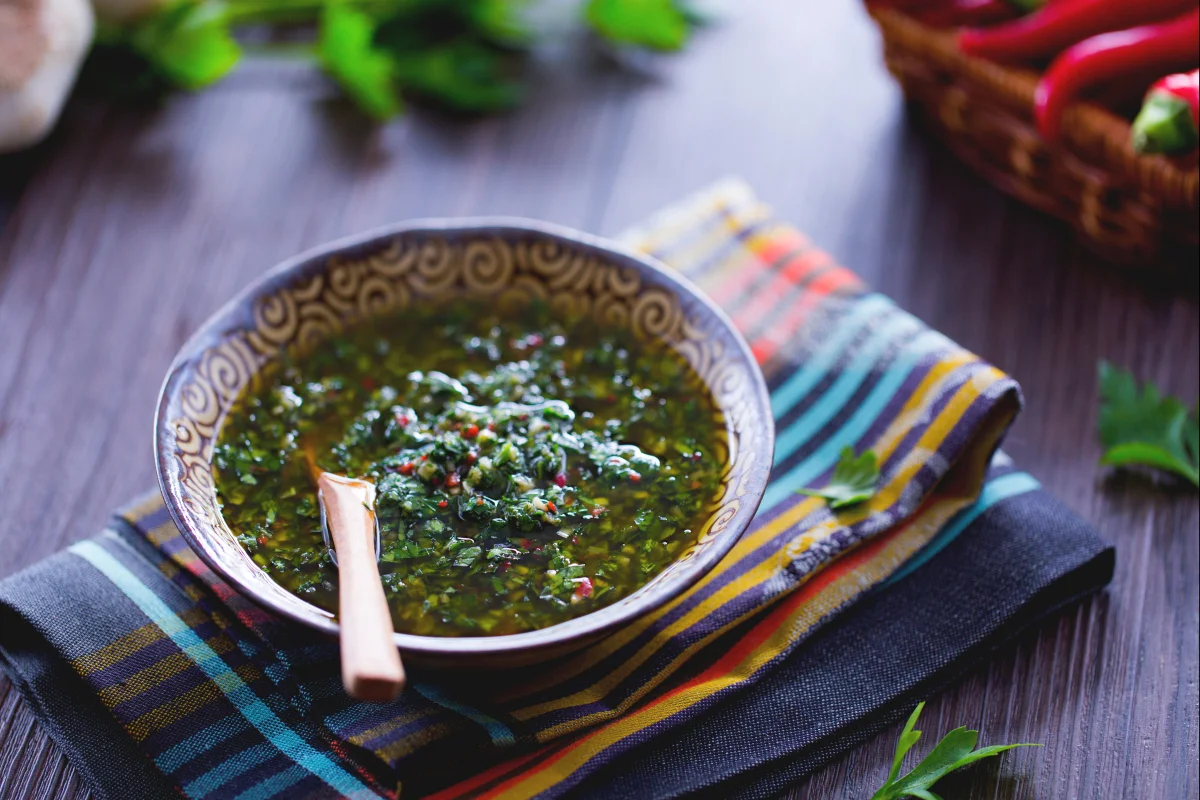
Chimichurri is a lively Argentine herb sauce made with parsley, garlic, chilli, spices, oil and vinegar. Stir it together in minutes, then let it rest so the flavours can mingle before serving with meat or fish.
Ingredients
- 15 gfresh parsley
- 3 clovesgarlic
- 2 smalldried chillies
- 2 tablespoonsdried oregano
- 2 tablespoonsdried thyme
- 1 teaspoonground cumin
- 1 teaspoonfine salt
- 1 teaspoonblack pepper
- 60 gwater
- 40 gextra-virgin olive oil
- 20 gwhite wine vinegar
Instructions
- 1
Combine the herbs
Put the dried thyme and oregano in a bowl, then crumble in the dried chilli.
- 2
Add the spices
Mix in the ground cumin and black pepper, followed by the crushed garlic cloves.
- 3
Add parsley and liquid
Add the parsley leaves, washed and dried beforehand, along with the salt, vinegar and water.
- 4
Mix and rest
Pour in the extra-virgin olive oil and mix thoroughly. Leave the chimichurri at room temperature for at least 1 hour before serving.
What is chimichurri?
Chimichurri is a green sauce associated with Argentina, made from herbs, garlic, chilli, oil and vinegar. It is commonly served alongside grilled meat and also works well with fish.
This version combines fresh parsley with dried herbs and spices. Water and vinegar loosen the mixture, while a rest gives the dried ingredients time to take on moisture and share their flavour.
Nutrition and macros by portion
The nutrition label shows one serving as written: 112 calories, 1g protein, 4g carbs, 10g fat.
| Portion | Adjustment | kcal | Protein | Carbs | Fat |
|---|---|---|---|---|---|
| Lighter | Use less olive oil | 78 kcal | 1g | 3g | 7g |
| This serving | As written | 112 kcal | 1g | 4g | 10g |
| Hungry | Serve a larger spoonful | 168 kcal | 2g | 6g | 15g |
Olive oil supplies most of the sauce's fat, while the parsley, garlic and dried herbs contribute small amounts of carbohydrate and protein. Serve a spoonful with a protein-rich main and vegetables to make a more balanced plate.
The herbs and aromatics
Parsley: wash and dry the leaves before adding them, so the sauce does not take on excess rinsing water.
Dried herbs: thyme and oregano form the aromatic base. Crumble the chilli into the bowl so it is distributed through the sauce.
Garlic: crush the cloves as directed to release their flavour into the liquid ingredients.
Balancing the seasoning
Spices: cumin and black pepper add warmth alongside the herbs and chilli. Add them in the listed quantities for a balanced starting point.
Salt and vinegar: salt seasons the mixture, while white wine vinegar brings acidity. Stir them in with the water before adding the oil.
Getting the texture right
Mixing: combine the ingredients thoroughly so the parsley and seasonings are coated rather than sitting in separate layers.
Consistency: this is a spoonable sauce, not a smooth purée. The chopped herbs and crushed garlic should remain visible.
Why the rest matters
Resting time: leave the bowl at room temperature for at least 1 hour before serving. This gives the dried herbs and spices time to absorb some of the liquid and lets the flavours mingle.
Plan ahead: the hands-on mixing takes only a few minutes, but the resting period means the sauce is not ready to serve immediately.
How to serve it
Grilled food: spoon chimichurri over meat or fish, as suggested for this sauce, or serve it alongside so everyone can add their own.
At the table: mix the sauce again before serving if the oil and water have separated during the rest.
Recipe notes & tips
- Dry the washed parsley well before adding it.
- Crumble the dried chillies finely so their heat is spread through the sauce.
- Use a bowl large enough to mix the herbs and liquids without spilling.
- Give the sauce at least 1 hour to rest at room temperature.
- Stir it again before serving if the oil has settled on top.
Variations
- Adjust the chilli: use less for a milder sauce or crumble in more for extra heat.
- Use fresh oregano: replace the dried oregano with fresh leaves, finely chopped.
- Add lemon: use a little lemon juice in place of some of the vinegar for a different citrus note.
- Choose another vinegar: swap the white wine vinegar for red wine vinegar.
- Make it coarser: chop the parsley by hand and leave the garlic in small pieces.
Common mistakes to avoid
- Wet parsley: excess water can dilute the sauce; dry the leaves thoroughly after washing.
- Serving straight away: the flavours have little time to mingle; rest the sauce for at least 1 hour.
- Large chilli pieces: they can make individual bites unexpectedly hot; crumble the chilli finely.
- Uneven mixing: herbs and oil may remain in separate patches; stir thoroughly before serving.
- Over-blending: a smooth purée loses the sauce's characteristic texture; mix by hand instead.
How to store
Store leftover chimichurri in a covered container in the fridge and use within 3 days. Bring it towards room temperature and stir well before serving; it does not need reheating.
Frequently asked questions
How long should chimichurri rest before serving?
Leave it at room temperature for at least 1 hour, as directed. This gives the dried herbs time to absorb liquid and the flavours time to mingle.
Can I make chimichurri ahead?
Yes. Make it in advance, cover it and keep it in the fridge, then stir it before serving.
What can I serve chimichurri with?
It is particularly suited to meat and fish. Serve it alongside the main or spoon it over just before eating.
Can I make the sauce less hot?
Yes. Use less dried chilli, or remove some of the chilli before mixing it into the bowl.
Should chimichurri be smooth?
No. It is meant to remain a textured sauce with visible herbs and garlic, so mix it rather than blending it smooth.
Cook it from the original
This recipe comes from giallozafferano.es. Their page has the author’s own photos, notes and tips — the best place to cook it from.
Open the recipe on giallozafferano.es