
Mutton Nihari With Homemade Nihari Masala
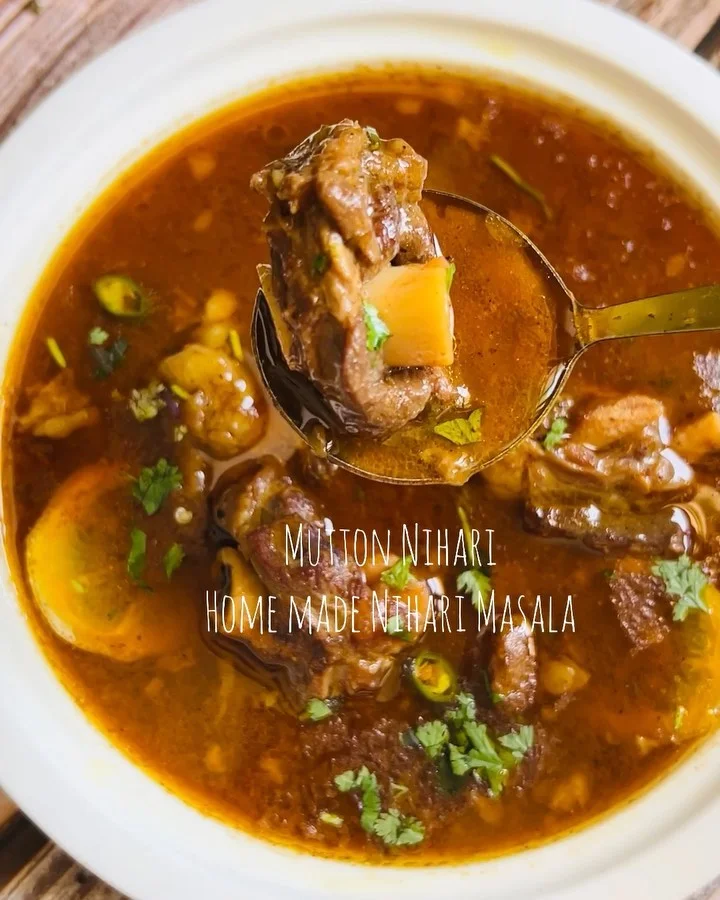
Mutton nihari is a slow-cooked, richly spiced stew in which bone-in meat becomes tender in a thick, savoury gravy. This version uses homemade nihari masala and a flour slurry to give the broth its characteristic body.
Ingredients
- 500 gbone-in mutton, cut for nihari
- 1 tablespoonraw papaya
- 1 heaped tablespoonginger and garlic paste
- 1 wholeonion
- 1 teaspoonred chilli powder
- 1 tablespoonKashmiri red chilli powder
- 1 teaspoonturmeric powder
- to tastesalt
- 3 heaped tablespoonshomemade nihari masala
- 120 ml (½ cup)oil or ghee
- 1.9–2.4 litres (8–10 cups)water
- about 32 g (4 tablespoons)wholemeal flour (atta)
- 120 ml (½ cup)water, for mixing with the flour
- to tastegreen chillies, for garnish
- to tastefresh coriander, for garnish
Instructions
- 1
Roast the spices
Dry-roast the spices for the homemade nihari masala in a wok for 3–5 minutes, then grind them to a powder.
- 2
Prepare the masala
The ground spice blend is now ready to use as homemade nihari masala.
- 3
Brown the mutton
Heat the oil or ghee in a pressure cooker, Instant Pot or ordinary pan. Add the mutton and sauté over high heat until its colour changes.
- 4
Add the aromatics
Stir in the raw papaya and ginger and garlic paste.
- 5
Fry the spices
Add the homemade nihari masala, red chilli powders, turmeric and salt. Sauté for 3–5 minutes.
- 6
Add water
Pour in 1.9–2.4 litres (8–10 cups) of water and cook over a low heat for 5–10 minutes.
- 7
Reserve the tarri
Remove 1 cup of the liquid from the pot and set it aside to use as the tarri.
- 8
Cook until tender
Add the whole onion and cook over a medium heat for 40 minutes in a pressure cooker, or longer in an ordinary pan, until the meat is tender and beginning to pull away from the bone.
- 9
Thicken the gravy
Whisk the wholemeal flour with 120 ml (½ cup) of water, add it to the pot and cook over a low heat for 15 minutes.
- 10
Garnish and serve
Garnish with green chillies and fresh coriander, then spoon the reserved tarri over the top.
What is mutton nihari?
Nihari is a slow-cooked South Asian meat stew, traditionally associated with the Indian subcontinent. It is known for tender meat and a thick, aromatic gravy.
This version uses bone-in mutton and homemade nihari masala. The flour slurry thickens the cooking liquid, while the reserved tarri is added at the end for a finishing layer of flavour.
Nutrition and macros by portion
The nutrition label shows one serving as written: 510 calories, 25g protein, 12g carbs, 42g fat.
| Portion | Adjustment | kcal | Protein | Carbs | Fat |
|---|---|---|---|---|---|
| Lighter | Use less oil or ghee | 357 kcal | 18g | 8g | 29g |
| This serving | As written | 510 kcal | 25g | 12g | 42g |
| Hungry | Serve with extra naan | 765 kcal | 38g | 18g | 63g |
The mutton provides most of the protein, while the flour contributes some carbohydrate and the gravy's thickness. Oil or ghee supplies much of the fat; serve a moderate portion with vegetables and naan or rice to balance the plate.
The spice blend
Homemade masala: the method calls for dry-roasting the masala spices for 3–5 minutes, then grinding them. The recipe does not specify which whole spices make up that blend, so use the blend prepared for this recipe.
Chilli powders: red chilli powder brings heat, while Kashmiri chilli powder contributes colour and a milder chilli flavour. Adjust them only if you are deliberately changing the recipe's heat.
Getting the mutton ready
Browning: sauté the mutton over high heat until its colour changes before adding the other ingredients. This gives the meat a head start and coats it in the cooking fat.
Tenderising: raw papaya is added with the ginger and garlic paste. The recipe does not specify a marinating period, so add it during cooking as directed.
Cooking to tenderness
Pressure cooker: cook the mutton with the onion for 40 minutes over a medium heat, as the method specifies. Check that the meat is tender and starting to separate from the bone before thickening the gravy.
Ordinary pan: allow longer than 40 minutes and check the meat as it cooks. The recipe gives no fixed extra time, so tenderness is the useful cue.
Thickening the gravy
Flour slurry: whisk the atta with water before adding it, which helps it blend into the liquid. Cook the thickened stew on a low heat for 15 minutes.
Tarri: set aside 1 cup of cooking liquid before adding the flour. Keep it for spooning over the finished nihari, as directed.
Serving the nihari
Garnish: finish with green chillies and fresh coriander, then add the reserved tarri. These fresh toppings provide contrast to the deep, rich gravy.
On the side: serve with naan, roti or rice to make a filling meal. A simple salad or lightly dressed vegetables can add freshness alongside the stew.
Recipe notes & tips
- Cut the mutton into similarly sized pieces so they cook at a similar rate.
- Stir the spice mixture frequently while sautéing to keep it from catching on the bottom of the pot.
- Whisk the flour thoroughly with its water before pouring it into the stew.
- Check the meat for tenderness before adding the flour slurry.
- Reserve exactly 1 cup of cooking liquid for the tarri before thickening the gravy.
Variations
- Choose ghee: use ghee instead of oil for a richer flavour.
- Adjust the heat: reduce the red chilli powder for a milder stew.
- Add fresh ginger: serve with a little finely sliced ginger for a sharper finish.
- Serve with naan: use naan to scoop up the thick gravy.
- Serve with rice: pair the nihari with plain rice for an alternative to bread.
Common mistakes to avoid
- Skipping the browning: sauté the mutton until its colour changes before adding the other ingredients.
- Scorching the spices: keep stirring during the 3–5-minute sauté.
- Adding flour dry: whisk it with water first so it can be incorporated into the gravy.
- Thickening too early: wait until the mutton is tender before adding the flour slurry.
- Overlooking the tarri: set aside 1 cup of cooking liquid before adding the flour.
How to store
Refrigerate leftover nihari in a covered container and eat within 3 days. Reheat gently in a pan until piping hot, adding a splash of water if the gravy has thickened too much.
Frequently asked questions
Can I cook this without a pressure cooker?
Yes. Use an ordinary pan and cook the mutton for longer than 40 minutes, checking until it is tender and beginning to pull away from the bone.
How do I know when the mutton is tender?
It should be soft and start to separate from the bone. The method gives tenderness, rather than a fixed cooking time, as the cue for a pan-cooked version.
Why is some cooking liquid reserved?
The recipe calls the reserved 1 cup of liquid tarri and uses it as a finishing topping. Set it aside before you thicken the rest of the gravy.
How do I stop the flour from clumping?
Whisk the atta with 120 ml (½ cup) of water until smooth before adding it to the pot. Stir it into the stew and cook on low for 15 minutes.
What can I serve with mutton nihari?
Naan, roti or rice all work well with the thick gravy. A simple salad or vegetables make a fresh accompaniment.
Cook it from the original
This recipe comes from fooooods.com. Their page has the author’s own photos, notes and tips — the best place to cook it from.
Open the recipe on fooooods.com