
Pavlova
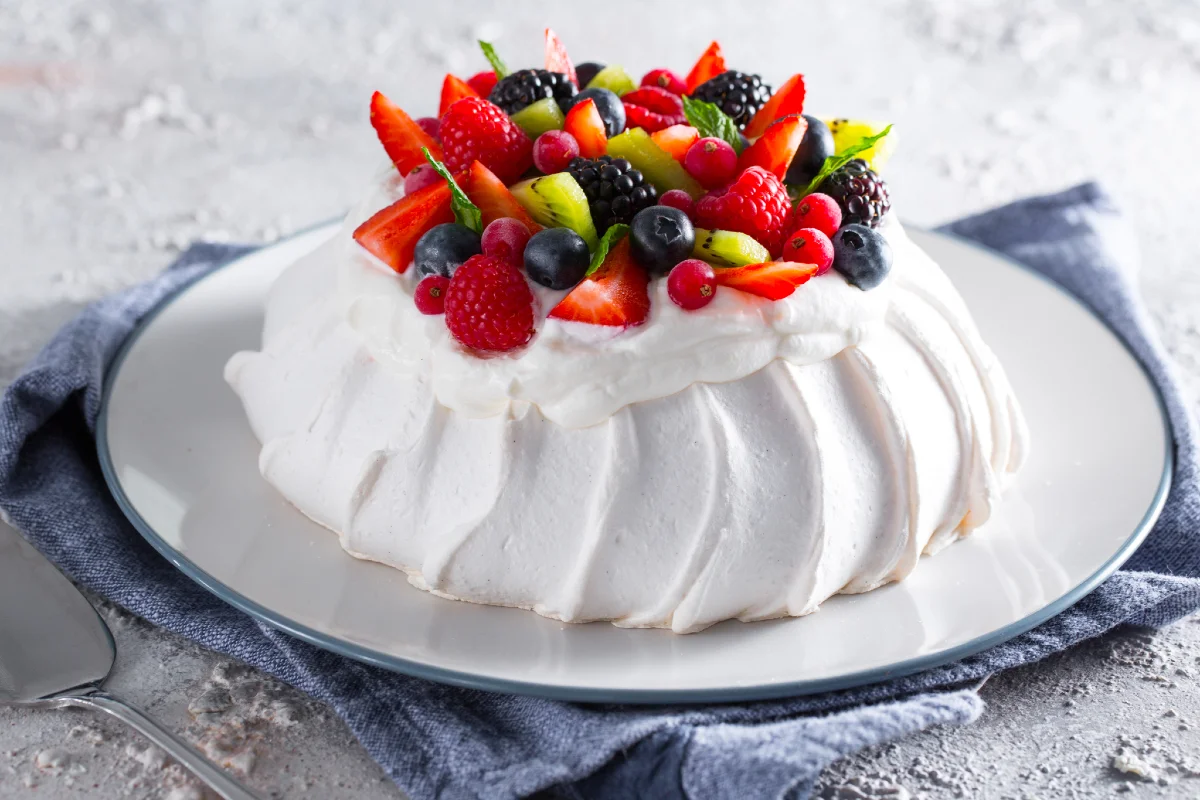
Pavlova is a crisp, delicate meringue with a soft centre, finished with whipped cream and fresh fruit. Its airy base and colourful topping make it a lovely dessert to share.
Ingredients
- 100 g (about 3 medium eggs)egg whites, at room temperature
- 200 gsugar
- 20 gcornflour
- 10 glemon juice
- as neededvanilla extract
- 200 gfresh liquid cream
- 20 gicing sugar
- 1kiwi
- as neededstrawberries
- as neededraspberries
- as neededblackberries
- as neededblueberries
- as neededredcurrants
- as neededmint
- as neededicing sugar
Instructions
- 1
Whisk the whites
Preheat a conventional oven to 130°C. Separate the yolks from the room-temperature egg whites, then put the whites in a stand mixer fitted with a whisk and beat at medium-high speed. Once they turn white, gradually add the sugar. When all the sugar is incorporated and the meringue is thick and creamy, pour in the lemon juice.
- 2
Add flavouring
Add the vanilla extract and whisk until it is incorporated and the meringue is firm. Turn off the mixer and add the cornflour.
- 3
Shape the meringue
Fold the cornflour in gently with a spatula, using a bottom-to-top motion so you do not knock out the air. Transfer the mixture to a baking tray lined with baking paper, shape it into a mound and smooth the surface.
- 4
Bake and cool
Make a shallow hollow in the centre and shape the sides with a smaller spatula, moving from the bottom upwards. Bake in the preheated oven at 130°C for 10 minutes, then reduce the temperature to 100°C and bake for a further 50 minutes without opening the door. Turn off the oven and leave the pavlova to cool for at least 2 hours, with the door still closed.
- 5
Prepare the fruit
Once the pavlova is cold, halve the kiwi and slice it into half-moons. Cut the strawberries into quarters, then wash and dry the berries. Put the fresh cream and 20 g icing sugar in a bowl.
- 6
Whip the cream
Whisk the cream and icing sugar with electric beaters until firm and creamy. Gently tap the pavlova surface to crack it slightly and widen the hollow.
- 7
Fill the pavlova
Spoon the whipped cream into the hollow and arrange the fresh fruit over it.
- 8
Finish and serve
Decorate with fresh mint leaves and dust lightly with icing sugar before serving.
What is pavlova?
Pavlova is a meringue dessert associated with Australia and New Zealand, usually served with cream and fresh fruit. This version builds a crisp-edged shell with a hollow centre, ready to hold the topping.
The combination of a slow-baked meringue, softly whipped cream and bright fruit gives each serving a mix of textures and flavours.
Nutrition and macros by portion
The nutrition label shows one serving as written: 310 calories, 0g protein, 48g carbs, 12g fat.
| Portion | Adjustment | kcal | Protein | Carbs | Fat |
|---|---|---|---|---|---|
| Lighter | Use less whipped cream | 217 kcal | 0g | 33g | 8g |
| This serving | As written | 310 kcal | 0g | 48g | 12g |
| Hungry | Serve a larger slice | 465 kcal | 0g | 72g | 18g |
The meringue’s sugar supplies most of the carbohydrates, while the cream contributes most of the fat; egg whites provide the protein. Serve a slice with the fruit topping and consider balancing the plate with a lighter main course rather than adding another rich dessert.
Building a stable meringue
Room-temperature whites: they are easier to whip to a voluminous foam. Make sure the bowl and whisk are clean before you begin.
Gradual sugar: add it only after the whites have turned white, and add it little by little. This gives it time to blend into the foam before the lemon juice, vanilla and cornflour go in.
Shaping the shell
Gentle folding: use a spatula to incorporate the cornflour from the bottom upwards, keeping as much air in the mixture as possible.
Central hollow: shape the meringue into a mound, then make a shallow dip for the cream. The sides can be drawn upwards with a smaller spatula to form a nest-like shell.
Baking and cooling
Two temperatures: begin at 130°C for 10 minutes, then lower the oven to 100°C for another 50 minutes. Keep the oven door shut throughout the bake.
Slow cooling: leave the pavlova in the switched-off oven for at least 2 hours with the door closed. This gradual change helps avoid an abrupt temperature shift.
Whipping the cream
Cold cream: whip the fresh cream with 20 g icing sugar until it is firm and creamy. Stop once it holds its shape so it stays smooth rather than becoming grainy.
Fill at the end: add the cream only after the shell is cold, then top it with fruit shortly before serving.
Choosing and arranging the fruit
Fruit mix: kiwi, strawberries, raspberries, blackberries, blueberries and redcurrants give the topping a range of colours and tart, sweet notes. Wash and dry the berries well before using them.
Finishing touch: mint leaves and a light dusting of icing sugar complete the decoration. Arrange the fruit over the cream rather than pressing it into the shell.
Serving and timing
The 100-minute total time includes the bake and the minimum 2-hour cooling period stated in the method, so allow extra time if you are following the cooling instruction in full.
Serve soon after adding the cream and fruit, when the meringue is still crisp. It works well as a centrepiece dessert after a meal.
Recipe notes & tips
- Separate the eggs carefully so no yolk gets into the whites.
- Add the sugar gradually after the whites have turned white.
- Fold in the cornflour gently to preserve the whipped volume.
- Keep the oven door closed during baking and cooling.
- Dry the washed fruit thoroughly before placing it on the cream.
- Add the cream and fruit shortly before serving for the best contrast in texture.
Variations
- Seasonal fruit: replace the listed fruit with a similar quantity of ripe fruit in season.
- Citrus finish: add finely grated lemon zest to the whipped cream for a fragrant note.
- Passion fruit: spoon its pulp over the fruit topping for a tangy finish.
- Chocolate: shave a little chocolate over the cream and fruit just before serving.
- Single portions: shape the meringue into smaller nests and adjust the baking time while watching their texture.
Common mistakes to avoid
- Greasy bowl: any residue can hinder the whites from whipping; clean and dry the bowl and whisk thoroughly.
- Sugar added too soon: wait until the whites are white, then add the sugar gradually.
- Overmixing the cornflour: fold gently from the bottom upwards so the meringue keeps its air.
- Opening the oven: this interrupts the steady bake; leave the door closed for the full baking time.
- Cooling too quickly: keep the pavlova in the switched-off oven with the door closed for at least 2 hours.
- Topping a warm shell: wait until it is completely cold before adding cream, or the topping may soften.
How to store
Store leftover pavlova covered in the fridge and eat it within 1 day; the cream and fruit will soften the meringue over time. It is best assembled just before serving, and reheating is not recommended.
Frequently asked questions
Can I make the meringue base ahead?
Yes. Bake and cool the base, then keep it in an airtight container in a cool, dry place until you are ready to decorate it.
Why should I leave the oven door closed?
The method relies on steady heat during baking and gradual cooling. Opening the door can cause a sudden temperature change.
How can I tell whether the cream is ready?
It should look firm and creamy and hold its shape when lifted by the beaters. Stop whisking at that point.
Can I use different fruit?
Yes. Use fruit that is ripe and easy to arrange, and dry it well after washing before adding it to the cream.
Why is my pavlova cracked?
Some cracking is normal in a meringue shell. The cream and fruit fill the hollow and make cracks less noticeable when served.
When should I add the topping?
Wait until the pavlova is completely cold, then add the cream and fruit close to serving so the base stays crisper.
Cook it from the original
This recipe comes from giallozafferano.es. Their page has the author’s own photos, notes and tips — the best place to cook it from.
Open the recipe on giallozafferano.es