
Tomato purée
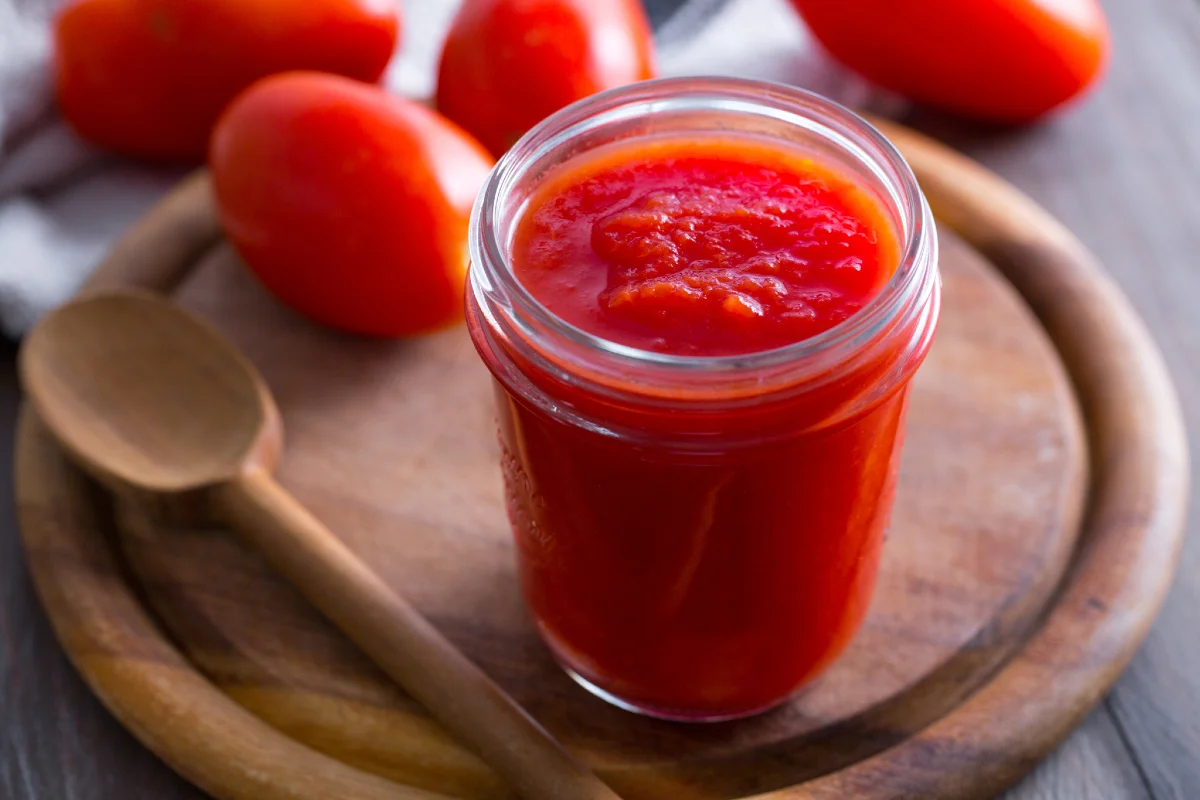
This tomato purée is made by gently softening San Marzano tomatoes and passing them through a food mill. Make it to use straight away or preserve for later, with basil ready to add as desired.
Ingredients
- 2 kgSan Marzano tomatoes
- as neededbasil
- as neededfine salt
Instructions
- 1
Prepare the tomatoes
Check each tomato and discard any that are damaged, spotted or bruised. Wash them thoroughly and remove the stalks. Cut each tomato in half lengthways, then squeeze out the central part with the seeds if you want a thicker purée. You can skip this step when making a large batch and leave the seeds in.
- 2
Soften gently
Collect the tomato flesh in one bowl and the juice in another. Put the tomatoes in a large pan and cook over a low heat for about 30 minutes, stirring from time to time, until softened.
- 3
Season and mill
Add salt to the softened tomatoes, stir and leave them for a few moments longer. Pass a few tomatoes at a time through a food mill fitted with a medium-fine plate.
- 4
Collect the purée
Continue milling the tomatoes in batches, collecting the purée in a bowl. Use it straight away or choose how to preserve it.
What is tomato purée?
Tomato purée is cooked tomato flesh passed through a food mill to make a smooth, versatile base. It is widely used in Italian home cooking, and San Marzano tomatoes are a classic choice for this kind of preparation.
This version keeps the method simple: soften the tomatoes, season them and mill them. Removing some seeds and their surrounding juice is optional, but can make the finished purée thicker.
Nutrition and macros by portion
The nutrition label shows one serving as written: 90 calories, 4g protein, 19g carbs, 1g fat.
| Portion | Adjustment | kcal | Protein | Carbs | Fat |
|---|---|---|---|---|---|
| Lighter | Smaller purée serving | 63 kcal | 3g | 14g | 1g |
| This serving | As written | 90 kcal | 4g | 19g | 1g |
| Hungry | Larger purée serving | 135 kcal | 7g | 29g | 1g |
The tomatoes provide most of the carbohydrates, natural sugars and fibre, while contributing little fat or protein; salt adds sodium, but its amount is left to taste. For a more filling plate, pair the purée with a protein-rich food and a portion of vegetables or whole grains.
Choosing and checking tomatoes
Sound fruit: inspect each tomato and remove any that are damaged, spotted or bruised. Washing and removing the stalks prepares them for cutting and cooking.
San Marzano tomatoes: these are the specified variety for this recipe. If you substitute another variety, choose ripe tomatoes and expect the finished texture to vary.
Why the seeds are optional
For a thicker result: cut the tomatoes lengthways and squeeze out the central seed-filled part before cooking. Collecting the juice separately keeps it from going into the purée.
For a larger batch: the method allows you to leave the seeds in. The purée may be less thick, but the extra step of deseeding is avoided.
Gentle cooking and milling
Low heat: cook the tomatoes for about 30 minutes, stirring occasionally. They should soften and collapse rather than brown on the bottom of the pan.
Small batches: pass only a few softened tomatoes through the food mill at a time. This makes it easier to work steadily and collect the purée in a bowl.
Seasoning and basil
Fine salt: add it once the tomatoes have softened, then stir and give the mixture a few moments before milling. The recipe leaves the amount to taste, so season gradually.
Basil: it is listed as an ingredient but not given a specific point in the method. Add it to taste when serving or when using the purée in another dish.
Ways to use it
As a base: use the purée in sauces, soups or other dishes that call for cooked tomato. Adjust the seasoning to suit the recipe it is going into.
For a meal: serve a tomato-based sauce with pasta, or use the purée as part of a meal with beans, vegetables or another source of protein.
Recipe notes & tips
- Choose tomatoes without bruises or damaged patches so the purée has a clean flavour.
- Keep the heat low and stir occasionally during the 30-minute softening stage.
- Squeeze out the seeds and central juice if you prefer a thicker result.
- Use a medium-fine food-mill plate for a smooth texture.
- Work in small batches so the softened tomatoes pass through the mill evenly.
Variations
- Leave the seeds in: skip deseeding for a simpler preparation and a less thick purée.
- Add basil: stir in basil to taste when serving or using the purée in another dish.
- Season gradually: add fine salt a little at a time to suit how you plan to use the purée.
- Save the juice: set the extracted tomato juice aside for another use rather than adding it to the purée.
- Serve with pasta: use the purée as the tomato base for a pasta sauce and adjust its seasoning.
Common mistakes to avoid
- Using damaged tomatoes: check each one carefully and discard any that are bruised or spoiled.
- Cooking too hot: the tomatoes can catch on the bottom; keep the heat low and stir occasionally.
- Expecting a thick result with all the juice: squeeze out the central seed-filled part if thickness is important.
- Filling the food mill too much: process a few tomatoes at a time for easier milling.
- Adding too much salt at once: season gradually because the recipe does not specify an exact amount.
How to store
The recipe does not specify a preserving or storage method, so refrigerate any purée you are not using straight away in a clean, covered container and use within 3–4 days. Reheat gently in a saucepan, stirring until hot throughout. For longer storage, use a tested preserving method rather than relying on this recipe alone.
Frequently asked questions
Do I have to remove the seeds?
No. Removing the central seed-filled part is optional and is intended to make the purée thicker. For a large batch, the method says you can leave the seeds in.
How long do the tomatoes cook for?
Soften them over a low heat for about 30 minutes, stirring from time to time. They should be well softened before you add salt and pass them through the food mill.
What kind of food mill plate should I use?
Use a plate with a medium-fine mesh, as specified in the method. Pass the tomatoes through in small batches.
Can I use another type of tomato?
The recipe specifies San Marzano tomatoes. You can use another ripe tomato variety, though the texture and flavour may differ.
When should I add the basil?
Basil is listed in the ingredients, but the method does not specify when to add it. Add it to taste when serving or when using the purée in another dish.
Can I preserve the purée in jars?
The method says you can preserve it but gives no canning instructions. Use a tested preserving recipe and process rather than assuming that filling jars alone makes the purée shelf-stable.
Cook it from the original
This recipe comes from giallozafferano.es. Their page has the author’s own photos, notes and tips — the best place to cook it from.
Open the recipe on giallozafferano.es