
Hummus
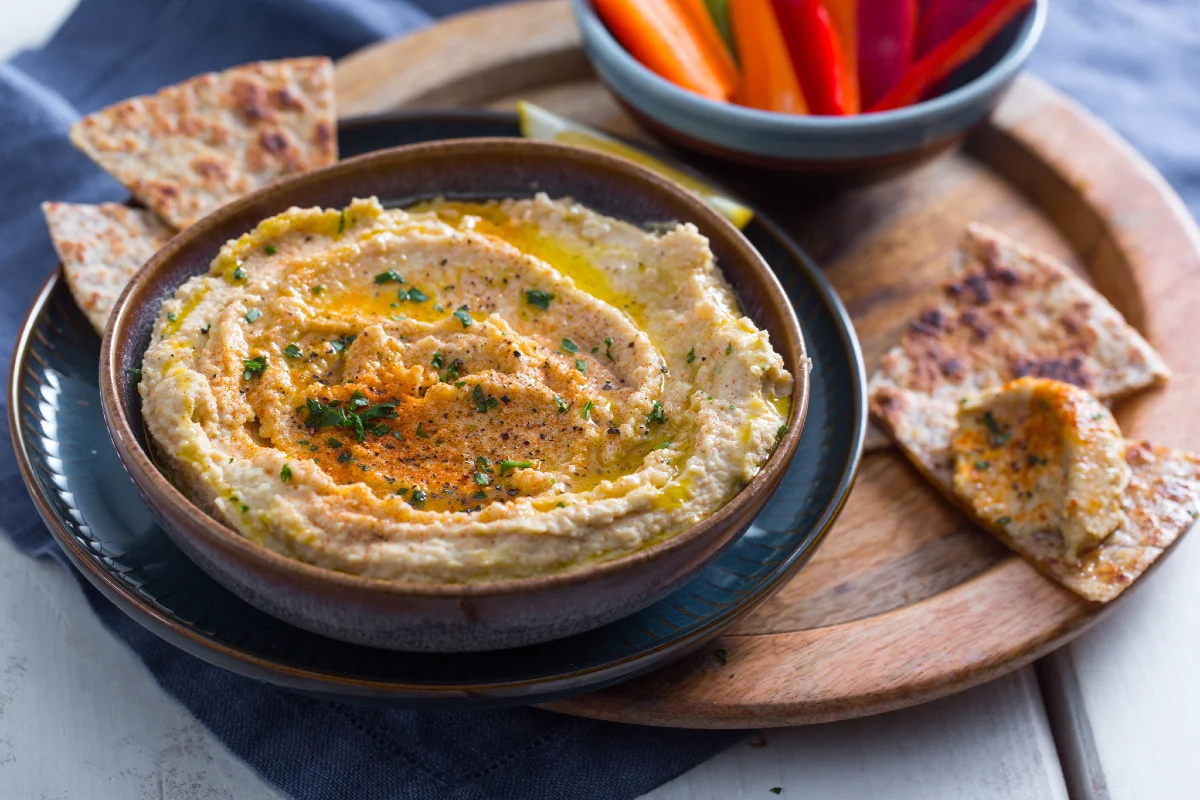
This quick chickpea hummus blends tahini, lemon juice and extra virgin olive oil into a creamy Middle Eastern dip. Serve it as a vegan appetiser with bread or vegetables.
Ingredients
- 500 g (drained weight)Precooked chickpeas
- 90 gLemon juice
- 70 gTahini
- 1 clove (optional)Garlic
- 50 gExtra virgin olive oil
- As neededWater
- As neededFine salt
- To tasteSweet paprika
- To tasteParsley
- To tasteExtra virgin olive oil
- To tasteBlack pepper
- 100 gSesame seeds
- 30 gSesame oil
- As neededHot water
- As neededFine salt
Instructions
- 1
Blend the chickpeas
Drain and rinse the precooked chickpeas, then put them in a blender. Add the lemon juice, tahini and 50 g extra virgin olive oil.
- 2
Adjust the texture
Add fine salt and, if you like, a crushed garlic clove with its germ removed. Blend until you reach your preferred smooth or rustic texture, adding 2–3 tablespoons of water as needed. You can use more lemon juice for extra acidity, or more oil or tahini for a richer result.
- 3
Garnish the hummus
Transfer the hummus to a bowl. Finish with sweet paprika, black pepper, a drizzle of extra virgin olive oil and chopped parsley.
- 4
Toast the sesame
To make the tahini, toast the sesame seeds in a non-stick frying pan, stirring frequently. Transfer them to a mortar, add some of the sesame oil and fine salt, then begin grinding with circular movements.
- 5
Finish the tahini
Gradually pour in the remaining sesame oil and hot water as needed, continuing to grind until the mixture is fairly smooth and even.
What is hummus?
Hummus is a Middle Eastern chickpea dip commonly made with tahini and lemon juice. This version combines those familiar flavours with extra virgin olive oil for a rich, creamy result.
The method is simple: blend the chickpeas with the other main ingredients, then adjust the texture to suit your preference. It also includes instructions for making tahini from sesame seeds.
Nutrition and macros by portion
The nutrition label shows one serving as written: 536 calories, 0g protein, 28g carbs, 39g fat.
| Portion | Adjustment | kcal | Protein | Carbs | Fat |
|---|---|---|---|---|---|
| Lighter | Less finishing oil | 375 kcal | 0g | 20g | 27g |
| This serving | As written | 536 kcal | 0g | 28g | 39g |
| Hungry | Larger hummus portion | 804 kcal | 0g | 43g | 59g |
The chickpeas provide most of the carbohydrates, while the tahini, sesame and olive oils contribute much of the fat. Chickpeas and sesame also contribute some protein; the supplied nutrition figures list protein as 0 g. Balance a serving with crunchy vegetables or a salad alongside.
The chickpeas and tahini
Chickpeas: Drain and rinse them well before blending so the liquid from the tin does not affect the dip’s consistency.
Tahini: The recipe uses 70 g in the hummus, then gives a separate method using sesame seeds and sesame oil. Its nutty flavour helps balance the lemon’s sharpness.
Balancing lemon and oil
Lemon juice: The 90 g in the recipe gives the hummus a distinctly bright, tangy flavour. If you want a less sharp finish, add it gradually while blending.
Olive oil: Blend in the measured 50 g, then use the additional oil listed for a finishing drizzle. Add any extra oil to the mixture only if you want a richer result.
Getting the texture right
Water: Add 2–3 tablespoons as needed while blending, stopping when the hummus reaches the consistency you like. The method aims for a light, buttery cream, but a shorter blend leaves it more rustic.
Blending: Adjust the blender speed and time to suit the texture you prefer. Scrape down the mixture if needed so it blends evenly.
Making the tahini
Toasting: Stir the sesame seeds often as they toast in the non-stick pan. This helps them heat evenly; the recipe does not specify a temperature or toasting time.
Grinding: Start the seeds in a mortar with some sesame oil and salt, then add the rest of the oil and hot water gradually. Keep grinding until the mixture looks fairly smooth and uniform.
Serving and garnishing
Finish the bowl with paprika, black pepper, chopped parsley and a drizzle of extra virgin olive oil. Add the seasonings to taste so they complement rather than overwhelm the chickpea and tahini base.
Serve as an appetiser with bread or crisp vegetables for dipping. The hummus is also a handy addition to a mezze-style spread.
Recipe notes & tips
- Rinse the chickpeas well before blending to remove their canning liquid.
- Add water a little at a time so you can stop at your preferred consistency.
- Remove the garlic germ if using the optional clove.
- Taste the hummus before garnishing and adjust the salt to your preference.
- Stir the sesame seeds frequently while toasting them.
Variations
- More lemon: Add a little extra lemon juice for a sharper finish.
- Garlic version: Include the optional clove for a more savoury flavour.
- Rustic texture: Blend for less time to leave the chickpeas less smooth.
- Richer finish: Add a little more tahini or oil to the hummus.
- Extra garnish: Use more paprika, pepper or parsley to suit your taste.
Common mistakes to avoid
- Adding too much water: The hummus can become runny, so add it gradually and stop when the texture is right.
- Skipping the rinse: Canning liquid can affect the dip’s consistency; drain and rinse the chickpeas first.
- Over-blending: A longer blend makes a smoother hummus, so use less blending time if you prefer a rustic texture.
- Toasting without stirring: Sesame can toast unevenly, so keep it moving in the pan.
- Pouring in all the tahini ingredients at once: Add the sesame oil and hot water gradually while grinding for a more even mixture.
How to store
Store leftover hummus in a covered container in the fridge and use within 3–4 days. Stir before serving; if it has thickened, mix in a little water. This dip is usually served cold, so reheating is not necessary.
Frequently asked questions
Can I leave out the garlic?
Yes. Garlic is optional in this recipe, so you can omit it without changing the rest of the method.
How much water should I add?
The method suggests 2–3 tablespoons for the hummus, added as needed. For the tahini, add hot water gradually until it is fairly smooth and even.
Can I make the hummus more rustic?
Yes. Blend for less time and stop when the texture is as coarse as you like.
How do I make the tahini in this recipe?
Toast the sesame seeds, then grind them with sesame oil and salt in a mortar. Add the remaining oil and hot water gradually until smooth.
What can I serve with hummus?
Serve it as an appetiser with bread or vegetables for dipping, or add it to a mezze-style spread.
Cook it from the original
This recipe comes from giallozafferano.es. Their page has the author’s own photos, notes and tips — the best place to cook it from.
Open the recipe on giallozafferano.es