
Creamy Roman-style carbonara
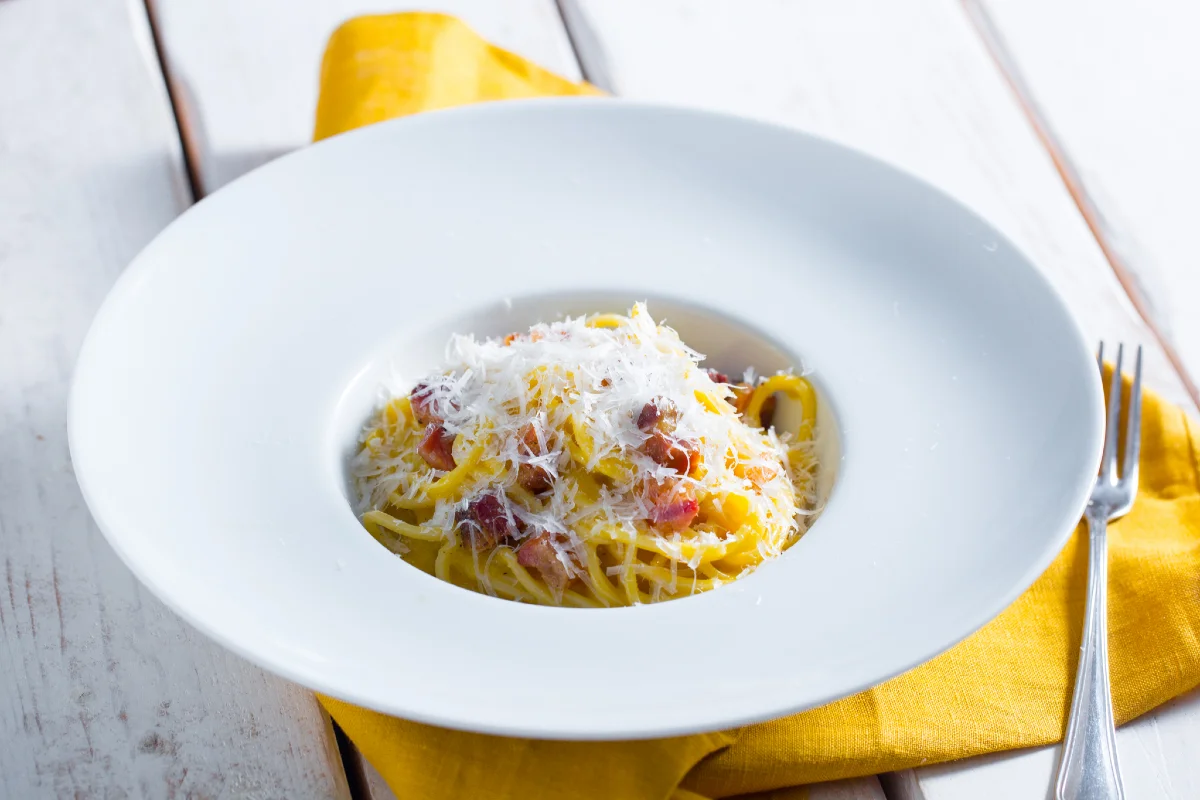
Roman-style carbonara combines spaghettoni with crisp guanciale and a glossy sauce made from egg yolks, cheese and pasta water. This method uses gentle heat and careful mixing to bring the sauce together without scrambling the eggs.
Ingredients
- 320 gspaghettoni
- 200 gguanciale, matured for 3–4 months
- 4yolks from medium eggs
- 30 gGrana Padano DOP, for grating
- 20 gPecorino Romano, for grating
- 20 gwhole black peppercorns, freshly ground
- 20 gPecorino Romano, for grating
Instructions
- 1
Brown the guanciale
Remove the rind and peppered part of the guanciale, then cut it into 0.5 cm cubes. Put it in a barely warmed frying pan without added fat. Start cooking over a low heat, raising the heat once it begins to brown. Meanwhile, bring a pan of water to the boil for the pasta.
- 2
Reserve the fat
When the guanciale is golden pink, turn off the heat and pour the rendered fat into a bowl. Set both the guanciale and its fat aside.
- 3
Cook the pasta
When the water boils, salt it moderately and cook the spaghettoni until al dente. Meanwhile, grate the Grana Padano and Pecorino Romano into a stainless-steel bowl, then add the yolks, keeping them well separated from the whites.
- 4
Mix the sauce
Grind the pepper freshly into the bowl and begin whisking. Pour in a ladleful of pasta cooking water and mix it in.
- 5
Warm the yolks
Add a ladleful of the guanciale fat. Set the bowl over the pasta pan, placing a ladle or other spacer between the bowl and pan so the pan can vent and the water does not overflow. Keep whisking until the yolk cream reaches 65°C. To check its consistency, dip in a spatula: the cream should not drip off.
- 6
Combine and serve
Drain the pasta while al dente and transfer it to the bowl, removed from the heat. Toss continuously with tongs, adding pasta water as needed. Stir in almost all the guanciale, add a little more pasta water and mix again, finishing the cooking over the bain-marie. Serve with the remaining guanciale, a little grated Pecorino Romano and a pinch of pepper.
What is Roman-style carbonara?
Carbonara is a Roman pasta dish built around pasta, cured pork, eggs, cheese and black pepper. This version uses spaghettoni and guanciale, with the sauce brought together from yolks, grated cheeses, rendered pork fat and starchy pasta water.
The method relies on controlled warmth rather than direct cooking of the egg sauce. Whisking the yolks over a bain-marie and then tossing them with hot pasta helps create a creamy coating.
Nutrition and macros by portion
The nutrition label shows one serving as written: 757 calories, 0g protein, 65g carbs, 46g fat.
| Portion | Adjustment | kcal | Protein | Carbs | Fat |
|---|---|---|---|---|---|
| Lighter | Use less guanciale fat | 530 kcal | 0g | 45g | 32g |
| This serving | As written | 757 kcal | 0g | 65g | 46g |
| Hungry | Serve a larger portion | 1136 kcal | 0g | 97g | 69g |
The pasta supplies most of the carbohydrates, while the guanciale, yolks and rendered fat contribute much of the fat; the eggs and cheeses provide protein. The supplied nutrition lists protein as 0 g, so treat that figure with caution. Pair a serving with salad or vegetables to add freshness and balance the plate.
Choose and prepare the guanciale
Trim first: remove the rind and peppered part before cutting the guanciale into 0.5 cm cubes. The recipe explains that removing the peppered section helps prevent it from burning as the pork browns.
Render gently: start in a barely warmed pan with no added fat. Begin over low heat, then raise it as the guanciale starts to colour; reserve both the browned pieces and their fat.
Build a smooth yolk cream
Grate the cheeses finely so they mix evenly with the yolks. Add freshly ground pepper, then whisk in a ladleful of pasta water followed by a ladleful of guanciale fat.
Use a bain-marie: place the bowl over the pasta pan with a spacer between them, and keep whisking as the mixture warms to 65°C. The spatula check in the method is a useful cue: the cream should cling rather than drip.
Keep the pasta al dente
Cook the spaghettoni in moderately salted boiling water and drain it while it is still al dente. The pasta will continue cooking briefly as it is tossed with the sauce.
Save the cooking water: add it gradually as you mix, rather than pouring in too much at once. Its starch helps the sauce coat the pasta.
Finish without scrambling
Take the bowl off the heat before adding the drained pasta. Toss continuously with tongs, then add almost all the guanciale and a little more pasta water.
The recipe finishes the pasta over the bain-marie. Keep mixing and watch the consistency so the sauce stays creamy rather than setting into pieces.
Serve it simply
Bring the pasta to the table straight away, while the sauce is glossy and the guanciale is still crisp. Finish each serving with the reserved guanciale, a little grated Pecorino Romano and a pinch of pepper.
A plain green salad or lightly dressed vegetables make a fresh contrast to the rich pasta without competing with its peppery, savoury flavour.
Recipe notes & tips
- Cut the guanciale into even 0.5 cm cubes so the pieces cook at a similar rate.
- Grind the pepper just before mixing it into the yolk and cheese.
- Salt the pasta water moderately, as the guanciale and cheeses are already savoury.
- Keep a ladleful of pasta water available for adjusting the sauce as you toss.
- Use a spacer between the bowl and pasta pan during the bain-marie stage so the pan can vent.
Variations
- More pepper: add an extra pinch at the table for a sharper finish.
- Cheese balance: adjust the grated Grana Padano and Pecorino proportions while keeping the total amount the same.
- Different pasta: use another long pasta shape that holds the sauce well.
- Softer finish: add reserved pasta water a little at a time until the sauce coats the strands.
- Extra garnish: reserve a few more browned guanciale pieces for topping each serving.
Common mistakes to avoid
- Starting with high heat: the guanciale may brown too quickly; begin gently and raise the heat once it starts colouring.
- Leaving peppered rind on: it can burn during cooking; trim away the rind and peppered part first.
- Overheating the yolks: the sauce can lose its creamy texture; whisk over the bain-marie and check for 65°C.
- Adding pasta water all at once: the sauce can become too loose; incorporate it gradually while tossing.
- Mixing over direct heat: the yolks may scramble; remove the bowl from the heat before adding the pasta.
How to store
Carbonara is best served immediately. If needed, refrigerate leftovers in a covered container for up to 2 days; reheat gently in a pan with a splash of water, stirring often, and avoid high heat.
Frequently asked questions
How do I know when the yolk cream is ready?
The method calls for warming it to 65°C while whisking. As a texture check, dip in a spatula: the cream should cling rather than drip.
Can I make the sauce without a thermometer?
Use the spatula test given in the method: the cream should not drip off. Keep whisking gently over the bain-marie and avoid letting the bowl sit unattended.
Why remove the peppered part of the guanciale?
The recipe notes that it can burn during cooking. Trim it away along with the rind before cutting the guanciale into cubes.
Why should I save pasta water?
It is used to mix the yolk cream and adjust the sauce as you toss the pasta. Add it gradually until the sauce coats the spaghettoni.
Can I prepare carbonara ahead of time?
It is best cooked and served straight away, since the sauce is designed to be finished with hot pasta. You can grate the cheeses and cut the guanciale in advance.
What can I serve with carbonara?
A simple green salad or lightly dressed vegetables offer a fresh contrast. Serve the pasta as soon as it is finished.
Cook it from the original
This recipe comes from giallozafferano.es. Their page has the author’s own photos, notes and tips — the best place to cook it from.
Open the recipe on giallozafferano.es