
Neapolitan pizza
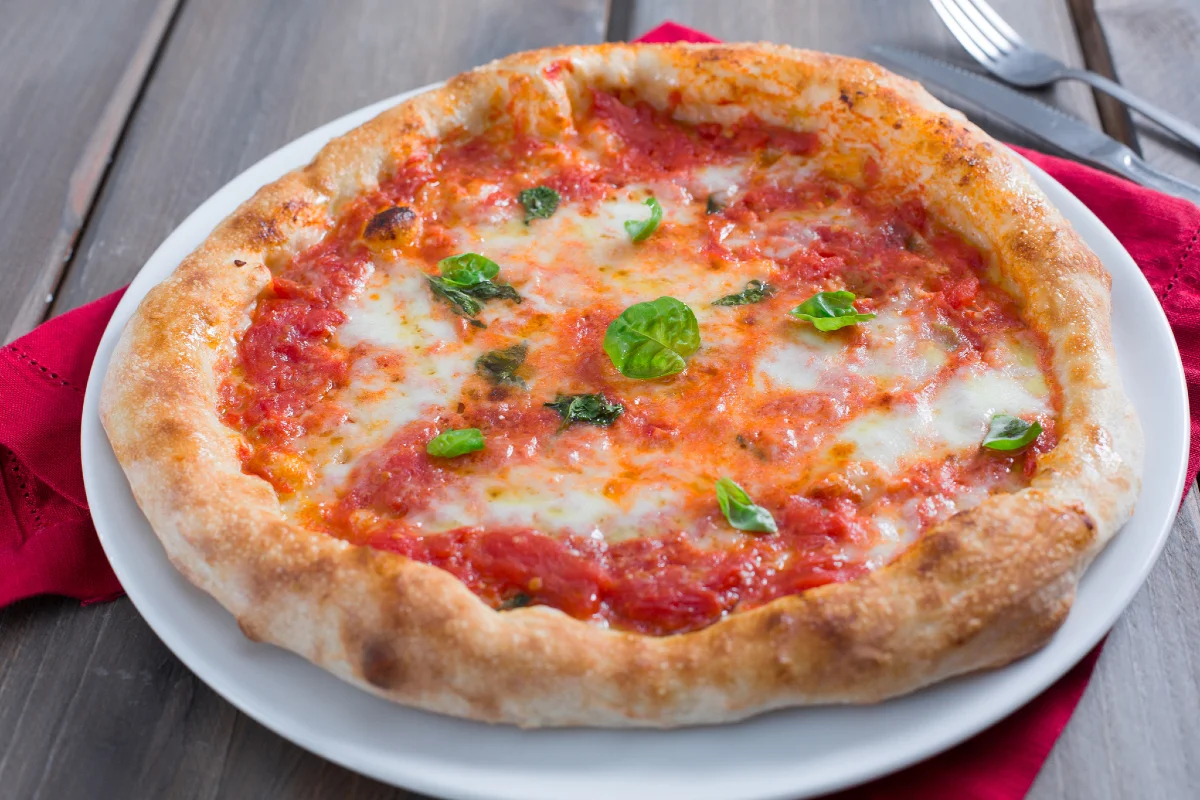
Neapolitan pizza pairs a soft, airy crust with tomato, fiordilatte mozzarella, Parmesan and fresh basil. This home version uses a long proving time and a very hot oven for a tender centre and browned, puffy edge.
Ingredients
- 800 g00 flour, W 280
- 500 gwater
- 25 gextra-virgin olive oil
- 25 gfine salt
- 10 gsugar
- 1 gfresh baker’s yeast
- 400 gpeeled San Marzano-style tomatoes
- 400 gfiordilatte mozzarella
- as neededParmigiano Reggiano DOP, for grating
- as neededfresh basil, torn by hand
- as neededextra-virgin olive oil
- 4 gfine salt
Instructions
- 1
Mix the dough
Pour the water into a large dough trough or bowl and add 25 g salt and the sugar. Stir until dissolved, then add more than half the flour. Crumble the yeast over the flour and begin mixing with one hand, letting the flour gradually absorb the water.
- 2
Add the flour
Add the remaining flour in stages, continuing to mix and knead with one hand until it is incorporated, adjusting how much you add to suit the dough’s consistency.
- 3
Work in oil
Pour in all 25 g of olive oil and keep kneading with one hand until the dough has absorbed it.
- 4
Knead and rest
Move the dough to a work surface and knead with both hands for about 20–25 minutes. If needed, dust the surface with just a little flour. Once smooth and no longer sticky, shape it into a ball, cover it with the trough or bowl, and leave it to rest for 15 minutes.
- 5
Knead again
After the rest, gently knead the relaxed dough again, shape it into a round and return it to the trough. Cover and leave it for 40 minutes.
- 6
Divide the dough
Divide the dough into portions. For the professional method, split it into two parts, shape one into a cylinder, then form and separate balls by pinching the dough between your thumb and index finger and rounding each piece on the work surface. For the easier home method, divide it into equal pieces of about 250–260 g each; these make pizzas about 28–32 cm across.
- 7
Shape and prove
Roll each portion on the work surface to seal its base and make a ball. Place the balls well apart in the trough, cover, and leave to prove at 18–24°C for 8–12 hours.
- 8
Season the tomatoes
Put the peeled tomatoes in a bowl and crush them by hand. Season with 4 g salt, a drizzle of olive oil and basil torn by hand.
- 9
Slice the cheese
Halve the fiordilatte, cut it into slices, then slice those into strips that are neither too thick nor too thin.
- 10
Heat the oven
When the dough balls are nearly proved, put a baking stone in the oven and heat it at maximum temperature for 30–40 minutes, or up to 1 hour if your oven is not very powerful.
- 11
Open the dough
Quickly dust the first dough ball with flour on both sides. Press from the centre towards the edge, using your joined index fingers and thumbs to push air out towards the rim. Repeat this centre-to-edge pressing three times.
- 12
Stretch gently
Lift and turn the dough gently, then repeat the centre-to-edge pressing three times. Turn it again and repeat once more. Avoid pulling hard or handling it too much, as this can make it shrink. Pinch opposite edges between your index and middle fingers and move the dough gently across the work surface without tugging. Keep one hand over the centre as you gently draw out an edge, then turn the dough over your other hand and lay it back on the surface with a slight turn. Stretch it only halfway so it is less likely to tear when topped.
- 13
Add the toppings
Spread the crushed tomatoes over the centre in a spiral, leaving the rim clear. Add a moderate amount of fiordilatte, grate over Parmesan, then finish with hand-torn basil and a drizzle of olive oil.
- 14
Bake and serve
Lift the pizza onto a peel and gently straighten it with your hands. Slide it directly onto the preheated baking stone and bake at the oven’s maximum temperature for 5–7 minutes. Remove and serve immediately.
What is Neapolitan pizza?
Neapolitan pizza comes from Naples, where a simple combination of dough, tomato, cheese and basil is baked at very high heat. Its hallmark is a soft centre surrounded by a raised, airy rim.
This version follows pizzaiolo Davide Civitiello’s method, using a small amount of fresh yeast and a long prove. The hot stone helps the base cook quickly while the toppings remain fresh and the edge puffs.
Nutrition and macros by portion
The nutrition label shows one serving as written: 949 calories, 0g protein, 128g carbs, 31g fat.
| Portion | Adjustment | kcal | Protein | Carbs | Fat |
|---|---|---|---|---|---|
| Lighter | Use less cheese and oil | 664 kcal | 0g | 90g | 22g |
| This serving | As written | 949 kcal | 0g | 128g | 31g |
| Hungry | Add an extra slice | 1424 kcal | 0g | 192g | 47g |
Most of the carbohydrate comes from the flour, while the olive oil and cheeses contribute much of the fat. Fiordilatte and Parmesan also provide protein; tomato adds flavour with relatively little energy compared with the dough and cheese. Serve a slice or two with a green salad or vegetables to round out the plate.
Choose the right flour
00 flour, W 280: this is the specified flour for the dough and is intended to form a workable, elastic base. Add it in stages as directed, stopping when the dough has the consistency described in the method.
Fresh yeast: just 1 g is used, so the extended proving period is part of the recipe rather than a shortcut to skip.
Build the dough gradually
Water and salt: dissolve these with the sugar before adding most of the flour. This gives the dough a smooth start and helps the ingredients combine evenly.
Oil: work it in after the flour has been incorporated. Kneading by hand for 20–25 minutes takes time, but the dough should become smooth and stop sticking to the work surface.
Allow for the long prove
The method includes a 15-minute rest, a further 40-minute rest and then an 8–12-hour prove for the dough balls at 18–24°C. The listed total time of 65 minutes does not include that final proving period, so plan ahead.
Keep the portions covered during proving, with space between them. They should be nearly proved before you begin heating the oven and shaping the first pizza.
Stretch without tearing
Press from the centre towards the edge to move air outwards and preserve a thicker rim. Turn the dough and repeat the gentle pressing rather than flattening the edge.
Use a light touch when drawing out the dough, and stop when it is only halfway stretched. The recipe cautions against pulling one edge sharply, which can make the dough shrink or tear.
Keep the toppings balanced
Tomato: crush the peeled tomatoes by hand and season them with 4 g salt, olive oil and torn basil. Spread the mixture over the centre in a spiral, leaving the rim bare.
Fiordilatte: cut it into strips and use a moderate amount so the centre is not overloaded. Finish with grated Parmesan, more basil and a drizzle of oil.
Bake on a fully heated stone
Heat the stone at the oven’s maximum setting for 30–40 minutes, or up to an hour if the oven is not very powerful. The recipe places the pizza directly on the hot stone.
Bake for 5–7 minutes, then serve straight away. The method relies on a very hot oven and a short bake, so have the toppings ready before shaping.
Recipe notes & tips
- Weigh the dough portions to keep them close to 250–260 g each.
- Keep the dough covered during rests and proving so its surface does not dry out.
- Drain excess liquid from the fiordilatte if it is particularly wet before slicing it.
- Prepare the tomato mixture and sliced cheese before you start stretching the dough.
- Use only a little flour when dusting the dough so the base does not become dry.
- Slide each pizza onto the stone only once it is topped and ready to bake.
Variations
- Add oregano: sprinkle a little over the tomato for a more herbal finish.
- Use another mozzarella: choose a low-moisture mozzarella if fiordilatte is unavailable.
- Add olives: scatter a few sliced olives over the tomato before the cheese.
- Make it spicy: add a pinch of chilli flakes with the toppings.
- Try a marinara-style topping: omit the cheeses and finish the tomato with garlic and oregano.
Common mistakes to avoid
- Rushing the prove: allow the dough balls their specified 8–12 hours at 18–24°C.
- Adding too much bench flour: use only a light dusting so the dough remains supple.
- Flattening the rim: press from the centre outwards while leaving the edge untouched.
- Pulling the dough sharply: stretch it gently and turn it rather than tugging one edge.
- Overloading the centre: use a moderate amount of mozzarella so the base can bake through.
- Using a lukewarm stone: heat it at maximum oven temperature for the full recommended time.
How to store
The method recommends serving the pizza immediately. If you have leftovers, refrigerate them in a covered container and reheat in a hot oven until warmed through; the crust is best freshly baked.
Frequently asked questions
How long does the dough need to prove?
After the initial rests, the dough balls need 8–12 hours at 18–24°C. This long prove is not included in the listed 65-minute total time.
How big should each dough ball be?
The recipe suggests portions of about 250–260 g, which make pizzas around 28–32 cm across.
Can I make the dough without a dough trough?
Yes. Use a large bowl or another roomy container, and cover it during the rests and prove.
How long should I heat the baking stone?
Heat it in the oven at maximum temperature for 30–40 minutes, or up to 1 hour if your oven is not very powerful.
How do I stop the dough tearing?
Handle it gently and avoid pulling hard on one edge. The method says to stretch it only halfway before adding the toppings.
Can I use a different mozzarella?
Fiordilatte is the cheese specified. Another mozzarella can be used if needed, but choose one that is not too wet and avoid overloading the pizza.
Cook it from the original
This recipe comes from giallozafferano.es. Their page has the author’s own photos, notes and tips — the best place to cook it from.
Open the recipe on giallozafferano.es